


Today, the commissioners decided to delay a vote on the proposed $5 increase in the license plate fee.
Despite having 2 public hearings, Commissioner Wozniak believed that there should be better outreach to the township trustees for their input. She requested the delay in order to contact the trustees (and I also suggested the mayors and councils in the villages) to see if they would like to take a position on the fee increase.
The County Engineer, who made the request, confirmed that the vote could take place at our next meeting (June 6th, 9:30 a.m.) and still meet his timeframe for implementation, if we vote yes.
So there's still time for you to share your opinion of this with the commissioners. The phone number is 419-213-4500 and our emails are:
mthurber@co.lucas.oh.us
twozniak@co.lucas.oh.us
pgerken@co.lucas.oh.us
Please take the time to have your opinions heard!
UPDATE:
I receive an email of all postings to my blog and the posting below was received, but has not shown up on the blogsite. I believe it's important to include it in the body of the topic rather than as a comment. My thanks to County Engineer Keith Earley who submitted it:
I am afraid that I bored everyone to death with all the details of what we do, why we do it, why it is important, and why it will cost more later. The major point is: HIGHWAY CONSTRUCTION COSTS HAVE INCREASED 25% SINCE 2003 AND EXPERTS EXPECT 30% MORE.
Our revenue has not kept pace with inflation, but we have coped with a 2.5% annual inflation rate, knowing some adjustments for inflation will need to be made. The $5 permissive would provide a 2.5% increase. With registations declining in Lucas County we expect our future revenue to decline. We have put an emphasis on maintenance & reduced our workforce 20%.
A one time 2.5% increase is a very small first step. We need all revenue tied to the average of the highway constion cost index & the CPI. CCAO lists one of the reasons to oppose the TEL amendment is because costs such as highway construction costs have increased much more than the 3.5% allowable.
The public is not aware of the situation and I am nnot surprised that they would oppose any increase. The longer we wait to make annual adjustments for inflation, the further our ability to let construction contracts will be diminished. A cap on the annual increase to 3.5 % would be a huge improvement to 0%.
--Posted by Keith Earley to Thurber's Thoughts at 5/24/2006 12:24:29 PM
Tuesday, May 23, 2006


Thursday, May 18, 2006
License Plate Fee Increase Poll
Okay - so I'm trying something new...a POLL!
As you may know, the BCC is considering increasing the license plate fee in the unincorporated areas of the County. If approved, people living in the 11 townships and the 5 villages would pay an additional $5 for each vehicle that has a license plate (including trailers, boats, etc...).
The money would be dedicated to the road and bridge fund in the County Engineer's office. The County Engineer, Keith Earley, has requested the increase.
We had our first of two public hearings on this issue. The second hearing, and the vote, will be Tuesday, May 23rd, at 9:30 a.m. in the County Commissioner's hearing room on the first floor of Government Center.
Please take the poll (bottom left side of page) and let me know what you think. Thanks!
As you may know, the BCC is considering increasing the license plate fee in the unincorporated areas of the County. If approved, people living in the 11 townships and the 5 villages would pay an additional $5 for each vehicle that has a license plate (including trailers, boats, etc...).
The money would be dedicated to the road and bridge fund in the County Engineer's office. The County Engineer, Keith Earley, has requested the increase.
We had our first of two public hearings on this issue. The second hearing, and the vote, will be Tuesday, May 23rd, at 9:30 a.m. in the County Commissioner's hearing room on the first floor of Government Center.
Please take the poll (bottom left side of page) and let me know what you think. Thanks!
Monday, May 15, 2006
Something on the lighter side...
In doing some research, I found that William DeBuvitz, a physics teacher, wrote the following and called it "Administratium." It was written in 1998 and published in the January 1999 issue of The Physics Teacher. I heard it recited at Hillsdale College as the definition of "govermentium." Enjoy!
Definition of govermentium:
A major research institution (MRI) has recently announced the discovery of the heaviest chemical element yet known to science. The new element has been tentatively named Governmentium.
Governmentium has 1 neutron, 12 assistant neutrons, 75 deputy neutrons, and 224 assistant deputy neutrons, giving it an atomic mass of 312. These 312 particles are held together by forces called morons, which are surrounded by vast quantities of lepton-like particles called peons.
Since governmentium has no electrons, it is inert. However, it can be detected as it impedes every reaction with which it comes into contact. A minute amount of governmentium causes one reaction to take over four days to complete when it would normally take less than a second.
Governmentium has a normal half-life of three years; it does not decay, but instead undergoes a reorganization in which a portion of the assistant neutrons and deputy neutrons exchange places. In fact, governmentium's mass will actually increase over time, since each reorganization will cause some morons to become neutrons, forming isodopes.
This characteristic of moron-promotion leads some scientists to speculate that governmentium is formed whenever morons reach a certain quantity in concentration. This hypothetical quantity is referred to as Critical Morass.
Definition of govermentium:
A major research institution (MRI) has recently announced the discovery of the heaviest chemical element yet known to science. The new element has been tentatively named Governmentium.
Governmentium has 1 neutron, 12 assistant neutrons, 75 deputy neutrons, and 224 assistant deputy neutrons, giving it an atomic mass of 312. These 312 particles are held together by forces called morons, which are surrounded by vast quantities of lepton-like particles called peons.
Since governmentium has no electrons, it is inert. However, it can be detected as it impedes every reaction with which it comes into contact. A minute amount of governmentium causes one reaction to take over four days to complete when it would normally take less than a second.
Governmentium has a normal half-life of three years; it does not decay, but instead undergoes a reorganization in which a portion of the assistant neutrons and deputy neutrons exchange places. In fact, governmentium's mass will actually increase over time, since each reorganization will cause some morons to become neutrons, forming isodopes.
This characteristic of moron-promotion leads some scientists to speculate that governmentium is formed whenever morons reach a certain quantity in concentration. This hypothetical quantity is referred to as Critical Morass.
Wednesday, May 10, 2006
Does the ends justify the means?
The Toledo Free Press has a front-page article highlighting some of the communication problems on the 8th Floor of government center (Commission: Impossible - see TFP link). Interestingly, it includes the following:
Though discussing the ADAS and Mental Health merger in the commission before June 30 would have been illegal, Gerken and Wozniak insisted any oversight of the law was done unintentionally. They said such an arrangement, once completed, would better serve taxpayers, the organizations and their clients.
"At this point, it is a formality to pass a resolution," Wozniak said. "The work that the two groups have done has been going on, at length, for a period of time."
Gerken partly attributed the mistake in timing to the fact the legislation allowing a merger to occur was part of a large package that was passed en masse by the state House.
"If there's a ‘gotcha' in this, that's unfortunate, because at the end of the day we did our homework," Gerken said. "We're prepared and we're ready to move forward."
Let's see...first contention is that oversight of the law was "unintentional." I guess I'm wondering why no one (except me) bothered to do their due diligence ahead of time so that there was no oversight - unintentionally or not. But, should we, as elected officials, be excused from compliance simply because we didn't "intentionally" do something that was incorrect?
The second contention is that passing a resolution is a "formality." As the ADAS and Mental Health Boards have made the recommendation to merge, it really shouldn't matter to the public that the decision of the commissioners is just a "formality." I guess that any opinions from the public are unnecessary and, perhaps, unwanted.
Personally, the message I get from that statement is that any questions to the two boards regarding their merger report would be unwelcome (by the commissioners - not the members of the two boards) since the decision to merge these two entities has already been made and (sarcasm alert) we certainly wouldn't want to ask any questions that may challenge such a pre-determined outcome. Or perhaps we should ask such questions, but we should do so now - privately - and not wait for a public meeting...
The third contention is that "at the end of the day we did our homework." Somehow I thought that knowing and following the legal process was part of "doing our homework," but perhaps I missed a change in the definition along the way.
What these contentions boil down to is this: the perspective that the ends justifies the means. "We're doing something good - so don't worry about HOW we do it - just be grateful that we're doing anything at all...and don't hold us accountable for following the rules - just be glad with the outcomes." And this "logic" has been used more than once to excuse actions that have the potential to get the BCC into trouble.
I was always taught that if something is worth doing - it's worth doing right, and that you don't sacrifice legality for expediency.
Is this a perspective that is needed on the BCC? As this is an election year, you get to decide the answer to that question.
Though discussing the ADAS and Mental Health merger in the commission before June 30 would have been illegal, Gerken and Wozniak insisted any oversight of the law was done unintentionally. They said such an arrangement, once completed, would better serve taxpayers, the organizations and their clients.
"At this point, it is a formality to pass a resolution," Wozniak said. "The work that the two groups have done has been going on, at length, for a period of time."
Gerken partly attributed the mistake in timing to the fact the legislation allowing a merger to occur was part of a large package that was passed en masse by the state House.
"If there's a ‘gotcha' in this, that's unfortunate, because at the end of the day we did our homework," Gerken said. "We're prepared and we're ready to move forward."
Let's see...first contention is that oversight of the law was "unintentional." I guess I'm wondering why no one (except me) bothered to do their due diligence ahead of time so that there was no oversight - unintentionally or not. But, should we, as elected officials, be excused from compliance simply because we didn't "intentionally" do something that was incorrect?
The second contention is that passing a resolution is a "formality." As the ADAS and Mental Health Boards have made the recommendation to merge, it really shouldn't matter to the public that the decision of the commissioners is just a "formality." I guess that any opinions from the public are unnecessary and, perhaps, unwanted.
Personally, the message I get from that statement is that any questions to the two boards regarding their merger report would be unwelcome (by the commissioners - not the members of the two boards) since the decision to merge these two entities has already been made and (sarcasm alert) we certainly wouldn't want to ask any questions that may challenge such a pre-determined outcome. Or perhaps we should ask such questions, but we should do so now - privately - and not wait for a public meeting...
The third contention is that "at the end of the day we did our homework." Somehow I thought that knowing and following the legal process was part of "doing our homework," but perhaps I missed a change in the definition along the way.
What these contentions boil down to is this: the perspective that the ends justifies the means. "We're doing something good - so don't worry about HOW we do it - just be grateful that we're doing anything at all...and don't hold us accountable for following the rules - just be glad with the outcomes." And this "logic" has been used more than once to excuse actions that have the potential to get the BCC into trouble.
I was always taught that if something is worth doing - it's worth doing right, and that you don't sacrifice legality for expediency.
Is this a perspective that is needed on the BCC? As this is an election year, you get to decide the answer to that question.
Sunday, May 07, 2006
Of Special Meetings and grubs...
This past week, I've had to do research on problems I wish I didn't have...grubs in my lawn and requests for a special meeting of the Board of County Commissioners (BCC).
The special meeting, first...
I received an email from the Clerk of the Board that she'd been instructed to schedule a special meeting on Tuesday, May 2nd. Unfortunately, it took some work to try and figure out WHO gave the instructions and for what purpose...
After some research, I found that at least one commissioner wanted to pass the required resolutions for a merger between our Mental Health Board and the Alcohol and Drug Addiction Services (ADAS) agency. And that's when the trouble started...
You see, in 1989, the counties were mandated by state government to form either an ADAS board or a combined MH/ADAS board. Some counties did, some didn't. Lucas County chose to form separate boards (still looking for the reasoning on that decision).
Then, in 2003, counties which had formed separate boards were given a window during which they could consider merging the two bodies. Lucas County did discuss this at a Dec. 16th, 2003, BCC meeting - at the request of Comm. Tina Skeldon Wozniak. The decision was NOT to merge (2-1 vote) - based upon comments made by both boards at the meeting.
Along comes 2005 and a different makeup of the BCC and now merger is back on the table. The ADAS and MH boards were either asked, encouraged or told (depending upon whose version you listen to) to merge their boards. They formed a study group to look at the benefits of merger and then, in February 2006, issued a final report that said merger was a good idea.
Now, there are many unanswered questions about this report - but those can wait...this post is about the special meeting...
While the study group was meeting, efforts were also under way in Columbus to create another "window" in which separate boards could merge. Since this is primarily a law to give permissive authority to counties, it received very little, if any, opposition - the general philosophy in Columbus being that they usually support permissive authority at local levels in order to let individuals decide what's best within their jurisdiction. The amendment to the law was added to the budget reconciliation bill recently signed into law by the governor.
The Study Group decided that the merger should be official by July 1, 2006. There are several rationales for the merger, but the timing is based upon having a merged entity capable of promoting itself and its benefits in time for the MH levy in 2007 (as they state in their report).
In order to have these agencies meet their timeframe, the vote on the merger was tentatively scheduled for May 9th at the 9:30 a.m. BCC meeting
ah, but there's the rub...
It seems that the new law requires a 3-step process:
1) Commissioners must pass a resolution declaring their intent to merge.
2) Commissioners must pass a resolution requiring a report on a potential merger to be completed by a date certain.
3) Commissioners, after having time to review the report, may pass a resolution to merge the two entities.
So if you're going to have a vote on the merger on May 9th (step 3), you need to have votes on steps 1 & 2 first...hence the need to schedule a special meeting on election day.
Except that terrible Maggie Thurber, who asks all these questions that no one wants asked...happen to inquire as to WHEN the new law goes into effect. You see, since no one was really able to explain WHY we were having a special meeting to order a report that had already been completed, I learned all about the three-step process and the fact that the law requiring the three-step process had just been passed.
Now, in Ohio, most laws go into effect 90 days after signature by governor, unless another effective date is included within the law itself. I could find no special designation of an effective date for the merger, so I had my assistant check with the prosecutor's office to verify the actual effect date. Turns out, it's June 30, 2006.
Which means that we cancelled the special meeting on Election Day and we won't have the merger vote on the agenda May 9th...and we can't do anything until AFTER June 30th.
And for making sure that the BCC didn't act without the statutory authority to do so, I've been the "bad" commissioner this week.
Kind of makes me look forward to dealing with the grubs in my lawn...
The special meeting, first...
I received an email from the Clerk of the Board that she'd been instructed to schedule a special meeting on Tuesday, May 2nd. Unfortunately, it took some work to try and figure out WHO gave the instructions and for what purpose...
After some research, I found that at least one commissioner wanted to pass the required resolutions for a merger between our Mental Health Board and the Alcohol and Drug Addiction Services (ADAS) agency. And that's when the trouble started...
You see, in 1989, the counties were mandated by state government to form either an ADAS board or a combined MH/ADAS board. Some counties did, some didn't. Lucas County chose to form separate boards (still looking for the reasoning on that decision).
Then, in 2003, counties which had formed separate boards were given a window during which they could consider merging the two bodies. Lucas County did discuss this at a Dec. 16th, 2003, BCC meeting - at the request of Comm. Tina Skeldon Wozniak. The decision was NOT to merge (2-1 vote) - based upon comments made by both boards at the meeting.
Along comes 2005 and a different makeup of the BCC and now merger is back on the table. The ADAS and MH boards were either asked, encouraged or told (depending upon whose version you listen to) to merge their boards. They formed a study group to look at the benefits of merger and then, in February 2006, issued a final report that said merger was a good idea.
Now, there are many unanswered questions about this report - but those can wait...this post is about the special meeting...
While the study group was meeting, efforts were also under way in Columbus to create another "window" in which separate boards could merge. Since this is primarily a law to give permissive authority to counties, it received very little, if any, opposition - the general philosophy in Columbus being that they usually support permissive authority at local levels in order to let individuals decide what's best within their jurisdiction. The amendment to the law was added to the budget reconciliation bill recently signed into law by the governor.
The Study Group decided that the merger should be official by July 1, 2006. There are several rationales for the merger, but the timing is based upon having a merged entity capable of promoting itself and its benefits in time for the MH levy in 2007 (as they state in their report).
In order to have these agencies meet their timeframe, the vote on the merger was tentatively scheduled for May 9th at the 9:30 a.m. BCC meeting
ah, but there's the rub...
It seems that the new law requires a 3-step process:
1) Commissioners must pass a resolution declaring their intent to merge.
2) Commissioners must pass a resolution requiring a report on a potential merger to be completed by a date certain.
3) Commissioners, after having time to review the report, may pass a resolution to merge the two entities.
So if you're going to have a vote on the merger on May 9th (step 3), you need to have votes on steps 1 & 2 first...hence the need to schedule a special meeting on election day.
Except that terrible Maggie Thurber, who asks all these questions that no one wants asked...happen to inquire as to WHEN the new law goes into effect. You see, since no one was really able to explain WHY we were having a special meeting to order a report that had already been completed, I learned all about the three-step process and the fact that the law requiring the three-step process had just been passed.
Now, in Ohio, most laws go into effect 90 days after signature by governor, unless another effective date is included within the law itself. I could find no special designation of an effective date for the merger, so I had my assistant check with the prosecutor's office to verify the actual effect date. Turns out, it's June 30, 2006.
Which means that we cancelled the special meeting on Election Day and we won't have the merger vote on the agenda May 9th...and we can't do anything until AFTER June 30th.
And for making sure that the BCC didn't act without the statutory authority to do so, I've been the "bad" commissioner this week.
Kind of makes me look forward to dealing with the grubs in my lawn...
Saturday, April 29, 2006
New Links Added
As you can see, I've added some links to my site - finally. They're in alphabetical order at this time, but I may, in the future, begin to group them by category.
When I first started blogging, I received some good advice from History Mike, whom I "met" through Toledo Talk. (www.historymike.blogspot.com) He encouraged me to do a blog, but also cautioned me about links, saying that links were great ways to generate traffic, but you need to be careful about where you link to. Some bloggers, he warned, were not as careful (in terms of language, facts vs. opinions, etc...) about their posts as others.
So, for the last several months, I've been visiting many sites and looking for the ones I like AND the ones I think those of you who read my site will find interesting.
Obviously, History Mike's Musings is one of them. His approach to his blog is thoughtful, he's a very good writer and he covers a variety of topics. He's also got several other sites that represent his interests in history and journalism.
The next site is Glass City Jungle (www.glasscityjungle.blogspot.com). Lisa Renee, who publishes this look at the 'jungle' of Toledo and Lucas County politics, was also the blogger selected to do the live blogging during the 5-way county commissioner debate. Lisa has stated her liberal perspective, but does an excellent job of trying to present both sides of an issue. Her writing is clear, concise, reflective and I enjoy reading her posts, even when I may disagree with her opinion.
I've not met Mike nor Lisa in person, but I can't help but think this would be a better place if there were more people like them here.
I've also included a link to Hooda_Thunkit's site (www.hooda-thunkit.blogspot.com), primarily because I love the name. Actually, Hooda posts to numerous blogs and always has a perspective I appreciate. His blog is more of a reflection on every-day issues and annoyances. As his intro says, "I can ask rhetorical questions, rant, vent, and ask and answer my own questions. The best part is that my family no longer asks me who I am talking to..." I hope you will enjoy it as much as I have.
There are some traditional links found on most Toledo area blogs: Toledo Bloggers (a listing of blog sites), Toledo Talk, Toledo Free Press, and Townhall.com (which I read for access to some of my favorite columnists). I've also included a link to the new Fallen Timbers Republican Club message board. I believe this is the first Republican Club that's put out such a message board - and this one includes polls (so if you have an opinion on the new license plate fee increase, go vote).
If you've not seen Snopes.com, you should. This is a fun site that researches urban legends and reports the facts. Our most recent use of this was to debunk the myth of a penny dissolving in a glass of Coke in 24 hours (not true).
So those are my links. I must be honest and say that I read other blogs on a regular basis, but haven't yet decided whether or not to provide a link.
The "newest" one I'm familiar with is Progressive Toledo. It's primarily a liberal perspective and is currently more of an "I love Ben Konop" site than anything else. I don't know what it will evolve into, but since they've publicly stated that conservative opinions are not wanted, I probably will not link to them. Two others I read are Toledo Speaks Out and Politics in Mudville, so if you're interested, you can check them out, too.
So those are the links - for now. Thanks, again, History Mike for the good advice!
When I first started blogging, I received some good advice from History Mike, whom I "met" through Toledo Talk. (www.historymike.blogspot.com) He encouraged me to do a blog, but also cautioned me about links, saying that links were great ways to generate traffic, but you need to be careful about where you link to. Some bloggers, he warned, were not as careful (in terms of language, facts vs. opinions, etc...) about their posts as others.
So, for the last several months, I've been visiting many sites and looking for the ones I like AND the ones I think those of you who read my site will find interesting.
Obviously, History Mike's Musings is one of them. His approach to his blog is thoughtful, he's a very good writer and he covers a variety of topics. He's also got several other sites that represent his interests in history and journalism.
The next site is Glass City Jungle (www.glasscityjungle.blogspot.com). Lisa Renee, who publishes this look at the 'jungle' of Toledo and Lucas County politics, was also the blogger selected to do the live blogging during the 5-way county commissioner debate. Lisa has stated her liberal perspective, but does an excellent job of trying to present both sides of an issue. Her writing is clear, concise, reflective and I enjoy reading her posts, even when I may disagree with her opinion.
I've not met Mike nor Lisa in person, but I can't help but think this would be a better place if there were more people like them here.
I've also included a link to Hooda_Thunkit's site (www.hooda-thunkit.blogspot.com), primarily because I love the name. Actually, Hooda posts to numerous blogs and always has a perspective I appreciate. His blog is more of a reflection on every-day issues and annoyances. As his intro says, "I can ask rhetorical questions, rant, vent, and ask and answer my own questions. The best part is that my family no longer asks me who I am talking to..." I hope you will enjoy it as much as I have.
There are some traditional links found on most Toledo area blogs: Toledo Bloggers (a listing of blog sites), Toledo Talk, Toledo Free Press, and Townhall.com (which I read for access to some of my favorite columnists). I've also included a link to the new Fallen Timbers Republican Club message board. I believe this is the first Republican Club that's put out such a message board - and this one includes polls (so if you have an opinion on the new license plate fee increase, go vote).
If you've not seen Snopes.com, you should. This is a fun site that researches urban legends and reports the facts. Our most recent use of this was to debunk the myth of a penny dissolving in a glass of Coke in 24 hours (not true).
So those are my links. I must be honest and say that I read other blogs on a regular basis, but haven't yet decided whether or not to provide a link.
The "newest" one I'm familiar with is Progressive Toledo. It's primarily a liberal perspective and is currently more of an "I love Ben Konop" site than anything else. I don't know what it will evolve into, but since they've publicly stated that conservative opinions are not wanted, I probably will not link to them. Two others I read are Toledo Speaks Out and Politics in Mudville, so if you're interested, you can check them out, too.
So those are the links - for now. Thanks, again, History Mike for the good advice!
Wednesday, April 26, 2006
Even commissioners make mistakes
Okay - I really screwed up (when was the last time you heard an elected official say that?)...but being human, that's what happens.
The County Commissioners passed a resolution to set public hearing dates so we can get feedback on a proposal by County Engineer Keith Earley to increase the fees on license plate registrations in the 11 Townships and 5 Villages.
I mistakenly thought that this was PERMISSIVE authority we would be voting upon and that the townships and villages would also have to approve this increase before it could take effect - and I said so in several places, including an news interview on WSPD.
Engineer Earley informed me this morning of my error and so now I'm correcting it.
The County Commissioners can pass a resolution WITHOUT FURTHER VOTE OF OTHER JURISDICTIONS to increase the license plates fees. The additional $5 fee would be collected in the 11 townships (Harding, Jerusalem, Monclova, Providence, Richfield, Spencer, Springfield, Swanton, Sylvania, Washington and Waterville) and in the 5 villages (Berkey, Harbor View, Holland, Ottawa Hills, and Waterville).
So if you live in these areas and you have an opinion about this increase in your license plates fees, come to the public meetings and let us know what you think.
Tuesday, May 16th at 7 p.m.
Hosted by Swanton and Harding Townships
Valleywood Golf Club
13502 Airport Highway
Swanton, OH
Tuesday, May 23rd at 9:30 a.m.
Commissioners Chambers
1 Government Center
Toledo, OH
The County Commissioners passed a resolution to set public hearing dates so we can get feedback on a proposal by County Engineer Keith Earley to increase the fees on license plate registrations in the 11 Townships and 5 Villages.
I mistakenly thought that this was PERMISSIVE authority we would be voting upon and that the townships and villages would also have to approve this increase before it could take effect - and I said so in several places, including an news interview on WSPD.
Engineer Earley informed me this morning of my error and so now I'm correcting it.
The County Commissioners can pass a resolution WITHOUT FURTHER VOTE OF OTHER JURISDICTIONS to increase the license plates fees. The additional $5 fee would be collected in the 11 townships (Harding, Jerusalem, Monclova, Providence, Richfield, Spencer, Springfield, Swanton, Sylvania, Washington and Waterville) and in the 5 villages (Berkey, Harbor View, Holland, Ottawa Hills, and Waterville).
So if you live in these areas and you have an opinion about this increase in your license plates fees, come to the public meetings and let us know what you think.
Tuesday, May 16th at 7 p.m.
Hosted by Swanton and Harding Townships
Valleywood Golf Club
13502 Airport Highway
Swanton, OH
Tuesday, May 23rd at 9:30 a.m.
Commissioners Chambers
1 Government Center
Toledo, OH
Monday, April 24, 2006
Who would have guessed?
Gongwers is a daily news service covering state house activity in Columbus. Recently, they reported:
"A $3.4 million cash transfusion for the Division of Emergency Medical Services cleared the Controlling Board without objection Monday, a Band-Aid approach to a fiscal problem created because more drivers are using their seat belts.
The Controlling Board approved a request from the Department of Public Safety to transfer $2.9 million from an emergency medical service grants program and $442,553 from an elementary school seat belt program into the Division of Emergency Medical Services. The division trains and certifies the state's emergency first responders, and is the administrative arm of the state board responsible for disaster response planning and trauma system management.
Kathryn Ludowese, department chief fiscal officer, said fines imposed against violators of the seat belt law are the sole source of revenue for the EMS Division. Since safety restraint usage has reached an all-time high, there is less money available to fund division operations.
Seat belt revenue amounted to just over $2 million in fiscal year 2003. For fiscal year 2005, the amount generated fell to $1.1 million. The General Assembly was made aware of the funding problem during work on the current state budget, and the measure authorized the Controlling Board to approve a transfer of cash between funds.
Ms. Ludowese said the transfer would not affect grants to local EMS units. Without the transfer, the division would have to reduce its 27-member staff, causing, the department said, an "unacceptable decline in service." Sen. Finance Chairman John Carey (R-Wellston) asked about progress toward identifying an alternative funding source in the next budget cycle. Ms. Ludowese could offer no information about a specific proposal. "I certainly understand your curiosity about that," she said.
***
While the work of this department is very important, it just goes to show that when the funding from this "crime" runs out, a new law will have to be passed to make some other activity illegal, thus producing a new source of revenue for government.
"A $3.4 million cash transfusion for the Division of Emergency Medical Services cleared the Controlling Board without objection Monday, a Band-Aid approach to a fiscal problem created because more drivers are using their seat belts.
The Controlling Board approved a request from the Department of Public Safety to transfer $2.9 million from an emergency medical service grants program and $442,553 from an elementary school seat belt program into the Division of Emergency Medical Services. The division trains and certifies the state's emergency first responders, and is the administrative arm of the state board responsible for disaster response planning and trauma system management.
Kathryn Ludowese, department chief fiscal officer, said fines imposed against violators of the seat belt law are the sole source of revenue for the EMS Division. Since safety restraint usage has reached an all-time high, there is less money available to fund division operations.
Seat belt revenue amounted to just over $2 million in fiscal year 2003. For fiscal year 2005, the amount generated fell to $1.1 million. The General Assembly was made aware of the funding problem during work on the current state budget, and the measure authorized the Controlling Board to approve a transfer of cash between funds.
Ms. Ludowese said the transfer would not affect grants to local EMS units. Without the transfer, the division would have to reduce its 27-member staff, causing, the department said, an "unacceptable decline in service." Sen. Finance Chairman John Carey (R-Wellston) asked about progress toward identifying an alternative funding source in the next budget cycle. Ms. Ludowese could offer no information about a specific proposal. "I certainly understand your curiosity about that," she said.
***
While the work of this department is very important, it just goes to show that when the funding from this "crime" runs out, a new law will have to be passed to make some other activity illegal, thus producing a new source of revenue for government.
Sunday, April 23, 2006
Good News from UT & Owens
In my last post, I wrote about a report ("Brain Drain or Weak Attraction? Migration of Ohio's Young College-Educated Population" December 2003) which had several interesting policy recommendations, one of which was:
Keep more Ohio high school graduates in the state for college and ensure that they graduate. Ohio high school graduates who go to college in Ohio are far more likely to be “stayers” than those who leave the state for college.
Then along comes the Regional Growth Partnership's newsletter, The Regional Express, with these two articles:
New UT Engineering Program Grooms Future Entrepreneurs
Designed to provide a unique learning experience for students and to support regional economic development, the University of Toledo recently launched the Engineering Freshman Entrepreneurship Program.
Under the program, students are introduced to entrepreneurship during their freshman year, acquire the necessary business and communication skills that complement their engineering studies, and have opportunities to cultivate community contacts.
“This is not a major, a minor or a center,” said Dr. Nagi Naganathan, dean of the College of Engineering. “It’s about making a transition to a culture of entrepreneurism.”
Dr. Naganathan believes that if students are provided experience early in their college years and get connected in the community, they are more likely to start a new business upon graduation right here in Northwest Ohio. He said the program will also present students with an additional tool that may differentiate them from others during subsequent job interviews.
The program was made possible through a donation from Dr. Tom and Betsy Brady, who founded and operate Plastic Technologies, Inc. Tom was recognized by Ernst & Young as Entrepreneur of the Year in 1989 and 2005.
Owens Community College
When Master Chemical donated $250,000 in state-of-the-art machining and grinding equipment to Owens Community College, the purpose was to support the education and training of students in manufacturing technology programs.
But now, these aspiring students have taken the next step by operating the equipment to run critical performance tests for Master Chemical, providing the company with essential data to increase productivity and efficiency. Owens students who receive this high-tech training will be able to apply their skills as future CNC operators, programmers, machinists and certified quality technicians in any manufacturing industry.
These news items show that at least someone in Northwest Ohio is paying attention to facts and not fads when it comes to creating an environment that leads to the creation of jobs. Congrats UT College of Engineering and Owns Community College!!!!
Keep more Ohio high school graduates in the state for college and ensure that they graduate. Ohio high school graduates who go to college in Ohio are far more likely to be “stayers” than those who leave the state for college.
Then along comes the Regional Growth Partnership's newsletter, The Regional Express, with these two articles:
New UT Engineering Program Grooms Future Entrepreneurs
Designed to provide a unique learning experience for students and to support regional economic development, the University of Toledo recently launched the Engineering Freshman Entrepreneurship Program.
Under the program, students are introduced to entrepreneurship during their freshman year, acquire the necessary business and communication skills that complement their engineering studies, and have opportunities to cultivate community contacts.
“This is not a major, a minor or a center,” said Dr. Nagi Naganathan, dean of the College of Engineering. “It’s about making a transition to a culture of entrepreneurism.”
Dr. Naganathan believes that if students are provided experience early in their college years and get connected in the community, they are more likely to start a new business upon graduation right here in Northwest Ohio. He said the program will also present students with an additional tool that may differentiate them from others during subsequent job interviews.
The program was made possible through a donation from Dr. Tom and Betsy Brady, who founded and operate Plastic Technologies, Inc. Tom was recognized by Ernst & Young as Entrepreneur of the Year in 1989 and 2005.
Owens Community College
When Master Chemical donated $250,000 in state-of-the-art machining and grinding equipment to Owens Community College, the purpose was to support the education and training of students in manufacturing technology programs.
But now, these aspiring students have taken the next step by operating the equipment to run critical performance tests for Master Chemical, providing the company with essential data to increase productivity and efficiency. Owens students who receive this high-tech training will be able to apply their skills as future CNC operators, programmers, machinists and certified quality technicians in any manufacturing industry.
These news items show that at least someone in Northwest Ohio is paying attention to facts and not fads when it comes to creating an environment that leads to the creation of jobs. Congrats UT College of Engineering and Owns Community College!!!!
Tuesday, April 11, 2006
The Truth About Brain Drain
I lot has been said about "brain drain," the loss of young graduates from our area and our state. The most commonly offered solution to this phenomenon is to create entertain districts or artistic districts under the belief that we need cultural and entertainment activities to give younger people things to do.
But these ideas - even the current definition of brain drain - are not rooted in fact.
As part of some research I was doing on another topic, I came across a November 2004 Board of Regents publication called "The Issue." This one was "Is Ohio Experiencing 'Brain Drain'?" And here are the main points and conclusions:
The Governor's Commission on Higher Education and the Economy (CHEE) commissioned a report about the issue to determine the extent of the problem and to discuss how to address it. The actual report is "Brain Drain or Weak Attraction? Migration of Ohio's Young College-Educated Population" December 2003 by Dixie Sommers, Center for Human Resource Research, The Ohio State University, College of Social and Behavioral Science.
Between 1995 and 2000, 10% of the US population 20 and over moved to another state.
Education increases mobility - in the same time period, 28% of the 20-29 year olds with at least a bachelor's degree relocated to another state.
States with larger population centers near state lines often experience higher rates of migration - this is important to Ohio where 29% of the population lives in counties bordering another state.
The 2000 Census showed that Ohio suffered a net loss in the migration of college graduates in and out of the state. "However, one should not jump to conclusions that an exceedingly high number of Ohio's graduates are leaving the state." (emphasis added)
The good news for Ohio is that in the last decade, Ohio's young college graduates were no more likely to leave the state than college graduates generally across the nation.
Out-migration rates:
US - 28.4%
Ohio - 26.8%
Kentucky - 27.1%
Michigan - 27.2%
Pennsylvania - 31.5%
Indiana - 36%
Ohio graduates are not leaving the state in disproportionately high numbers, and are actually slightly less likely to migrate out of the state than are graduates from neighboring states.
The bad news is that too few graduates are coming INTO Ohio from other states and abroad to replace those who leave. The reason for the net loss of college graduates in Ohio is Ohio's failure to attract graduates. In 2000, Ohio ranked 49th in the percent of its population who were in-migrants.
The report did identify the reasons for the low numbers of in-migrants:
* lack of new job growth - from 1995-2000, nonfarm payroll jobs in Ohio increased by 5.6 percent, less than half of the 12.4 percent increase for the US. This rate of growth was actually slower than all but two other states in the country. It is no coincidence that young college graduates who leave Ohio most often move to states with higher rates of job growth where they earn an average of 11.6% more than those who remain in-state.
* Ohio's economy is not producing enough jobs that require a college degree. In 2000, only 19% of Ohio's jobs required a bachelor's degree or higher - lower than the national average of 20.7% and neighboring states such as Michigan (20%) and Pennsylvania (21.6%).
* not enough "arrivers" - students who come into the state for college. On average, 43% of out-of-state students stay in the state where they went to college. Only 23% of "leavers," high school graduates who go out of state to college, return to their home state after graduation. If fewer students are coming into Ohio to attend college, statistics show that fewer will remain here upon graduating.
To reverse the trend of negative net migration of college graduates, Ohio must continue to strive to increase access to its institutions of higher education, and to once again become an net importer of college students. High school graduates who attend college in Ohio are more likely to be "stayers" than those who attend school out of state.
Also, Ohio must increase the percentage of its population in postsecondary education. Ohio lags behind the nation in educational attainment - ranking 41st in the nation for the percent of population with at least a bachelor's degree.
Finally, Ohio must place an emphasis on attracting and creating jobs that require a college education. These types of jobs will provide higher salaries, encourage more Ohioans to stay in the state and will encourage graduates from out of state to locate here.
That is the summary of the report and I've asked for the entire report to be sent to me. But the most glaring point of all this research is that nowhere did anyone identify arts, culture and entertainment as the key to ending brain drain.
Maybe we should actually heed the research instead of catering to fads.
But these ideas - even the current definition of brain drain - are not rooted in fact.
As part of some research I was doing on another topic, I came across a November 2004 Board of Regents publication called "The Issue." This one was "Is Ohio Experiencing 'Brain Drain'?" And here are the main points and conclusions:
The Governor's Commission on Higher Education and the Economy (CHEE) commissioned a report about the issue to determine the extent of the problem and to discuss how to address it. The actual report is "Brain Drain or Weak Attraction? Migration of Ohio's Young College-Educated Population" December 2003 by Dixie Sommers, Center for Human Resource Research, The Ohio State University, College of Social and Behavioral Science.
Between 1995 and 2000, 10% of the US population 20 and over moved to another state.
Education increases mobility - in the same time period, 28% of the 20-29 year olds with at least a bachelor's degree relocated to another state.
States with larger population centers near state lines often experience higher rates of migration - this is important to Ohio where 29% of the population lives in counties bordering another state.
The 2000 Census showed that Ohio suffered a net loss in the migration of college graduates in and out of the state. "However, one should not jump to conclusions that an exceedingly high number of Ohio's graduates are leaving the state." (emphasis added)
The good news for Ohio is that in the last decade, Ohio's young college graduates were no more likely to leave the state than college graduates generally across the nation.
Out-migration rates:
US - 28.4%
Ohio - 26.8%
Kentucky - 27.1%
Michigan - 27.2%
Pennsylvania - 31.5%
Indiana - 36%
Ohio graduates are not leaving the state in disproportionately high numbers, and are actually slightly less likely to migrate out of the state than are graduates from neighboring states.
The bad news is that too few graduates are coming INTO Ohio from other states and abroad to replace those who leave. The reason for the net loss of college graduates in Ohio is Ohio's failure to attract graduates. In 2000, Ohio ranked 49th in the percent of its population who were in-migrants.
The report did identify the reasons for the low numbers of in-migrants:
* lack of new job growth - from 1995-2000, nonfarm payroll jobs in Ohio increased by 5.6 percent, less than half of the 12.4 percent increase for the US. This rate of growth was actually slower than all but two other states in the country. It is no coincidence that young college graduates who leave Ohio most often move to states with higher rates of job growth where they earn an average of 11.6% more than those who remain in-state.
* Ohio's economy is not producing enough jobs that require a college degree. In 2000, only 19% of Ohio's jobs required a bachelor's degree or higher - lower than the national average of 20.7% and neighboring states such as Michigan (20%) and Pennsylvania (21.6%).
* not enough "arrivers" - students who come into the state for college. On average, 43% of out-of-state students stay in the state where they went to college. Only 23% of "leavers," high school graduates who go out of state to college, return to their home state after graduation. If fewer students are coming into Ohio to attend college, statistics show that fewer will remain here upon graduating.
To reverse the trend of negative net migration of college graduates, Ohio must continue to strive to increase access to its institutions of higher education, and to once again become an net importer of college students. High school graduates who attend college in Ohio are more likely to be "stayers" than those who attend school out of state.
Also, Ohio must increase the percentage of its population in postsecondary education. Ohio lags behind the nation in educational attainment - ranking 41st in the nation for the percent of population with at least a bachelor's degree.
Finally, Ohio must place an emphasis on attracting and creating jobs that require a college education. These types of jobs will provide higher salaries, encourage more Ohioans to stay in the state and will encourage graduates from out of state to locate here.
That is the summary of the report and I've asked for the entire report to be sent to me. But the most glaring point of all this research is that nowhere did anyone identify arts, culture and entertainment as the key to ending brain drain.
Maybe we should actually heed the research instead of catering to fads.
Wednesday, March 29, 2006
Back to Blogging
My apologies for not having posted in a while. To be quite honest, I really wasn't sure where to begin, as there was so much to cover following my vacation. (Yes, even commissioners get a vacation.)
So I decided to start by sharing some personal things from my vacation...
My family and I have been vacationing at the same location for about 15 years now. We love the island where we (and several friends) rent a house and a small boat. This year, the weather was the best it's ever been. On our last day, it was so clear and calm that looking down into the water was like looking through a glass at an aquarium.
 We read good books (I caught up on some Ursula K. LeGuin and sci fi collections), played Apples to Apples with the kids, sat in the sun, snorkled and fished. I caught a 4-1/2 pound grouper, which was dinner that night, and a 5-foot barracuda. Both those were caught when they ate the fish on my line. As you can see from the photo, that's the tail of a Rock Hind inside the grouper's mouth.
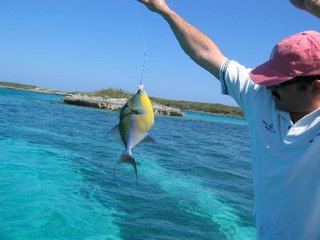 I also caught a Queen Trigger fish, which is really hard because they're very smart fish and very strong, but they have teeny, tiny, little mouths, so they can usually get your bait off the hook and never get caught. Not this year! While they're supposed to be really good to eat, I think they're the prettiest fish I've ever seen and I just couldn't fix him for dinner.
We also saw several turtles, lots of stingrays, including a Spotted Eagle Ray that was about 10 feet wide, and baby sharks. The guys spent the evening on the beach trying to catch the sharks and were able to land two this year.
The place we stay faces eastward, so we awake in the morning to the most amazing sunrises and were usually in bed before 9 p.m. We made two trips to an "underwater park," a protected reef in deep water, and saw the most amazing coral. We took some oatmeal and tuna, worked into a ball, and fed the fish. It was the most amazing thing to see all the YellowTail swarm around the boat and my husband, who couldn't get enough of swimming with the fishes.
All in all, a very good time was had by all, but vacations are never long enough!
Upon my return, I immediately travelled to Washington D.C. for a National Association of Counties (NACo) legislative conference. At the request of the County Commissioner's Association of Ohio, I serve as a representative on NACo's Justice and Public Safety Committee. Most of the time we were working on the problem of Meth...really nasty stuff and a growing concern. Meth use started out west and has been moving eastward. So far, we haven't identified any meth labs in Lucas County, but there have been some in the more rural counties around us. The problem with Meth (besides the whole addiction aspect) is that any "lab" qualifies as a haz-mat site because of the chemicals involved in production. They're very dangerous and often explode.
Since then, we've had lots of coverage on the topic of "discretionary funds." My plan was to post an article entitled, "Community Funding - Lucas County's own version of Pork." However, with all the publicity, I believe that most of the facts are now known - for Toledo and Lucas County.
I will continue to oppose such expenditures - and will probably do a more in-depth post about the excuses I continue to hear for why it's okay to spend YOUR money to buy votes by making donations to charitable organizations.
That's all for now - thanks for stopping by!
So I decided to start by sharing some personal things from my vacation...
My family and I have been vacationing at the same location for about 15 years now. We love the island where we (and several friends) rent a house and a small boat. This year, the weather was the best it's ever been. On our last day, it was so clear and calm that looking down into the water was like looking through a glass at an aquarium.
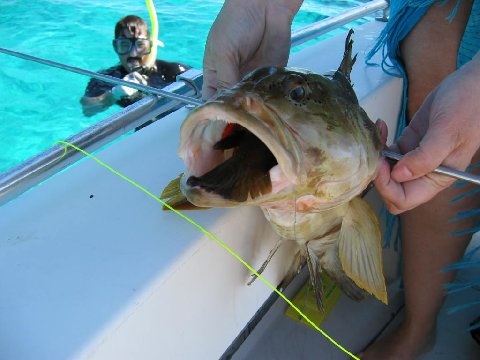 We read good books (I caught up on some Ursula K. LeGuin and sci fi collections), played Apples to Apples with the kids, sat in the sun, snorkled and fished. I caught a 4-1/2 pound grouper, which was dinner that night, and a 5-foot barracuda. Both those were caught when they ate the fish on my line. As you can see from the photo, that's the tail of a Rock Hind inside the grouper's mouth.
 I also caught a Queen Trigger fish, which is really hard because they're very smart fish and very strong, but they have teeny, tiny, little mouths, so they can usually get your bait off the hook and never get caught. Not this year! While they're supposed to be really good to eat, I think they're the prettiest fish I've ever seen and I just couldn't fix him for dinner.
We also saw several turtles, lots of stingrays, including a Spotted Eagle Ray that was about 10 feet wide, and baby sharks. The guys spent the evening on the beach trying to catch the sharks and were able to land two this year.
The place we stay faces eastward, so we awake in the morning to the most amazing sunrises and were usually in bed before 9 p.m. We made two trips to an "underwater park," a protected reef in deep water, and saw the most amazing coral. We took some oatmeal and tuna, worked into a ball, and fed the fish. It was the most amazing thing to see all the YellowTail swarm around the boat and my husband, who couldn't get enough of swimming with the fishes.
All in all, a very good time was had by all, but vacations are never long enough!
Upon my return, I immediately travelled to Washington D.C. for a National Association of Counties (NACo) legislative conference. At the request of the County Commissioner's Association of Ohio, I serve as a representative on NACo's Justice and Public Safety Committee. Most of the time we were working on the problem of Meth...really nasty stuff and a growing concern. Meth use started out west and has been moving eastward. So far, we haven't identified any meth labs in Lucas County, but there have been some in the more rural counties around us. The problem with Meth (besides the whole addiction aspect) is that any "lab" qualifies as a haz-mat site because of the chemicals involved in production. They're very dangerous and often explode.
Since then, we've had lots of coverage on the topic of "discretionary funds." My plan was to post an article entitled, "Community Funding - Lucas County's own version of Pork." However, with all the publicity, I believe that most of the facts are now known - for Toledo and Lucas County.
I will continue to oppose such expenditures - and will probably do a more in-depth post about the excuses I continue to hear for why it's okay to spend YOUR money to buy votes by making donations to charitable organizations.
That's all for now - thanks for stopping by!
Wednesday, February 15, 2006
In my own words...
Tonight I announced that I will not seek re-election as Lucas County Commissioner.
My husband, Sam, and I made this decision in December. We worked with the party leadership here and in Columbus on how and when to make this announcement.
There are several personal reasons why we’ve made this decision.
Recently, my husband and I lost a very dear friend to brain cancer. This, along with some needs within our families, has caused us to reconsider several decisions we’ve made in the past as well as focus on what’s really important in our lives.
Sam and I have delayed many of our plans while I served in public office. We do not want to continue to put off those plans any longer.
I am proud of my accomplishments in office. As Clerk of Court, we brought the office into the 21st Century by instituting an integrated computerization program that is now a model across the country, and by modernizing the way the office operated. We removed the politics from the office to better meet the needs of the public.
In the last three years, I was proud to get our Workforce Investment Board up and running in the best possible manner to make sure our local workforce is ready to meet the needs of our employers. I am happy to say that today, it is a strong, independent organization driven by the needs of the business community, and it makes the local economy stronger.
I have worked for openness in the operation of county government, and have reached out to local elected officials around the county to make sure they were included.
In both positions I was elected by my professional peers to serve in leadership positions in statewide organizations. The fact that I have earned the respect of those who also do my jobs is an accomplishment I hold dear.
I am perhaps most proud that, in my service to Toledo and Lucas County, I have been a voice of reason and responsibility. I have not been afraid to speak my mind when I saw things that needed to be corrected, and I have not been afraid to pitch in and help fix them.
The years that I’ve spent as Clerk and as Commissioner would never be described as ‘easy.’ These positions have required more of me than any regular job and certainly more than most people actually realize. And while I have cherished being able to serve in these positions, I believe it’s time for someone with fresh energy to take up the fight of standing for conservative Republican principles.
I worked hard to be a good Clerk of Court and County Commissioner – making sure that I represent and serve ALL of Lucas County. I’m truly grateful for the friendships I’ve formed, for the terrific supporters that I have and for the privilege of serving in elective office. After I finish this term of office, I will begin looking for new opportunities, but whatever I decide to do, I am a richer person for having served in public office, and I will be forever grateful for the privilege.
Thank you.
My husband, Sam, and I made this decision in December. We worked with the party leadership here and in Columbus on how and when to make this announcement.
There are several personal reasons why we’ve made this decision.
Recently, my husband and I lost a very dear friend to brain cancer. This, along with some needs within our families, has caused us to reconsider several decisions we’ve made in the past as well as focus on what’s really important in our lives.
Sam and I have delayed many of our plans while I served in public office. We do not want to continue to put off those plans any longer.
I am proud of my accomplishments in office. As Clerk of Court, we brought the office into the 21st Century by instituting an integrated computerization program that is now a model across the country, and by modernizing the way the office operated. We removed the politics from the office to better meet the needs of the public.
In the last three years, I was proud to get our Workforce Investment Board up and running in the best possible manner to make sure our local workforce is ready to meet the needs of our employers. I am happy to say that today, it is a strong, independent organization driven by the needs of the business community, and it makes the local economy stronger.
I have worked for openness in the operation of county government, and have reached out to local elected officials around the county to make sure they were included.
In both positions I was elected by my professional peers to serve in leadership positions in statewide organizations. The fact that I have earned the respect of those who also do my jobs is an accomplishment I hold dear.
I am perhaps most proud that, in my service to Toledo and Lucas County, I have been a voice of reason and responsibility. I have not been afraid to speak my mind when I saw things that needed to be corrected, and I have not been afraid to pitch in and help fix them.
The years that I’ve spent as Clerk and as Commissioner would never be described as ‘easy.’ These positions have required more of me than any regular job and certainly more than most people actually realize. And while I have cherished being able to serve in these positions, I believe it’s time for someone with fresh energy to take up the fight of standing for conservative Republican principles.
I worked hard to be a good Clerk of Court and County Commissioner – making sure that I represent and serve ALL of Lucas County. I’m truly grateful for the friendships I’ve formed, for the terrific supporters that I have and for the privilege of serving in elective office. After I finish this term of office, I will begin looking for new opportunities, but whatever I decide to do, I am a richer person for having served in public office, and I will be forever grateful for the privilege.
Thank you.
Arena Considerations
The following was published in the Toledo Free Press on February 15th.
As Lucas County residents consider the possibility of a new arena, they will be inundated by proponents who will say that a sports arena is an economic development catalyst in an area – sort of the “you build it and they will come” mentality. While some of that statement may be true – just look at the new businesses that are surround 5/3 Field – overall, most studies show that arenas are not the economic panacea that many proclaim.
A study by Dennis Coates and Brad Humphreys, economics professors at the University of Maryland Baltimore County, found that most studies ask the question: what will happen if a new franchise and stadium enter the community? The problem, they say, is that stadiums simply displace dollar-for-dollar spending that would have occurred otherwise. The correct question to ask, then, is: how much stadium-related spending results in a net gain in spending?
When asking the right question, their study found that the professional sports environment has a statistically significant impact on the level of real per capita income and that overall impact is NEGATIVE.
Many other stadium economic impact studies show that most of the revenue generated from a new arena is merely money not spent by the same people elsewhere in the area. And the Coates/Humphreys study concluded that stadiums and sports teams were actually a tool for redistributing income in which the people from the suburbs subsidize businesses in the city. While these studies look primarily at major league sports arenas, if even the major leagues can’t attain an increase in spending in an area, what makes us think that minor league teams in Toledo will be able to do so?
Additionally, public spending on arenas diverts money that could be spent on other, essential services that government must, by law, provide. Such public funds could be spent on maintaining local infrastructure, increasing the quality or provision of public health/safety/education, attracting new businesses to the area, a new jail, or even reducing the tax rates we all must pay.
Based on the estimated costs, some entity must pay between $3.2 and $6.3 million in interest and principle for the construction of a new arena. Think of the water and sewer lines, roads and other infrastructure that could be done for $3.2 million to $6.3 million each year. How many shovel-ready sites for development could we prepare for that amount of money? If the County had $3.2 million to $6.3 million each year to spend on low interest loans to help purchase equipment for business expansions, how many jobs could local business owners provide? How far would that amount go to cover any unexpected reductions in our local government funding from the state?
When it comes to making a decision about a new arena in Toledo, the public needs to be given all the facts – not just a rosy picture. From an economic development perspective, a new arena will not be as successful as most politicians would want you to believe. From a financial perspective, a new arena is not self supporting, and public entities don’t have the leeway in already tight budgets to support it. Furthermore, I believe that most taxpayers will not support a new or additional tax to pay for a new arena, considering all the other obligations competing for their limited earnings.
So, should the County build a new arena at this time? I believe that we should focus on government’s mandated responsibilities first. But since I’m in the minority on this, at least let’s not decide to go forward without a vote of the people – after all, they’re the ones who’ll end up footing the bill.
As Lucas County residents consider the possibility of a new arena, they will be inundated by proponents who will say that a sports arena is an economic development catalyst in an area – sort of the “you build it and they will come” mentality. While some of that statement may be true – just look at the new businesses that are surround 5/3 Field – overall, most studies show that arenas are not the economic panacea that many proclaim.
A study by Dennis Coates and Brad Humphreys, economics professors at the University of Maryland Baltimore County, found that most studies ask the question: what will happen if a new franchise and stadium enter the community? The problem, they say, is that stadiums simply displace dollar-for-dollar spending that would have occurred otherwise. The correct question to ask, then, is: how much stadium-related spending results in a net gain in spending?
When asking the right question, their study found that the professional sports environment has a statistically significant impact on the level of real per capita income and that overall impact is NEGATIVE.
Many other stadium economic impact studies show that most of the revenue generated from a new arena is merely money not spent by the same people elsewhere in the area. And the Coates/Humphreys study concluded that stadiums and sports teams were actually a tool for redistributing income in which the people from the suburbs subsidize businesses in the city. While these studies look primarily at major league sports arenas, if even the major leagues can’t attain an increase in spending in an area, what makes us think that minor league teams in Toledo will be able to do so?
Additionally, public spending on arenas diverts money that could be spent on other, essential services that government must, by law, provide. Such public funds could be spent on maintaining local infrastructure, increasing the quality or provision of public health/safety/education, attracting new businesses to the area, a new jail, or even reducing the tax rates we all must pay.
Based on the estimated costs, some entity must pay between $3.2 and $6.3 million in interest and principle for the construction of a new arena. Think of the water and sewer lines, roads and other infrastructure that could be done for $3.2 million to $6.3 million each year. How many shovel-ready sites for development could we prepare for that amount of money? If the County had $3.2 million to $6.3 million each year to spend on low interest loans to help purchase equipment for business expansions, how many jobs could local business owners provide? How far would that amount go to cover any unexpected reductions in our local government funding from the state?
When it comes to making a decision about a new arena in Toledo, the public needs to be given all the facts – not just a rosy picture. From an economic development perspective, a new arena will not be as successful as most politicians would want you to believe. From a financial perspective, a new arena is not self supporting, and public entities don’t have the leeway in already tight budgets to support it. Furthermore, I believe that most taxpayers will not support a new or additional tax to pay for a new arena, considering all the other obligations competing for their limited earnings.
So, should the County build a new arena at this time? I believe that we should focus on government’s mandated responsibilities first. But since I’m in the minority on this, at least let’s not decide to go forward without a vote of the people – after all, they’re the ones who’ll end up footing the bill.
Saturday, February 11, 2006
The more things change...
It should come as no surprise that I'm a fan of Ronald Reagan. What some people may not know is that I'm also a fan of most of the positions advocated by Barry Goldwater, especially his Conscience of a Conservative.
Recently, in one of my emails, there was a link to Reagan's 1964 speech in support of Barry Goldwater who was running for president. I clicked on the link and re-read the speech entitled "A Time For Choosing" and I was struck with the similarities to today's world.
Regardless of your political perspective, the picture this speech draws - of the economy, a nation's stuggle with war, the concept of entitlements and trying to save Social Security - is as accurate today as it was then. And despite this being just the words, you can tell that Reagan knew how to deliver a speech.
I hope you'll take the time to read it and reflect, as I did.
http://reagan2020.us/speeches/A_Time_for_Choosing.asp
Recently, in one of my emails, there was a link to Reagan's 1964 speech in support of Barry Goldwater who was running for president. I clicked on the link and re-read the speech entitled "A Time For Choosing" and I was struck with the similarities to today's world.
Regardless of your political perspective, the picture this speech draws - of the economy, a nation's stuggle with war, the concept of entitlements and trying to save Social Security - is as accurate today as it was then. And despite this being just the words, you can tell that Reagan knew how to deliver a speech.
I hope you'll take the time to read it and reflect, as I did.
http://reagan2020.us/speeches/A_Time_for_Choosing.asp
Thursday, February 09, 2006
As a follow-up to my earlier post on social service cuts and pork, this is a link to a column by one of my favorite political columnists, Michelle Malkin, entitled "The government junkets you fund."
http://www.townhall.com/opinion/columns/michellemalkin/2006/02/08/185608.html
For a preview...
"$1,401,104,263. That's how much of our hard-earned money has gone to subsidize the spring break-style trips and conferences of the federal government over the last five years. Spending on bureaucracy boondoggles has increased some 70 percent in that time period. We wouldn't know anything about this binge if Sen. Tom Coburn, R-Okla., hadn't asked."
It seems as if many individuals are thinking along the same lines - that governments have too much of our money to spend and they're not spending it wisely - or even with any respect to the fact that it's OUR money, not theirs.
This column details just some of the more egregious expenditures and I'm sure we'd be outraged to see a complete list. I'm grateful to Sen Coburn who's been willing to take a stand on this issue, even to his own detriment.
Ms. Malkin's column concludes:
"Blowhards in both parties in Washington have pledged to reduce spending and reform business as usual. Yet, Sen. Coburn's attempt to limit conference spending by just one agency -- HUD -- was anonymously stripped from an appropriations bill behind closed doors and unceremoniously killed.
Who did it? Let's have some transparency. Step forward and tell us why.
You want reform? You want smaller government? There's $1,401,104,263 and counting just waiting to be targeted.
Go ahead and make our day: Cut it out! "
I agree.
http://www.townhall.com/opinion/columns/michellemalkin/2006/02/08/185608.html
For a preview...
"$1,401,104,263. That's how much of our hard-earned money has gone to subsidize the spring break-style trips and conferences of the federal government over the last five years. Spending on bureaucracy boondoggles has increased some 70 percent in that time period. We wouldn't know anything about this binge if Sen. Tom Coburn, R-Okla., hadn't asked."
It seems as if many individuals are thinking along the same lines - that governments have too much of our money to spend and they're not spending it wisely - or even with any respect to the fact that it's OUR money, not theirs.
This column details just some of the more egregious expenditures and I'm sure we'd be outraged to see a complete list. I'm grateful to Sen Coburn who's been willing to take a stand on this issue, even to his own detriment.
Ms. Malkin's column concludes:
"Blowhards in both parties in Washington have pledged to reduce spending and reform business as usual. Yet, Sen. Coburn's attempt to limit conference spending by just one agency -- HUD -- was anonymously stripped from an appropriations bill behind closed doors and unceremoniously killed.
Who did it? Let's have some transparency. Step forward and tell us why.
You want reform? You want smaller government? There's $1,401,104,263 and counting just waiting to be targeted.
Go ahead and make our day: Cut it out! "
I agree.
Wednesday, February 08, 2006
Is a new arena study needed?
The following was published in the February 8th issue of the Toledo Free Press.
At the State of the County address, I learned – along with the rest of the public – that the Lucas County would like to take over the arena project. The proposal is to hire Gateway Consulting to do a fiscal plan, site selection, garner public support, and develop an action plan for moving forward.
First, we already have several plans, so why do we need a new one, especially at a cost of $12,000/month? Second, the citizens of Toledo have already decided on a site. While my personal preference is not to put an arena on our prime waterfront property, I support the public’s decision to put it in the Marina District. Any change in location should go back to the voters for support.
Third, a new arena is not the same as 5/3 Field. The Pizzuti Companies recommend that a non-profit board be established to “own and manage” an arena – similar to the set up for Seagate Convention Center. Seagate receives significant public funding from the hotel/motel tax and they still cannot live within their budgets, requesting, annually, a quarter of a million dollars from the County’s general fund to help make ends meet.
Finally, an action plan already exists. It calls for more “partners” to help fund the costs, more financial support from federal and state governments, and suggests an additional tax in Lucas County to generate the revenue to pay for a new stadium.
Given these factors, what will another study do, except tell us what we already know?
So let’s look at the fiscal realities. The cost estimates for a 10,000 seat arena range from $61.5 to $78.3 million. By the time you add in site acquisition and even a parking garage, the total comes to somewhere between $73 and $126 million.
When it comes to commitments, the City of Toledo can only provide $5 million either in direct construction costs, if built in the marina district, or in infrastructure support, if built downtown…that pesky little section 79 of the City Charter getting in the way.
The State has committed $7.5 million, but this, too, is site specific in the marina district. To spend that money in another location would require either a waiver by the State Controlling Board or a change in the enabling legislation.
A financial report from Pizzuti, shows that the facility will have about $400,000 to apply to debt each year – this means that the operating income can support bond financing of only $6.7 million. Add these three commitments together and you get $19.7 million available for the arena – which means we’re still short between $53.3 and $106 million.
Some entity must be able to afford interest and debt payments of $3.2 million to $6.3 million each year to cover the costs of a new arena.
Currently, all that’s been taken into account is public money and a small amount from the actual operations of the arena. Where is the private investment?
Joe Robie Stadium, home to the Miami Dolphins, was built with $12 million of Joe Robie’s own money and $90 million in loans from three private banks. The Fleet Center, home to the Boston Celtics, was privately financed except for road improvements, a mass transit station and service costs. The St. Louis Blues built their facility with a $30 million investment from the owners and a bank loan for the rest of the facility costs. The city provided the land and paid $10 million for land clearance.
How much is the Storm willing to invest in their future home? And how much are local banks willing to loan for such a facility? David Swindell, in an article for the Buckeye Institute said, “private financial markets will provide funding for the most economically profitable projects. If significant private financing is not available, taxpayers and policymakers, should take that as a sign that the sports facility is not a good investment.” In fact, the only reason more sports franchise owners decline to construct their own stadium is because taxpayers so often relieve them of the need to do so.
At the State of the County address, I learned – along with the rest of the public – that the Lucas County would like to take over the arena project. The proposal is to hire Gateway Consulting to do a fiscal plan, site selection, garner public support, and develop an action plan for moving forward.
First, we already have several plans, so why do we need a new one, especially at a cost of $12,000/month? Second, the citizens of Toledo have already decided on a site. While my personal preference is not to put an arena on our prime waterfront property, I support the public’s decision to put it in the Marina District. Any change in location should go back to the voters for support.
Third, a new arena is not the same as 5/3 Field. The Pizzuti Companies recommend that a non-profit board be established to “own and manage” an arena – similar to the set up for Seagate Convention Center. Seagate receives significant public funding from the hotel/motel tax and they still cannot live within their budgets, requesting, annually, a quarter of a million dollars from the County’s general fund to help make ends meet.
Finally, an action plan already exists. It calls for more “partners” to help fund the costs, more financial support from federal and state governments, and suggests an additional tax in Lucas County to generate the revenue to pay for a new stadium.
Given these factors, what will another study do, except tell us what we already know?
So let’s look at the fiscal realities. The cost estimates for a 10,000 seat arena range from $61.5 to $78.3 million. By the time you add in site acquisition and even a parking garage, the total comes to somewhere between $73 and $126 million.
When it comes to commitments, the City of Toledo can only provide $5 million either in direct construction costs, if built in the marina district, or in infrastructure support, if built downtown…that pesky little section 79 of the City Charter getting in the way.
The State has committed $7.5 million, but this, too, is site specific in the marina district. To spend that money in another location would require either a waiver by the State Controlling Board or a change in the enabling legislation.
A financial report from Pizzuti, shows that the facility will have about $400,000 to apply to debt each year – this means that the operating income can support bond financing of only $6.7 million. Add these three commitments together and you get $19.7 million available for the arena – which means we’re still short between $53.3 and $106 million.
Some entity must be able to afford interest and debt payments of $3.2 million to $6.3 million each year to cover the costs of a new arena.
Currently, all that’s been taken into account is public money and a small amount from the actual operations of the arena. Where is the private investment?
Joe Robie Stadium, home to the Miami Dolphins, was built with $12 million of Joe Robie’s own money and $90 million in loans from three private banks. The Fleet Center, home to the Boston Celtics, was privately financed except for road improvements, a mass transit station and service costs. The St. Louis Blues built their facility with a $30 million investment from the owners and a bank loan for the rest of the facility costs. The city provided the land and paid $10 million for land clearance.
How much is the Storm willing to invest in their future home? And how much are local banks willing to loan for such a facility? David Swindell, in an article for the Buckeye Institute said, “private financial markets will provide funding for the most economically profitable projects. If significant private financing is not available, taxpayers and policymakers, should take that as a sign that the sports facility is not a good investment.” In fact, the only reason more sports franchise owners decline to construct their own stadium is because taxpayers so often relieve them of the need to do so.
Monday, February 06, 2006
The Super Bowl - and its commercials
Super Bowl Sunday held special meaning in my family this year as the Pittsburgh Steelers returned. Yes, I'm a Steelers fan from way back when.
Interestingly enough, it was my Mom who was - and still is - the #1 football fan in our family, and it was her fondness for Terry Bradshaw that caused our tv to be turned to whatever channel featured the Steelers. My sister and I grew up trying to decide whether it would be Franco Harris or Lynn Swan who was going to get the play. Quite naturally, both of us turned out to be devoted fans.
So it was the two of us that the rest of my family and friends had to tolerate last night. We jumped, clapped, yelled, cringed, and celebrated. We annoyed everyone with our own instant replays and critique of the game. We decided we really liked the ref, even though his call on the Rothlisberger touchdown will be discussed for weeks. And now it's over...left-over sloppy joes and brownie crumbs are all that's left of the party and it will be months before we'll see our beloved team on the field again.
So now it's a question of what we'll do with Sundays for the rest of the winter.
Which is why, we've decided, Super Bowl commercials have taken on such interest. We watch them during the game, but they're not really the focus, so now we have them to look forward to.
I admit that some of them I didn't quite get. We weren't really sure what to think of the rather elaborate production of dancing women that turned out to be a Burger King commercial. In case you missed it, the women were in costumes that turned out to be a bun, a burger and all the trimmings - jumping on top of each other at the end to form a whopper. Very, very strange - but then - most of the newer BK "king" commercials are.
We thought the Clydesdale pony getting help from "mom and dad" to pull the Budweiser wagon pulled at the heartstrings. We loved the "rotating wall" to hide the refrigerator full of beer - only to have the neighbors in the apartment next door bowing toward the source of a fully-stocked refrigerator (this is a must see if you missed it).
But my favorite was the cell phone commercial with the "anti-theft" device. I only saw part of it, so I don't even know which company it was for...and I missed the last couple of lines as I tended to refills for my guests - but it was, by far, the one we all liked best and I'll look forward to seeing it again.
Good fun with the commercials, a good game (especially since we won), good food and good friends to share it all with - Super Bowl Sunday.
Interestingly enough, it was my Mom who was - and still is - the #1 football fan in our family, and it was her fondness for Terry Bradshaw that caused our tv to be turned to whatever channel featured the Steelers. My sister and I grew up trying to decide whether it would be Franco Harris or Lynn Swan who was going to get the play. Quite naturally, both of us turned out to be devoted fans.
So it was the two of us that the rest of my family and friends had to tolerate last night. We jumped, clapped, yelled, cringed, and celebrated. We annoyed everyone with our own instant replays and critique of the game. We decided we really liked the ref, even though his call on the Rothlisberger touchdown will be discussed for weeks. And now it's over...left-over sloppy joes and brownie crumbs are all that's left of the party and it will be months before we'll see our beloved team on the field again.
So now it's a question of what we'll do with Sundays for the rest of the winter.
Which is why, we've decided, Super Bowl commercials have taken on such interest. We watch them during the game, but they're not really the focus, so now we have them to look forward to.
I admit that some of them I didn't quite get. We weren't really sure what to think of the rather elaborate production of dancing women that turned out to be a Burger King commercial. In case you missed it, the women were in costumes that turned out to be a bun, a burger and all the trimmings - jumping on top of each other at the end to form a whopper. Very, very strange - but then - most of the newer BK "king" commercials are.
We thought the Clydesdale pony getting help from "mom and dad" to pull the Budweiser wagon pulled at the heartstrings. We loved the "rotating wall" to hide the refrigerator full of beer - only to have the neighbors in the apartment next door bowing toward the source of a fully-stocked refrigerator (this is a must see if you missed it).
But my favorite was the cell phone commercial with the "anti-theft" device. I only saw part of it, so I don't even know which company it was for...and I missed the last couple of lines as I tended to refills for my guests - but it was, by far, the one we all liked best and I'll look forward to seeing it again.
Good fun with the commercials, a good game (especially since we won), good food and good friends to share it all with - Super Bowl Sunday.
Saturday, February 04, 2006
Social services, tax cuts and "pork"
Yesterday, my fellow commissioners held a press conference to object to the budget reconciliation bill passed by the House. In addition to a series of changes to Medicaid and Medicare, the legislation in its final form contains a 5-year reauthorization of the TANF program, reductions to the child welfare program, and a series of changes to the child support enforcement program.
Commissioner Wozniak and Gerken said we shouldn’t cut services to pay for “tax cuts to the rich.” I believe the quote Comm. Gerken used was “Robin Hood in reverse – taking from the poor to give to the rich.”
Besides being typical Democrat Party rhetoric, this perspective clearly misses the point. The tax cuts are not the reason that the federal government is cutting spending - Americans across the country are asking their governments at all levels to cut spending.
The issue isn’t that government doesn’t have enough money to spend – it’s HOW they’re spending the money they do have. And it’s our demands that complicate the issue.
You see, while we all want government to cut spending, we never actually want government to cut our spending.
If we’re unhappy with cuts in actual social service dollars, then we should be willing to tell our representatives in Washington what we DO want cut…and let’s start with looking at our own community. What would be more important to us – to have money put back into essential services for children or to have the following “pork” projects, as identified by Citizens Against Government Waste:
**$2,000,000 for the University of Toledo (Agricultural Research Service - Buildings and Facilities)
**$1,000,000 for the City of Toledo Police Athletic League Youth Center for at-risk youth (Discretionary Grants - Juvenile Justice Programs)
**$500,000 for the University of Toledo Center for Parents Criminal Justice Program (State and Local Law Enforcement Assistance - Byrne Discretionary Grant)
**$1,500,000 for the Toledo Shipyard Improvement Plan (Operation and Maintenance, Navy)
**$1,000,000 for the University of Toledo/Bowling Green Fuel Cell Research project [Hydrogen] (Renewable Energy Resources - Department of Energy)
**$1,000,000 for the Toledo combined sewer overflow project [Ohio Environmental Infrastructure] (Corps of Engineers: Construction)
**$450,000 for Mercy Health Partners, Toledo (Health Resources and Services Administration - Department of Health and Human Services)
**$650,000 for Medical College of Ohio at Toledo for facilities and equipment (Health Resources and Services Administration - Department of Health and Human Services)
**$275,000 for Toledo Public Schools, for its Construction Career Academy (Fund for the Improvement of Education - Department of Education)
**$50,000 for the Toledo Zoo, for Thinking Works (Fund for the Improvement of Education - Department of Education)
**$200,000 for Ohio Educational Television Stations (OETS), Toledo, for the Ohio Cares Project (Social Services & Income Maintenance - Administration for Children and Families)
**$50,000 for Toledo Children's Hospital, Toledo, for health promotion and risk prevention programs targeted to teenagers (Public Health Improvement and Leadership - HHS)
**$6,900,000 to Replace logistics complex at Toledo Express Airport (Air National Guard)
**975,000 for Toledo (Terminal Air Traffic Control Facilities Replacement - Federal Aviation Administration)
**$350,000 for Toledo JARC (Job Access and Reverse Commute Grants - Federal Transit Adminstration)
**$1,250,000 for Toledo downtown waterfront redevelopment (Federal-Aid Highways - Federal Highway Administration)
**$250,000 for Cherry-Bancroft-Summit Corridor Neighborhood Business District revitalization, Toledo (Federal-Aid Highways - Federal Highway Administration)
**$250,000 for Toledo-Lucas County Port Authority for the Northwest Ohio Brownfield Restoration Initiative (Economic Development Initiative)
**$242,500 for City of Toledo for building construction and streetscape improvements along Detroit Avenue (Economic Development Initiative)
**$97,000 for Lagrange Development Corporation in Toledo for construction of a community center (Economic Development Initiative)
**$630,500 for City of Toledo for the Erie Street Market for facilities reconstruction (Economic Development Initiative)
**$97,000 for City of Toledo for economic development planning for the Reynolds Road Green Corridor Project (Economic Development Initiative)
**$1,000,000 for City of Toledo for wet weather flow and wastewater infrastructure improvements (State and Tribal Assistance Grants - EPA)
**$650,000 for University of Toledo for the Lake Erie Center (Science and Technology - EPA)
**$1,700,000 for the University of Toledo Turbine Institute (NASA)
**$1,000,000 for the Maumee Watershed Hydrological Study and Flood Mitigation Plan (Conservation Operations)
**$1,500,000 for the Maumee River Basin (NOAA - National Ocean Service, Construction)
**$325,000 for Lourdes College, Sylvania, for science equipment, technology, and instructional resources, and for the Lourdes College Planetarium (Fund for the Improvement of Post Secondary Education)
**$500,000 for Lucas County for law enforcement technologies (Law Enforcement Technology - Community Oriented Policing Services)
**$1,000,000 for McCord Road, Lucas County, grade separation (Rail-Highway Grade Crossing Mitigation - Federal Railroad Administration)
**$250,000 for Toledo-Lucas County Port Authority for the Northwest Ohio Brownfield Restoration Initiative (Economic Development Initiative)
( Source : http://www.cagw.org/site/PageServer?pagename=reports_pigbook2005_database)
Do we seriously think that renovations at Erie Street Market, planetarium equipment, streetscape improvements, educational television and planning a “green corridor” project are more important than essential services for our children? But I guarantee that for each one of these projects listed above, there will be a significant number of people who will say that we just have to have federal money for this, so don’t cut this project.
And these are just the ones from our area. Consider the costs when you combine all the counties in the country – not to mention the cost of the “bridge to nowhere” in Alaska.
With limited amounts of funding, firm priorities need to be established. Our goal should be to get government to spend money only on that which is detailed in the Constitution and collect enough in taxes only to cover those obligations. But as long as voters demand these pork-barrel projects, politicians will continue to try and gain the support of various special interest groups by “purchasing” their goodwill with our tax dollars.
The tax cuts weren’t just for the rich – they applied to everyone who actually paid taxes, including Commissioners Wozniak and Gerken. We don’t need to repeal the tax cuts. We need to have our representatives in Washington stop spending money on projects that just buy votes and, instead, reserve those funds for mandated government services. And we need to stand strongly behind them when they do.
Commissioner Wozniak and Gerken said we shouldn’t cut services to pay for “tax cuts to the rich.” I believe the quote Comm. Gerken used was “Robin Hood in reverse – taking from the poor to give to the rich.”
Besides being typical Democrat Party rhetoric, this perspective clearly misses the point. The tax cuts are not the reason that the federal government is cutting spending - Americans across the country are asking their governments at all levels to cut spending.
The issue isn’t that government doesn’t have enough money to spend – it’s HOW they’re spending the money they do have. And it’s our demands that complicate the issue.
You see, while we all want government to cut spending, we never actually want government to cut our spending.
If we’re unhappy with cuts in actual social service dollars, then we should be willing to tell our representatives in Washington what we DO want cut…and let’s start with looking at our own community. What would be more important to us – to have money put back into essential services for children or to have the following “pork” projects, as identified by Citizens Against Government Waste:
**$2,000,000 for the University of Toledo (Agricultural Research Service - Buildings and Facilities)
**$1,000,000 for the City of Toledo Police Athletic League Youth Center for at-risk youth (Discretionary Grants - Juvenile Justice Programs)
**$500,000 for the University of Toledo Center for Parents Criminal Justice Program (State and Local Law Enforcement Assistance - Byrne Discretionary Grant)
**$1,500,000 for the Toledo Shipyard Improvement Plan (Operation and Maintenance, Navy)
**$1,000,000 for the University of Toledo/Bowling Green Fuel Cell Research project [Hydrogen] (Renewable Energy Resources - Department of Energy)
**$1,000,000 for the Toledo combined sewer overflow project [Ohio Environmental Infrastructure] (Corps of Engineers: Construction)
**$450,000 for Mercy Health Partners, Toledo (Health Resources and Services Administration - Department of Health and Human Services)
**$650,000 for Medical College of Ohio at Toledo for facilities and equipment (Health Resources and Services Administration - Department of Health and Human Services)
**$275,000 for Toledo Public Schools, for its Construction Career Academy (Fund for the Improvement of Education - Department of Education)
**$50,000 for the Toledo Zoo, for Thinking Works (Fund for the Improvement of Education - Department of Education)
**$200,000 for Ohio Educational Television Stations (OETS), Toledo, for the Ohio Cares Project (Social Services & Income Maintenance - Administration for Children and Families)
**$50,000 for Toledo Children's Hospital, Toledo, for health promotion and risk prevention programs targeted to teenagers (Public Health Improvement and Leadership - HHS)
**$6,900,000 to Replace logistics complex at Toledo Express Airport (Air National Guard)
**975,000 for Toledo (Terminal Air Traffic Control Facilities Replacement - Federal Aviation Administration)
**$350,000 for Toledo JARC (Job Access and Reverse Commute Grants - Federal Transit Adminstration)
**$1,250,000 for Toledo downtown waterfront redevelopment (Federal-Aid Highways - Federal Highway Administration)
**$250,000 for Cherry-Bancroft-Summit Corridor Neighborhood Business District revitalization, Toledo (Federal-Aid Highways - Federal Highway Administration)
**$250,000 for Toledo-Lucas County Port Authority for the Northwest Ohio Brownfield Restoration Initiative (Economic Development Initiative)
**$242,500 for City of Toledo for building construction and streetscape improvements along Detroit Avenue (Economic Development Initiative)
**$97,000 for Lagrange Development Corporation in Toledo for construction of a community center (Economic Development Initiative)
**$630,500 for City of Toledo for the Erie Street Market for facilities reconstruction (Economic Development Initiative)
**$97,000 for City of Toledo for economic development planning for the Reynolds Road Green Corridor Project (Economic Development Initiative)
**$1,000,000 for City of Toledo for wet weather flow and wastewater infrastructure improvements (State and Tribal Assistance Grants - EPA)
**$650,000 for University of Toledo for the Lake Erie Center (Science and Technology - EPA)
**$1,700,000 for the University of Toledo Turbine Institute (NASA)
**$1,000,000 for the Maumee Watershed Hydrological Study and Flood Mitigation Plan (Conservation Operations)
**$1,500,000 for the Maumee River Basin (NOAA - National Ocean Service, Construction)
**$325,000 for Lourdes College, Sylvania, for science equipment, technology, and instructional resources, and for the Lourdes College Planetarium (Fund for the Improvement of Post Secondary Education)
**$500,000 for Lucas County for law enforcement technologies (Law Enforcement Technology - Community Oriented Policing Services)
**$1,000,000 for McCord Road, Lucas County, grade separation (Rail-Highway Grade Crossing Mitigation - Federal Railroad Administration)
**$250,000 for Toledo-Lucas County Port Authority for the Northwest Ohio Brownfield Restoration Initiative (Economic Development Initiative)
( Source : http://www.cagw.org/site/PageServer?pagename=reports_pigbook2005_database)
Do we seriously think that renovations at Erie Street Market, planetarium equipment, streetscape improvements, educational television and planning a “green corridor” project are more important than essential services for our children? But I guarantee that for each one of these projects listed above, there will be a significant number of people who will say that we just have to have federal money for this, so don’t cut this project.
And these are just the ones from our area. Consider the costs when you combine all the counties in the country – not to mention the cost of the “bridge to nowhere” in Alaska.
With limited amounts of funding, firm priorities need to be established. Our goal should be to get government to spend money only on that which is detailed in the Constitution and collect enough in taxes only to cover those obligations. But as long as voters demand these pork-barrel projects, politicians will continue to try and gain the support of various special interest groups by “purchasing” their goodwill with our tax dollars.
The tax cuts weren’t just for the rich – they applied to everyone who actually paid taxes, including Commissioners Wozniak and Gerken. We don’t need to repeal the tax cuts. We need to have our representatives in Washington stop spending money on projects that just buy votes and, instead, reserve those funds for mandated government services. And we need to stand strongly behind them when they do.
Friday, February 03, 2006
We could lose Costco
It was only a matter of time before we got “official” word that Costco has had offers from other communities both inside and outside of Lucas County (per Elizabeth Holland on the WSPD morning show). I’m just surprised it took this long.
And imagine how attractive an offer of “pick a spot and we’ll make it happen” would be to Costco…
Toledo is on the brink of losing this project. Abell is willing to invest $35 million dollars while bringing in good jobs and revenue to the City and County and Mayor Finkbeiner is quibbling over the issue of wider sidewalks, less green space and a drive-through.
But the Mayor’s positions are not the major issue in this fiasco – his approach is. He made up his mind about his personal vision of what Westgate should look like and he’s stubbornly insisting upon that vision. He is ignoring basic market and business realities as well as signed contracts that Abell has with potential tenants – contracts which were based upon previous approval from the Office of the Mayor.
And, by doing this, he continues to send a negative message to the business community. I can’t help but wonder what the new owners of Miracle Mile are thinking. Does anyone believe that they’re actually looking forward to submitting plans for redevelopment?
Further, the Mayor’s personal comments about Elizabeth Holland are rather hypocritical – such descriptions of “obstinate” and an attitude of “my way or the highway” could very easily be used to describe the Mayor.
Carty excuses his behavior by saying he’s doing what’s in the best interests of the City. And I believe that he believes this. But has he considered that his insistence on his position may well end up being bad for the Toledo in the long run if it costs us this development? Ms. Holland has already made further compromises – is Carty willing to compromise too?
During Carty’s campaign he said that the business community must lead our economic development – that government should provide a supportive role in that process. Perhaps he’s forgotten this in his zeal to interfere in the Westgate project.
But there is a solution to this dilemma – if Carty really wants his own way on this perhaps he should just purchase the entire site himself and then he can develop it any way he wants.
And imagine how attractive an offer of “pick a spot and we’ll make it happen” would be to Costco…
Toledo is on the brink of losing this project. Abell is willing to invest $35 million dollars while bringing in good jobs and revenue to the City and County and Mayor Finkbeiner is quibbling over the issue of wider sidewalks, less green space and a drive-through.
But the Mayor’s positions are not the major issue in this fiasco – his approach is. He made up his mind about his personal vision of what Westgate should look like and he’s stubbornly insisting upon that vision. He is ignoring basic market and business realities as well as signed contracts that Abell has with potential tenants – contracts which were based upon previous approval from the Office of the Mayor.
And, by doing this, he continues to send a negative message to the business community. I can’t help but wonder what the new owners of Miracle Mile are thinking. Does anyone believe that they’re actually looking forward to submitting plans for redevelopment?
Further, the Mayor’s personal comments about Elizabeth Holland are rather hypocritical – such descriptions of “obstinate” and an attitude of “my way or the highway” could very easily be used to describe the Mayor.
Carty excuses his behavior by saying he’s doing what’s in the best interests of the City. And I believe that he believes this. But has he considered that his insistence on his position may well end up being bad for the Toledo in the long run if it costs us this development? Ms. Holland has already made further compromises – is Carty willing to compromise too?
During Carty’s campaign he said that the business community must lead our economic development – that government should provide a supportive role in that process. Perhaps he’s forgotten this in his zeal to interfere in the Westgate project.
But there is a solution to this dilemma – if Carty really wants his own way on this perhaps he should just purchase the entire site himself and then he can develop it any way he wants.
Wednesday, February 01, 2006
The Westgate Fiasco
(This article was written on January 30th and published in the February 1st edition of the Toledo Free Press.)
Elizabeth Holland and Abell companies decide to renovate Westgate Village Shopping Center. They meet with potential tenants and neighbors, review zoning restrictions, do their market research, sign tenants and make a public announcement of a $35 million investment. They ask for infrastructure support – water/sewer/roads – that would be necessary regardless of what goes into Westgate. They spend 18 months doing their planning and preparation and then, at the last minute, they learn that three elected officials don’t “like” what they’ve got planned.
These three hold a press conference, without advance notice to Ms. Holland, and state publicly that they’re going to hire their own architect and lawyer (because they believe the law is on their side…merely an intimidation tool) to come up with their own plan for how they want this redeveloped property to look. They then meet, behind closed doors, to figure out how to pay for their plan and they decide that the Lucas County Improvement Corporation should foot the bill – and if they don’t then the County and City will just split the cost.
Without actually asking for LCIC support first, they give the go-ahead to the architect and lawyer who do the work and then release their plan. Their timing was based upon a sense of urgency to get their plan out in the public before the developer could present her plan – because, obviously, their plan is better.
Of course, like any plan developed by politicians, major issues were not considered and the result, so far, is a fiasco, with Abell calling the plan “unworkable” and some components a “deal-breaker” if insisted upon.
The final straw, however, came when Mayor Finkbeiner publicly stated that wealthy developers try to use money to influence our Plan Commission. Has our mayor ever heard the term “libel?”
Had I been consulted on this issue, I would have objected strenuously to any public announcement with first having met with Ms. Holland to understand her position on the design of Westgate. I would have said to Ms. Holland, “We’ve got some Westgate neighbors who are concerned about the walkability of the site. How do we help you address these concerns?” I would have worked with her to understand the depth of planning and market research and then would have worked with the neighbors to help them understand why the plan is as it is and why any modifications could or could not be made.
Consider the message that the business community has received with the Finkbeiner/Wozniak plan, as it’s become known: we don’t care how much homework you do to develop a profitable venture, if it doesn’t suit our personal tastes, we’ll use the power of our office to force you do things our way. We’ll then accuse you of trying to influence the process – completely ignoring the fact that that is exactly what we’re trying to do.
What message would the business community received if, instead, we tried to help Ms. Holland dispel the neighborhood concerns and then stood by her, defending her exhaustive market research and the desires of the tenants to have a facility that helps them – and subsequently, the city and county – make money?
That Mayor Finkbeiner, Commissioner Wozniak and Commissioner Gerken have never been business owners is clearly evident in the many factors they failed to consider before going down this ill-fated road. I realize that they don’t like to include the “Republican” in their plans – this is an election year for me, afterall. But they, and the entire community, would have been better served had they bothered to at least ask, “Maggie, you’ve run a company before, if you were Elizabeth Holland, what would you think about this?”
Right now, though, we have two choices: continue to insist that the personal preferences of elected officials take precedence over the legal plans of private developer and continue to expend public dollars to do so, or apologize for how rudely we’ve handled the situation and humbly ask what we can do to help Ms. Holland make Westgate profitable once again. I choose the latter.
Elizabeth Holland and Abell companies decide to renovate Westgate Village Shopping Center. They meet with potential tenants and neighbors, review zoning restrictions, do their market research, sign tenants and make a public announcement of a $35 million investment. They ask for infrastructure support – water/sewer/roads – that would be necessary regardless of what goes into Westgate. They spend 18 months doing their planning and preparation and then, at the last minute, they learn that three elected officials don’t “like” what they’ve got planned.
These three hold a press conference, without advance notice to Ms. Holland, and state publicly that they’re going to hire their own architect and lawyer (because they believe the law is on their side…merely an intimidation tool) to come up with their own plan for how they want this redeveloped property to look. They then meet, behind closed doors, to figure out how to pay for their plan and they decide that the Lucas County Improvement Corporation should foot the bill – and if they don’t then the County and City will just split the cost.
Without actually asking for LCIC support first, they give the go-ahead to the architect and lawyer who do the work and then release their plan. Their timing was based upon a sense of urgency to get their plan out in the public before the developer could present her plan – because, obviously, their plan is better.
Of course, like any plan developed by politicians, major issues were not considered and the result, so far, is a fiasco, with Abell calling the plan “unworkable” and some components a “deal-breaker” if insisted upon.
The final straw, however, came when Mayor Finkbeiner publicly stated that wealthy developers try to use money to influence our Plan Commission. Has our mayor ever heard the term “libel?”
Had I been consulted on this issue, I would have objected strenuously to any public announcement with first having met with Ms. Holland to understand her position on the design of Westgate. I would have said to Ms. Holland, “We’ve got some Westgate neighbors who are concerned about the walkability of the site. How do we help you address these concerns?” I would have worked with her to understand the depth of planning and market research and then would have worked with the neighbors to help them understand why the plan is as it is and why any modifications could or could not be made.
Consider the message that the business community has received with the Finkbeiner/Wozniak plan, as it’s become known: we don’t care how much homework you do to develop a profitable venture, if it doesn’t suit our personal tastes, we’ll use the power of our office to force you do things our way. We’ll then accuse you of trying to influence the process – completely ignoring the fact that that is exactly what we’re trying to do.
What message would the business community received if, instead, we tried to help Ms. Holland dispel the neighborhood concerns and then stood by her, defending her exhaustive market research and the desires of the tenants to have a facility that helps them – and subsequently, the city and county – make money?
That Mayor Finkbeiner, Commissioner Wozniak and Commissioner Gerken have never been business owners is clearly evident in the many factors they failed to consider before going down this ill-fated road. I realize that they don’t like to include the “Republican” in their plans – this is an election year for me, afterall. But they, and the entire community, would have been better served had they bothered to at least ask, “Maggie, you’ve run a company before, if you were Elizabeth Holland, what would you think about this?”
Right now, though, we have two choices: continue to insist that the personal preferences of elected officials take precedence over the legal plans of private developer and continue to expend public dollars to do so, or apologize for how rudely we’ve handled the situation and humbly ask what we can do to help Ms. Holland make Westgate profitable once again. I choose the latter.
Subscribe to:
Posts (Atom)

