Showing posts with label big government. Show all posts

Monday, January 12, 2015

Who is responsible for your health?


This ad is from the CDC which is no longer
just the Centers for Disease Control,but is
now the Centers for Disease Control
and Prevention.
Forgive me for getting this wrong, but I always thought I - and I alone - was responsible for my health.

Sure, genetics play a role, but whether I was overweight or underweight , ate junk food or fruits and vegetables, exercised or not ... all that was on me.

Apparently I'm wrong.  Well, at least according to today's lead editorial in The Blade.

Yes, they do say our individual health is partially on us and the decisions we make, but they also say:

"The report notes that Ohio ranks near the top in the percentage of its adults who smoke, and of children exposed to secondhand smoke in their homes. Such things are as much a matter of individual responsibility, or its absence, as of inadequate public policy.
Really?  Inadequate public policy is to blame if you or I smoke?

Who DOESN'T know that smoking is bad for you?

In fact, people who do smoke, do so in spite of the fact that they know it's bad for them and for anyone who lives in their smoke-filled house.

How can inadequate public policy be to blame for that?

They even write:

"But it isn't just the responsibility of government to make Ohioans healthier and more productive."

Hmm... I guess I missed that responsibility in the U.S. Constitution as well as the state constitution.

For the record, I don't smoke - never have.  Neither has my husband. My sister does, but she doesn't smoke in my house and has never asked to do so.  Most smokers are considerate in that respect.

But no amount of government spending is going to make her stop. In fact, I doubt that anyone has decided to stop smoking because government spent money on an advertisement bemoaning the ill effects of the practice.

People stop smoking when THEY want to. They are the ones who must make the choice, which means it is entirely an individual responsibility and action.

The primary reason for the editorial is to call for "greater public investment" - that means spending - arguing that the more government spends on preventive care, the less it should end up spending on actual, more expensive, care as a result of bad habits.

You see, the 'logic' is that if government spends more money up front telling people how to be healthy, they'll have to spend less treating these people when they end up with costly diseases like cancer, heart disease, etc...

But first the people have to actually head the direction from the government to lead healthier lives - and that certainly isn't the case, at least, not for the majority of people.

There's an easy solution to the state spending so much money on actual care of illnesses that are preventable:  Don't.

What if the government warned people ahead of time that if they get cancer from smoking none of their health bills will be covered?  In fact, what if the government said that the cost of any illness or disease that was the result of self-inflicted activity wouldn't be covered?

Would people make better decisions knowing they'd be responsible for all the costs associated with bad habits, or that they might have to go without treatment if they couldn't afford it?

It's an interesting question and one that too few stop to consider.

But the government is all too happy to pay because, in doing so, they develop justification for telling you how to live. It is the 'logic' they use for controlling your life:  We're going to end of paying for your health care so we have the authority to tell you how to keep yourself healthy so we don't have to pay so much.

Oh, they might not say so in so many words, the bottom line is control - of your eating habits, exercise regimen and decisions.

Just look at Michele Obama's Healthy Hunger-Free Act which, as of a year ago, had 1 million kids leaving the school lunch line.

It doesn't stop.

And sadly, too many editorials are all to happy to jump on the bandwagon and advocate for even more government involvement in our daily lives, because (clearly) they know what is best and its for our own good.

Tuesday, October 15, 2013

Quote of the day: value vs. fear


"Economic power is exercised by means of a positive, by offering men a reward, an incentive, a payment, a value; political power exercised by means of a negative, by the threat of punishment, injury, imprisonment, destruction. The businessman's tool is values; the bureucrat's tool is fear." ~ Ayn Rand

Wednesday, September 25, 2013

Quotes of the Day - union leader Samuel Gompers


Samuel Gompers, born January 27, 1850, was a cigar maker. He is best known as the founder of the American Federation of Labor (AFL), where he was president from 1886-94 and then again from 1895 until his death on December 13, 1924.

His take on labor unions, their purpose and their actions, is a bit different from today's and so I thought it might be interesting to share some of his quotes, especially in light of the many issues facing unions - and all of us - today.

While I don't agree with everything he said and stood for, there is wisdom and insight in much of what he said and stood for, especially in his support of America during World War I and his opposition to socialism as a unsound economic solution to the ills Americans were experiencing at the time. He opposed immigration without Americanization, something many labor leaders of today fail to address.

And he opposed loyalty to a particular party. Wonder what he'd think of today's labor movement?

The worst crime against working people is a company which fails to operate at a profit.

I want to urge devotion to the fundamentals of human liberty – the principles of voluntarism. No lasting gain has ever come from compulsion. If we seek to force, we but tear apart that which, united, is invincible. . . . I want to say to you, men and women of the American labor movement, do not reject the cornerstone upon which labor’s structure has been builded – but base your all upon voluntary principles and illumine your every problem by consecrated devotion to that highest of all purposes – human well being in the fullest, widest, deepest sense.

There may be here and there a worker who for certain reasons unexplainable to us does not join a union of labor. This is his right no matter how morally wrong he may be. It is his legal right and no one can dare question his exercise of that legal right.

We want a minimum wage established, but we want it established by the solidarity of the working men themselves through the economic forces of their trade unions, rather than by any legal enactment. . . . We must not, we cannot, depend upon legislative enactments to set wage standards. When once we encourage such a system, it is equivalent to admitting our incompetency for self-government and our inability to seek better conditions.

The workers of America adhere to voluntary institutions in preference to compulsory systems which are held to be not only impractical but a menace to their rights, welfare and their liberty.

Labor Day is devoted to no man, living or dead, to no sect, race or nation.

I have no word of censure for a man because of his views on political, social or economic questions, but I contend that trade unions are the natural form of organization for wage earners under existing economic conditions, and I propose (so far as I may be able) to keep them undefiled and free from alliance with any political party . . . . Factions who wish to dally with hobbies and fine spun theories . . . have no place in the ranks of trade unionism.

And what have our unions done? What do they aim to do? To improve the standard of life, to uproot ignorance and foster education, to instill character, manhood and independent spirit among our people; to bring about a recognition of the interdependence of man upon his fellow man. We aim to establish a normal work-day, to take the children from the factory and workshop and give them the opportunity of the school and the play-ground. In a word, our unions strive to lighten toil, educate their members, make their homes more cheerful, and in every way contribute an earnest effort toward making life the better worth living.

That which we call freedom, that which we call liberty, are not tangible things. They are not handed to any people on a silver platter. They are principles, they are questions of the spirit, and the people must have a consciousness that they not only have the term liberty and freedom, but they must have the power and the right to exercise these great attributes of life.

To strengthen the state, as Frederick Howe says, is to devitalize the individual. . . . I believe in people. I believe in the working people. I believe in their growing intelligence. I believe in their growing and persistent demand for better conditions, for a more rightful situation in the industrial, political, and social affairs of this country and of the world. I have faith that the working people will better their condition far beyond what it is today. The position of the organized labor movement is not based upon misery and poverty, but upon the right of workers to a larger and constantly growing share of the production, and they will work out these problems for themselves.

I do not think American labor is engaged in a class struggle and I do not think American labor believes it is engaged in a class struggle, because in our country we have no such thing and I hope never will have.

We are proud of the country which we claim as our own; we are proud of its history, proud of its heroes and proud of its traditions, and we hope as we struggle for its glorious future. But we maintain that patriotism does not mean the hatred of our neighbor. Nor do we believe that it is a wise policy, as some would advocate, that a foreign war might be a good cure for our domestic evils.

In the exercise of great powers often requisite under military control, the right of free meeting, the right of free speech, and free press is endangered. And when the smoke of battle is gone these rights, taken from the masses of the people under often necessary conditions, are seldom freely given back to the people.

That war transformed me from an ultra-pacifist to one willing to fight and sacrifice with my fellow countrymen in defense of the principle of living our own lives and working out our own destiny; and if there be a mad-man nation still, large or small, which will attempt to repeat that monumental crime I hope that the generations, perhaps yet unborn, of our self-governing civilized nations, may throw themselves with equal vigor in the battle to maintain the fundamental principles of freedom, justice and humanity.

[D]uring the years of [World War I] I was absorbed with the one object that it was labor's war as much as it was the war of any other group of our people; that labor had to make good in helping to win the war and to emerge from the war with freedom and democracy safeguarded and its honored name and high ideals maintained.

I want to tell you, Socialists, that I have studied your philosophy; read your works upon economics, and not the meanest of them; studied your standard works, both in English and German -- have not only read, but studied them. I have heard your orators and watched the work of your movement the world over. I have kept close watch upon your doctrines for thirty years; have been closely associated with many of you, and know how you think and what you propose. I know, too, what you have up your sleeve. And I want to say that I am entirely at variance with your philosophy. I declare to you, I am not only at variance with your doctrines, but with your philosophy. Economically you are unsound; socially, you are wrong; industrially, you are an impossibility.

You are mistaken in asserting that I am embittered against everybody or anything that savors of socialism. What I resent and what I have persistently opposed is any effort that will mislead the wage-earners and delude them with vain hope. There have been so many burdens and so much suffering and so much misery heaped upon those who are called the wage-earners, that I resent with every particle of force within me anything that would perpetuate their suffering or lead them into greater depths. Because I am firmly convinced that socialism is founded upon principles that will not lead out into broader liberty, independence and opportunity, I have done what I could to show men the fallacies of the doctrine of socialism.

There are people in the labor movement who seem to believe that success can only come by entrusting great, yes, absolute power in the hands of an individual or an executive officer. I warn you against a calamity none greater than which can occur to the labor
movement. Autocracy is as dangerous in our movement as in the state. Mistakes may be made by the masses but they learn to do better by reason of their mistakes. The individual, on the contrary, when having absolute power rarely makes mistakes, rather commits crime. The man who would arrogate to himself in the labor movement absolute and autocratic power would be a tyrant under
other circumstances and has no place in the labor movement.

One thing to be considered in discussing immigration is that the greater the number of immigrants the less American the United States becomes. . . . The American Federation of Labor believes that the foreigners now in this country should be assimilated before others are permitted to come except from such countries as Great Britain, France, Germany and Scandinavia.

America must be kept American. Those who would flood the country with hordes of immigrants from southeastern Europe care no more for America then do the Hottentots. Their desires are governed by greed.

The industrial field is littered with more corpses of organizations destroyed by the damning influences of partisan politics than from all other causes combined.

We deny the assertion made by some of our opponents when they say the American Federation of Labor is against political action. We are against the the American labor movement being made a political party machine.

I am very suspicious of the activities of governmental agencies.

We have been asked, or advised, to go for all the laws we can get. Save the workingmen of America from such a proposition! There are numbers of laws we can get, but prudence and defense of the rights and the liberties of the toilers are much more important than the effort to secure all the laws we can get.

Several times the proposition to form a labor party has been considered by the trade union movement, but after careful and thorough consideration it has been invariably decided that we can attain our purposes more quickly and more effectively by continuing our political policy of independent political action partisan to principles rather than to a party.

A law that is really a law, is a result of public thought and conviction and not a power to create thought or conviction. The enforcement of a law follows naturally because the people will it. To enact a law with the hope and for the purpose of educating the people is to proceed by indirection and to waste energy. It is better to begin work for securing ideals by directing activity first for fundamentals. Frequently, when the people concerned become mindful and eager for what will promote their own welfare, they find that they are much more able to secure what will benefit and adapt their methods to changing circumstances than is any law or the administration of that law.

There are a number of people who mistakenly charge me with being a Democrat. I never was a member of the Democratic Party. I was at one time, in my early years, a member of the Republican Party, and cast my first vote for a Republican President--U. S. Grant as soon as I attained my majority. I never did belong to the Democratic Party. In the pursuit of the Nonpartisan policy of labor in which I thoroughly believe, I supported Republican or Democrat or publicist as in the varying parties I believed that they would best serve the people without regard to party.

I love my liberty, and imprisonment would be, to say the least, very disagreeable to me; but there are some things that are even less desirable, among them one's loss of self-respect and the loss of inherent and lawful constitutional rights.

The meaning of America lies in the ideal she represents. That ideal is liberty and opportunity. But beautiful as any ideal may be, it becomes of practical value when it has effectiveness in the daily lives of men and women. Real liberty and opportunity mean a certain mental attitude toward life, certain standards of life and work, and possession of that which secures the enjoyment of opportunities. America the ideal -- the land of the free -- exists only when her people are American in all things.

By nature I am a non-conformist. I believe that restrictions dwarf personality and that largest usefulness comes through greatest personal freedom.

Note: Many of these quotes are from the Samuel Gompers Papers.

Wednesday, June 19, 2013

Bill authorizing warrantless searches of Ohioan's cell phone activity derailed


Email from the 1851 Center for Constitutional Law:

Bill Authorizing Warrantless Searches of Ohioans' Cell Phone Activity Derailed

Stalled in Committee after 1851 Testimony, Bill would permit sharing of "any information" to law enforcement, if not amended


Columbus, OH - The 1851 Center for Constitutional Law today took action that stalled passage of Senate Bill 5, legislation that, if enacted, would permit warrantless acquisition, by state and local law enforcement, of Ohioans' travels and cell phone communications.

The fast-tracked Bill, which passed 32-1 in the Ohio Senate and was poised to be voted out of its House committee today, voted on by the entire House on June 19, and enacted into law within a matter of days, received almost no public or media scrutiny until the 1851 Center's involvement today.

In his testimony before the House Committee on Transportation Public Safety and Homeland Security, 1851 Center Director Maurice Thompson explained the following:

  • The Bill authorizes wireless service providers to break their voluntarily-agreed-to contracts with Ohio customers, to whom they've promised privacy, and strips Ohioans of their right to enforce these contracts, or sue for damages (Cell phone carriers are granted absolute immunity for sharing information with law enforcement).
  • The Bill is broader than the controversial federal NSA program, in that it authorizes searches not related to foreign communications or terrorism, including activity related to petty crime such as driving infractions, or no crime at all.
  • While the Bill's initial requirements of an "emergency" are well-defined, later division of the Bill place no limits on local law enforcement's authority to acquire cell phone records of any Ohioan for any reason.
  • Cell phone companies have considerable incentive to share this information with Ohio police, to whom they can sell this information without liability (under the Bill) at up to $2,200 per search.

"We were shocked to learn that this Bill had overwhelmingly passed the Senate with such speed, and that there was previously no opposition," said Maurice Thompson, Executive Director of the 1851 Center. "Ohioans should be free from warrantless searches of their phone records except in the gravest of emergencies, if at all, and they should be free to contract with carriers that will not sell their information. This Bill would violate those constitutional principles, accomplishing the very thing the Fourth Amendment was written to guard against. That is why we have taken this action."

After an hour of testimony by Thompson today, which sometimes included tense exchanges with state representatives, the House Committee agreed to table the Bill and field the 1851 Center's proposed amendment - - which require a search warrants before any non-emergency acquisition of cell phone information may occur - - before taking further action on the Bill. The next Committee meeting on the matter is not yet scheduled.

Upon review of 1851 testimony, several Senators who voted for the Bill have indicated that the Bill was misleading, and that their support, at the behest of Senate leadership, was too hasty.

Read The 1851 Center's testimony on proposed Senate Bill 5 HERE.

Wednesday, June 12, 2013

Quote of the Day - taxes


A lesson for all politicians and those who would seek government funding for anything:

"But how is this legal plunder to be identified? Quite simply. See if the law takes from some persons what belongs to them, and gives it to other persons to whom it does not belong. See if the law benefits one citizen at the expense of another by doing what the citizen himself cannot do without committing a crime." ~ Frederic Bastiat

Monday, June 10, 2013

Quote of the Day - what to do about a tyrannical government


The instructions have been around since our nation was founded:

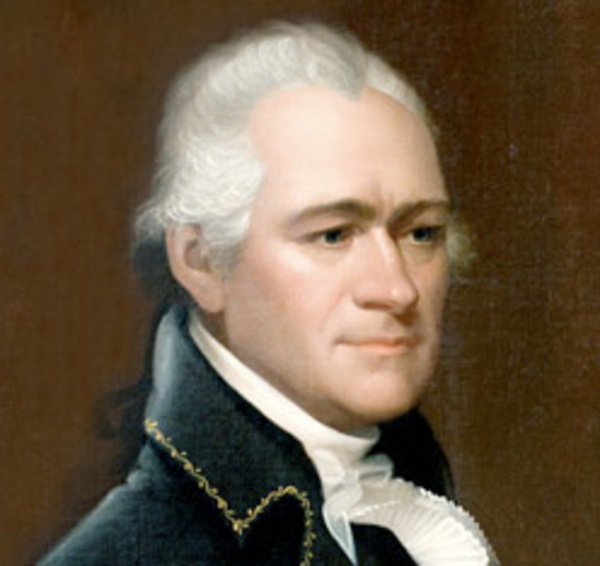
Portrait by Ezra Ames

"If the federal government should overpass the just bounds of its authority and make a tyrannical use of its powers, the people, whose creature it is, must appeal to the standard they have formed, and take such measures to redress the injury done to the Constitution as the exigency may suggest and prudence justify." ~ Alexander Hamilton


Thursday, June 06, 2013

Should the IRS take a lesson from Ohio's Boards of Election?


This post went up yesterday at Ohio Watchdog:


scales of justice R and DThe recent scandal of the IRS targeting conservative, tea party and patriot groups for unreasonable and ridiculous scrutiny in their tax-exempt applications, has renewed calls for abolishing the behemoth structure.

I'm all for that, but don't think it will ever happen. There just isn't the political will to eliminate the agency that implements the special favors and deductions created by politicians through a complicated, unknowable tax code.

Efforts to implement a flat tax or fair tax - where every person pays the same percentage of tax regardless of income - have also failed...so far. A major obstacle seems to be that poorer individuals would end up paying more than they do now and richer individuals wouldn't pay 'enough' - though 'enough' is never actually defined.

So absent its complete elimination, what can be done to ensure such targeting doesn't happen again - regardless of who the target might be?

The solution isn't easy, because the problem in inherent in the structure and culture of the agency - and government in general, as Monty at Ace of Spades explains:

The IRS is not supposed to be a partisan agency. The federal bureaucracy was explicitly designed to be non-partisan so that it would impartially enforce the tax laws and regulations passed by the Congress and approved by the Executive. But the IRS like many other federal bureaucracies tends to be staffed by people -- especially at the management level -- who believe in robust, activist government. In other words: it is staffed mainly by Democrats. And however nonpartisan the organization is supposed to be, it cannot help but reflect the culture of the people who comprise it. The IRS, being led by and staffed with activist-minded Democrats, cannot help but reflect that worldview. The culture reinforces itself because adherence to the culture is the only way to move up. Dissenters and contrarians do not last long in an organization like the IRS (any more than they do at the FBI or EPA or DoJ).

It's no surprise to hear that Lois Lerner's husband is a high-priced lawyer with an affinity for liberal activism. It's no surprise that Douglas Shulman's wife heads a liberal group dedicated to campaign finance reform. You'll find the same pattern repeated throughout the organization, no doubt. Like seeks out like. The culture reinforces itself. Everybody's kids go to the same schools, everybody knows everybody else's first name, and no one has to discuss politics because it's simply understood. The same thing happens at college campuses. Liberal politics, statism, the primacy of the regulatory state: it's just the water these people swim in.

This is the basic danger of a government that has grown too large. The federal machinery will trend Democrat no matter who happens to occupy the White House, Senate, or House of Representatives. And this is because the ideology that drives people to vote Democrat is also the ideology that makes them want to work for federal bureaucracies. The organizational culture in American federal service has become not just partisan but positively messianic during the age of Obama -- they're doing it for your own good, whether you know it or not! -- and the urge to suppress those with "wrong" opinions is becoming too strong to ignore. The tacit approval of Barack Obama and other powerful Democrat politicians removes any vestige of unease. It explains the near-complete lack of guilt or remorse shown so far by IRS management. In their minds, they are doing nothing wrong.

So what solution could possibly be suggested to address the inherent bureaucratic mentality of bias that permeates the IRS and other government agencies like the EPA, Department of Justice, etc...?

It's not non-partisan functioning the public seeks, but impartiality.

Maybe Ohio's structuring of the Board of Elections is the way to go.

Because of their obligation to conduct fair and impartial elections, and in order to ensure the sanctity of the vote, all BOEs are staffed equally by Republicans and Democrats. Every time a ballot or voting machine is handled, a Republican and a Democrat must be present and perform the function together.

The individual county offices are governed by a four-member board of two Republicans and two Democrats, nominated by the local parties and appointed by the Secretary of State. There is a director and assistant director to oversee the staff. The director is the opposite party from the chairman of the board and the assistant director is the same party.

By requiring both parties to be present and forcing a balance in the organizational chart, you ensure impartiality in a clearly partisan office.

Why not require that equal numbers of Republicans and Democrats be hired in all government agencies?

With equal numbers of Republicans and Democrats watching each other and ensuring the fair administration of election laws, you eliminate the type of one-sided internal culture that results in scandals like the IRS is currently experiencing.

Many state and federal boards and commissions require bi-partisan representation in their makeup. Why should the employees be any different?

This is not to say that problems won't arise or that such a system is without potential flaws:

* People are human and will make mistakes.
* Third parties won't like the two-party structure.
* Identifying individuals by party and then deciding who goes in order to ensure equal numbers is problematic (and doesn't address the potential for current employees to just change their party affiliation in order to keep their job).

But wouldn't a federal government comprised equally of Republicans and Democrats be better than what we have now?

Tuesday, June 04, 2013

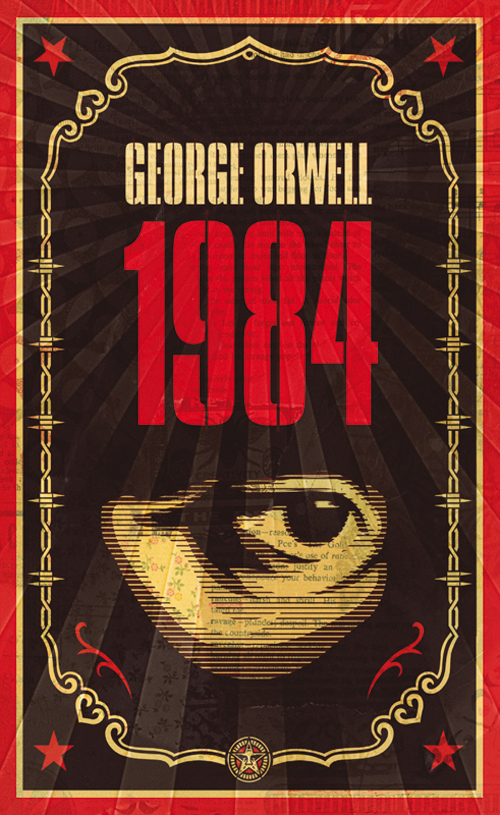
Could George Orwell have imagined what's going on today?


Saturday marks the 64th anniversary of the publication of George Orwell's book 1984:

Nineteen Eighty-Four is a dystopian novel by George Orwell published in 1949. The Oceanian province of Airstrip One is a world of perpetual war, omnipresent government surveillance, and public mind control, dictated by a political system euphemistically named English Socialism (Ingsoc) under the control of a privileged Inner Party elite that persecutes all individualism and independent thinking as thoughtcrimes. Their tyranny is headed by Big Brother, the quasi-divine Party leader who enjoys an intense cult of personality, but who may not even exist. Big Brother and the Party justify their rule in the name of a supposed greater good. The protagonist of the novel, Winston Smith, is a member of the Outer Party who works for the Ministry of Truth (Minitrue), which is responsible for propaganda and historical revisionism. His job is to re-write past newspaper articles so that the historical record always supports the current party line. Smith is a diligent and skillful worker, but he secretly hates the Party and dreams of rebellion against Big Brother.

With what's been going on lately, I can't help but wonder if we're there yet.

We have a media that is more interested in protecting their favored politician than in actually reporting the truth, often ignoring what should be major stories because they reflect negatively on their object of affection.

We have people calling for greater gun control as a means of preventing gun violence, yet Chicago - a city with gun-control laws these individuals would love to impose upon the rest of the nation - has one of the highest gun violence records in the country. How do these people not see the correlation?

We have children being expelled from school and even arrested because they have a toy gun or just drew a picture of one!

We have a monstrous government so completely out of control that the even President Barack Obama's former senior adviser David Axelrod says it's too big:

The government is simply too big for President Obama to keep track of all the wrongdoing taking place on his watch, his former senior adviser, David Axelrod, told MSNBC. “Part of being president is there’s so much beneath you that you can’t know because the government is so vast,” he explained.

The IRS targeted tea party and patriot groups. The Department of Justice bugged the phones of the press.

Now comes this from the Washington Free Beacon:

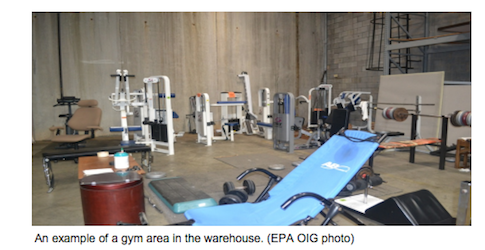
Contracted employees at an Environmental Protection Agency warehouse in Landover, Md., used surplus equipment to set up a gym and personal television spaces, a report by the agency inspector general released Monday said.
...
“The warehouse contained surplus gym equipment arranged to create exercise space for warehouse employees,” the report states. “The weights, machines, exercise equipment, and overall exercise area appeared to be well maintained. The exercise space was in excess of 30 by 45 feet. Carpet tiles from EPA inventory were placed on the floor in the gym area. This area has electrical power through an EPA power strip and provides music through other agency inventory items. Agency steno pads were used for recording workouts.”


That wasn't the only EPA story to make the news. How gargantuan does an agency have to be to give a fake employee numerous certificates of award?

“Richard Windsor” may have only been an alias for former Environmental Protection Agency administrator Lisa Jackson, but that didn’t stop him from being awarded numerous certificates for ethics and records management.

The EPA awarded certificates naming Jackson/Windsor a “scholar of ethical behavior.” Jackson, under her secret alias, was also awarded certificates for completing training modules on email records management.

Jackson set up a secret email address under the pseudonym “Richard Windsor.” The Competitive Enterprise Institute’s Chris Horner first discovered it in November.

Thank goodness for non-traditional media so we can know about these things, because we aren't going to get it from what passes for today's press corps - especially when you consider the latest from Erick Erickson.

The Democratic National Committee issued a memo saying Republicans were 'overreaching' when it comes to the IRS and other scandals. That was Friday - and by Monday that was the term being used by the press and others defending Pres. Obama and his administration.

We know the majority of the main stream media parrot whatever the Democrats want repeated, but apparently they're oblivious to how transparent they've become.

Add to this the recent court ruling that police can take a DNA swab of arrestees because it's just like taking fingerprints. And another court ruled that Google must turn over customer records to the FBI upon demand and without a warrant:

A federal judge has ruled that Google Inc. must comply with the FBI's warrantless demands for customer data, rejecting the company's argument that the government's practice of issuing so-called national security letters to telecommunication companies, Internet service providers, banks and others was unconstitutional and unnecessary.

Maybe it's not 1984 at all. I'm not sure that even Orwell could have imagined all this would become the norm.

Wednesday, May 22, 2013

Quotes of the Day vs Ohio laws and regulations


As part of my writing for Ohio Watchdog, I cover a lot of the proposed laws and regulations coming out of Columbus, primarily from Republicans because they're in the majority.

I'm working on a story now about the proposed revisions to the precious metals dealer license. Apparently, criminals used to use pawn shops to liquidate their stolen goods and now they're using businesses that buy and sell gold and other precious metals to do the same.

Of course, that means TOTBAL ... there ought to be a law.

With this on my mind, I opened my daily email from Liberty Tree and find these two quotes which seemed so very appropriate.

"After having thus successively taken each member of the community in its powerful grasp and fashioned him at will, the supreme power then extends its arm over the whole community. It covers the surface of society with a network of small complicated rules, minute and uniform, through which the most original minds and the most energetic characters cannot penetrate, to rise above the crowd. The will of man is not shattered, but softened, bent, and guided; men are seldom forced by it to act, but they are constantly restrained from acting. Such a power does not destroy, but it prevents existence; it does not tyrannize, but it compresses, enervates, extinguishes, and stupefies a people, till each nation is reduced to nothing better than a flock of timid and industrious animals, of which the government is the shepherd." ~ Alexis de Tocqueville

"It used to be the boast of free men that, so long as they kept within the bounds of the known law, there was no need to ask anybody's permission or to obey anybody's orders. It is doubtful whether any of us can make this claim today." ~ Friedrich August von Hayek

I can't help but wonder how we got to this point and whether or not we even realize how much freedom we've actually lost.

Tuesday, May 14, 2013

IRS - Tea Party scandal timeline or deleted scenes from Idiocracy?


ABC News has obtained a (leaked) copy of a timeline created for the Inspector General report on the IRS - Tea Party scandal. It's more than just a documentation of the actions taken to target tea party/patriot/conservative groups for screening before giving them tax-exempt status. It's a damning indictment of the bureaucracy of this massive government agency that has control over all Americans.

As the introduction to Appendix VII says:

"The following chart illustrates a timeline of events from Redacted through July 2012 involving the identification and processing of potential political cases. It shows that there was confusion about how to process the applications, delays in the processing of the applications, and a lack of management oversight and guidance."

The timeline references multiple acting managers, replacement of managers and supervisors, changes in personnel over a two-year period of time. What the timeline doesn't indicate is if these changes were normal movements of personnel or if they were a result of the lack of progress on reviewing the cases.

It gets a bit confusing with the titles and departments, but basically, a Determinations Unit, a Technical Unit, Rulings and Agreement, lawyers and directors were all involved. It appears the Determinations Unit asked numerous times for guidance and direction from the Technical Unit. As the issue began to get public attention, the internal actions escalated.

If you look at the September - October 2011 entries you'll see the Determinations Unit asked the Technical Unit to 'triage' the cases to see what actions the Determinations Unit should take. They did and sent back a spreadsheet. But the Determinations Unit, which was looking for a recommendation about whether to close or further develop the cases, had no idea what to do with the information on the spreadsheet because it didn't answer the question. So back to the Technical Unit they went.

By November, they all decided that "the guidance developed would not work in its present form – it was “too lawyerly” to be
useful and needed the Determinations Unit input."


Then there was this on Feb. 29, 2012 (emphasis mine):

The Director, EO, stopped any more additional information request letters from being issued on advocacy cases until new guidance was provided to the Determinations Unit. In addition, the Acting Director, Rulings and Agreements, discussed with the Determinations Unit Program Manager, about having specialists print out website information and asking the organizations to verify the information instead of asking for applicants to print out the website information.

Yes, you read that correctly. They had to tell the specialists to go to their computers, print out information from the groups' websites and then verify the information rather than mail a request asking the groups to print out their website information and mail it back to the IRS.

I had plenty to say about this in February 2012 when I first reported on the Ohio Liberty Coalition's own experience with the IRS. I especially took issue with the demand that this tea-party group predict the future.

Isn't that something you'd expect to see in the movie, Idiocracy?

In the end, it took almost the full two years to get instructions and directions clear so that the Determinations Unit, charged with actually deciding if the various applications met the proper criteria, could actually determine if the applications should be approved or denied.

Even without the "lack of oversight and guidance," how in the world did we let any agency get so big - or laws so complicated - that it takes two years just to decide something like this???

And remember - this is the taxation agency, something I'm certain our founders would never have envisioned when they used the rallying cry of 'no taxation without representation.'

And if that's not scary enough, this is the same agency that's going to oversee your compliance with Obamacare.

Tuesday, May 07, 2013

Arguments in favor of Internet Sales Tax are all wrong


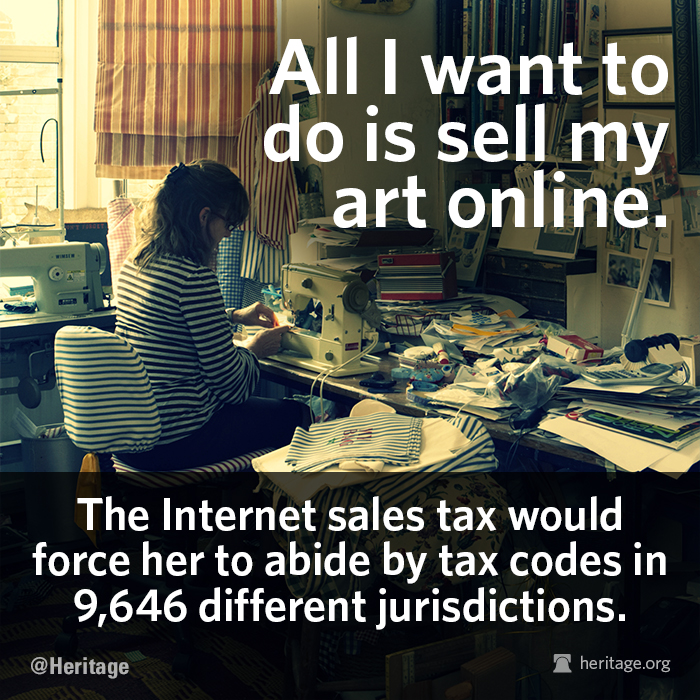
I've been listening to the arguments being made in favor of the Internet sales tax - a bill passed by the Senate and now headed to the House that would mandate the collection of sales tax for any on-line purchases from a company with more than $1 million in gross sales.

The claim by large, national corporations is that it will 'level the playing field' when it comes to collection of the tax because most of them already do this.


The problem is that the sales tax varies by jurisdiction with 9,646 different jurisdictions and a tax that is dependent upon where the purchaser lives.

Under current law, sales tax is collected by the merch ant based upon where the merchant is physically located and charged on on-line purchases only when a merchant has a physical location in a state.

It's a regulatory nightmare and companies with $1 million in GROSS sales might not have the NET profit to be able to afford the cost of the mandate. Then is also the possibility of purchasers giving a friend or relative's address in order to avoid paying a higher tax rate. What's to prevent someone from Toledo (with a 6.75% sales tax) from using an Erie, Michigan address (6%) in order to save the .75% difference?

The bigger question that bypasses all the arguments is this: why are merchants being used as a tax collector for the government?

The government is the person to whom the tax is owed. They are the ones who want the money and they are the ones who have the authority for penalizing the non-payment. Why is there even a middle-man in the first place?

Many entities use a company that specializes in collecting past-due bills. Those companies are paid for their services, either in a set fee or contract or by a percentage of what is collected.

But merchants don't get paid or compensated for collecting the government's bill of sales tax.

Ohio has a law that requires individuals to report on-line orders and then pay the appropriate sales tax on them. The state uses the yearly income tax form for doing this.

So why not just expand that procedure to all purchases?

Clearly, it's because government can't rely upon self-reporting of purchases and it may be unrealistic to expect individuals to keep track of the taxable vs. non-taxable purchases they make.

In fact, it's because the government doesn't trust individuals to self-report that they're not trying to expand their tax collection to entities that don't even live within the state.

Because certainly if individuals can avoid paying taxes, they do, regardless of how much they may support taxation in general or additional taxation on 'the rich.'

So we have a conversation about how merchants can be forced to be bill collectors for the state.

Anyone else see anything wrong with this?

Sunday, August 12, 2012

The difference between government and 'the people'


I like this quote, as it indicates a clear difference between government and 'the people.'

"Society in every state is a blessing, but government, even in its best state, is but a necessary evil; in its worst state an intolerable one; for when we suffer or are exposed to the same miseries by a government, which we might expect in a country without government, our calamity is heightened by reflecting that we furnish the means by which we suffer." ~ Thomas Paine, Common Sense, 1776

Liberals often point to things that society does and - incorrectly - assume that because it exists in society, government should also do it. Additionally, they - wrongly - justify government acting simply because society has.

Society, culture, religion, etc... all teach us that it is proper, right, moral and desirable to help others in need. But because we can and should do so individually does not mean that government can and should do so as well.

In fact, as Paine indicates, it is a "calamity" when government does these things against our wishes using our own money to do so.

The same is true for infringements. We may expect individuals in society to infringe upon us, but government is supposed to protect our individual rights. Rather than protecting our rights, government, at all levels, seeks to take more from us under the guise of it being 'in our best interests' or for the 'greater good.' But that deliberately overlooks the fact that the greater good is necessarily served by all individuals doing what is in their individual good. And it is nothing but extreme arrogance for anyone in government to think they know what's best for us individually much less what's best for every single person either individually or collectively.

Sadly, too many people look to government as the solution, even when it means suffering its miseries.

Tuesday, July 10, 2012

When did we get to the point that we reject the basic concept of entrepreneurship?


We've all - or at least most of us, depending on our age - have heard the phrase "invent a better mousetrap and the world will beat a path to your door."

It meant that if you came up with a better idea, people would pay for it. It also meant that if you were clever and creative, you could have better success.

This is the core basis of entrepreneurship - something that everyone says we need more of. You come up with a better idea or better way of doing something and you enter the market to see if others agree.

Maybe you find a more economical way to offer a service or process. Because of some innovation you've come up with, you can offer an item at less than what people are already paying.

Maybe your price is the same as what is already on the market, but you've got a better item or one that fits the needs of the consumer better, like in the mousetrap example. Certainly, there are plenty of mousetraps, but if yours does something the others can't, and people like the idea, they'll pay more.

Living by the water, we have mice. I willingly pay more for the traps that don't require me to come anywhere near touching the mouse when caught.

This is what forms the core of our nation and fuels the American Dream. Coming up with a better idea, marketing it and supporting ourselves and our families with the profits ... maybe growing into a large firm with a company and fortune to pass on to our descendants.

But what if government worked against you? What if the politicians tried to stop your innovation?

Yes, I'm referring to those same politicians who talk about entrepreneurship and tout that small businesses are the drivers of our economy, hiring more people than large corporations do.

What if they were doing everything they could to prevent you from offering a better product at a better price?

That's exactly what's happening in Washington, D.C., with Uber.

Uber is company that offers on-demand private transportation in various cities across the United States and Canada. You sign up, use your smart phone to request a ride, a car picks you up and takes you to your destination and they can bill your credit card on file. No more waiting for a cab. No more worry about having cash or credit cards to pay. No need to memorize bus schedules. And probably a cleaner, nicer looking ride. What's not to like?

Apparently, everything - if you're a taxi cab driver or company who now has competition.

So what do you do? You use the power of government to stifle your competition.

As Uber explains:

On Independence Day, Uber announced a roll out of a lower cost service that we call UberX. A less expensive Uber option on an all-hybrid fleet. We’re pretty excited about it and think it’s a great idea for cities across the country. What some of you probably noticed is that there was no roll out of this service in the District. That is because, only days earlier, the DC City Council informed us that they intended to pass an amendment to the taxi modernization bill that would make it illegal for Uber to lower its prices or to offer a low cost service in any form.

The Council’s intention is to prevent Uber from being a viable alternative to taxis by enacting a price floor to set Uber’s minimum fare at today’s rates and no less than 5 times a taxi’s minimum fare. Consequently they are handicapping a reliable, high quality transportation alternative so that Uber cannot offer a high quality service at the best possible price. It was hard for us to believe that an elected body would choose to keep prices of a transportation service artificially high – but the goal is essentially to protect a taxi industry that has significant experience in influencing local politicians. They want to make sure there is no viable alternative to a taxi in Washington DC, and so on Tuesday (tomorrow!), the DC City Council is going to formalize that principle into law.

This isn't just in DC - it's here in Ohio, as I detail at Ohio Watchdog: We're just a bunch of hapless rubes. Whether it's duct cleaning, roll-your-own cigarettes or food carts, government has become nothing more than a tool to be used against potential business competitors or to accomplish what your fail to achieve at the bargaining table (unions) or elsewhere (various non-profit groups who lobby for funding).

When did our government become a tool for stopping entrepreneurship? Why would any person who swore to uphold the Constitution of the United States think it acceptable to wield the regulatory power to protect an industry from competition. Why would any elected official agree to measures that actually hurt the very people they're supposed to serve? Why would any governmental body think it is okay to 'screw the public' by insisting that you pay higher prices - for anything?

These are rhetorical questions. I know the answers - I just have a hard time believing our nation has come to this point.


Wednesday, June 13, 2012

Sherrod Brown's 'stuck-on-stupid' economics


In yesterday's Washington Post, our Democrat Senator Sherrod Brown said:

“Everybody knows that government creates jobs.”

I kid you not.

He continued:

“Government creates jobs in highways. We hire private contractors. That creates other jobs. It builds an economic foundation for job creation.

“During the fifties, the sixties, the seventies, the eighties, the United States had great infrastructure programs. We were the envy of the world. Those are clear formulaic job creating strategies that we know.”

Can you say 'stuck-on-stupid'?

To be fair, he is technically correct that government spending can create temporary jobs - but he fails a basic economic lesson when he refuses to acknowledge that such spending comes at a cost to the private sector, which is the only true place where growth can occur.

You see, there is a difference between jobs and growth.

Government could pay us all to dig ditches. And if they wanted to employ us for a long time, they could give us only spoons to move the soil. Think about how many people could be employed if only the government did that!

But growth - the economic engine that results in long-term jobs and employment - does not come from government. It comes from the private sector when a company creates a product that others choose to purchase, creating the need for supplies and employees and transportation and marketing, etc... This is what builds "an economic foundation for job creation."

Government infrastructure projects do best when they're responding to the needs of the private market - not when they are 'busy work' in order to artificially inflate employment numbers or when they are nothing but pork or special interest projects of politicians (high-speed rail, anyone?).

Josh Mandel, Brown's opponent for the Senate seat in November, obviously has a better grasp of economics (emphasis added):

"Sherrod Brown's statement demonstrates that after two decades in Washington and 38 years running for political office, he is out of touch with struggling private sector job creators and millions of Americans looking for work but can’t find it. I believe the only way forward is to empower hard working Americans. If more wasteful Washington spending was the answer, the problem would have been solved long ago."

No matter where you stand on any other issue, the fact that Brown thinks more government spending is the solution to our economic woes should cause you to vote for Mandel in November.

Wednesday, February 01, 2012

Guest Post: Investment Best Left to Private Sector, Not Government

The following is a guest post by William O’Keefe, chief executive officer of the George C. Marshall Institute, and president of Solutions Consulting Inc.

Investment Best Left to Private Sector, Not Government

Al Gore’s self-aggrandizing claim that he “took the initiative in creating the Internet” has haunted him since he first uttered it during a 1999 interview. Newt Gingrich has taken a good deal of flack since claiming “helped lead the effort to defeat communism” late last year. It makes sense. In a society where people expect to be rewarded for their hard work and good ideas, the public generally abhors those who take credit where it’s not due. Self-promotion is what hucksters do.

For those reasons and others, politicians—especially those seeking reelection—should avoid engaging in unwarranted swagger. President Obama has not.

In his State of the Union address and campaign ads, Obama attempts to credit his administration with the recent boom in U.S. oil and gas production. Yet the facts don’t bear this out.

Obama has been more of an obstacle than an enabler to growth in America’s energy industry: straddling the fence over his support for development, targeting the sector for punitive tax hikes, and failing to issue a single new offshore permit in fiscal year 2011. So what are we to make of the President’s sudden embracing of traditional fuels and the more than 9 million workers whose jobs are supported by this industry? Why, election year politics, of course.

The President has already kicked off his swing state tour, traveling across the U.S. touting the need to create manufacturing jobs throughout 2012. Manufacturing is an important part of the Ohio economy, making this a politically savvy move to ensure his rhetoric resonates in the state. The manufacturing sector is the largest contributor to Ohio GDP at over 17 percent, and employs over 600,000 workers in the state. Nationally, the sector represents 11 percent of GDP.

But has the Obama administration really played the role in boosting manufacturing in the energy industry as he claims? In a word, no.

Private sector engineers invented hydraulic fracturing, the process responsible for the boom we’re witnessing in domestic natural gas production, back in 1947—over a decade before the President was even born. This innovation has enabled U.S. firms to unlock resources never before accessible and invest billions in our economy in the process. Far from encouraging this success, the President has singled out this sector for massive tax hikes—jeopardizing our already shaky position in the global energy market (not one U.S. company is in the top 15 largest energy companies worldwide).

In effect, by increasing taxes on U.S. companies, this desired policy would send more jobs and revenue abroad. This is a far cry from creating needed manufacturing jobs domestically. While domestic employment has been declining during the president’s tenure, employment in the oil industry has grown over 20%.

While gunning for oil and gas, the White House is playing favorites with the renewable lobby. Currently, about $11.3 billion taxpayer dollars are directed toward “green” energy annually. Despite decades of massive subsidization, the industry still accounts for only eight percent of U.S. energy demand. Heavily subsidized failures like the botched $500 million Solyndra loan are just the tip of the iceberg when it comes to government failures at picking winners and losers in the energy sector.

Ohio needs jobs, and that will require a plan to make our state and nation as a whole more attractive to investment and innovation. The President’s continued pursuit of job killing punitive tax hikes on manufacturers puts off investors and is contradictory to his campaign message touting the need for job creation. If Obama is serious about job creation, he must move to leave capital in the hands of proven private sector innovators, and stop trying to increase taxes to fund failed pet projects.

Thursday, January 19, 2012

Understanding SOPA and PIPA

Because of the actions of numerous websites, including Wikipedia which went black yesterday, a lot of people are now aware of two pending Congressional bills: Stop Online Piracy Act (SOPA) and Protect IP Act (PIPA).

But in case you still don't know why they're such a big deal, Sal Khan from the Khan Academy has put together a video which explains the bill in it language that is easy to understand.


(H/T: Small Business Against Big Government)

Friday, January 13, 2012

Who gets to decide: you or the government?

"[T]here are, at bottom, basically two ways to order social affairs, Coercively, through the mechanisms of the state -- what we can call political society. And voluntarily, through the private interaction of individuals and associations -- what we can call civil society. ... In a civil society, you make the decision. In a political society, someone else does. ... Civil society is based on reason, eloquence, and persuasion, which is to say voluntarism. Political society, on the other hand, is based on force." ~ Edward H. Crane

When it comes to the 2012 election, I predict that Democrats will try to portray Republicans as mean or mean-spirited and corporate or corporate-backed (as if having the support of people who actually provide jobs is a bad thing).

Their record on the economy, which they can no longer blame on Pres. Bush despite continuing to try, is dismal.

They're not promoting American exceptionalism, something that voters continue to believe in.

They're trying to divide us by race, income, class, employment - and just about every other category they can come up.

And their general philosophy - larger government - means Americans will have less control over their own lives and decisions.

Their positions are not 'American.' But then, they did say they want to "fundamentally change" our nation. I guess we should have believed them.

The 2012 election will boil down to a basic question of 'who gets to decide.' Who will decide how you will live your life? Who will decide how your money is spent? Who will decide, basically, everything?

Will it be you?

Or will it be the government?

Democrats want the answer to be government, though they'll try to couch it in such a way so that you'll believe they're doing it for your own good.

But think about that for a moment. How arrogant must a person be, especially someone who is supposed to be a servant to the public, to think they know better than you what is in your own good?

You might believe your parents, relatives or friends have your own good at heart when they advise you, but does an elected official? Someone who doesn't know you, your circumstances, your goals and interests? The only answer to that is a resounding 'no'!

And do you really believe that any decision designed for the masses is going to be the best decision for you? It may be, but chances are that it won't. Nothing designed for everyone actually works for everyone - any experience with one-size-fits-all clothing will tell you it NEVER fits 'all.'

Government and the decisions by politicians are no different.

But as Republicans battle Democrats in the election cycle, any argument against government making the decisions will be cast as 'mean,' 'mean-spirited' and 'uncaring.' How could any Republican not see that government needs to 'take care' of people?

Republicans hate children, the elderly, the poor, the down-trodden, the sick, the environment, etc... We want to kill kids, pollute the earth, let sick people die without health care, have the elderly eat dog food, starve the poor, and manipulate workers. Anyone seriously thinking about such claims will know how bogus they are, but they make such good sound bites, willingly repeated by a compliant and complicit press.

You name it and the Dems will say that the opposition is because Republicans are, well, evil. How could they not be, though the actual reasoning behind the opposition to government being in control of your life is never addressed.

No, it's much easier to appeal to the emotion of disliking mean people, which almost all of us do. That way, Dems won't have to address their dismal record - or the record they are proud of which has had the opposite effect of what was intended (think bailouts that backfired, stimulus that didn't, etc...).

Republicans don't have a good track record of communicating the difference between their answer to the question versus the Democrat answer. Sadly, it's hard to communicate a philosophy you don't fully support and too many Republican candidates and officeholders don't have the best of records on letting you control your own life. Despite what they say, some have actions which show they'd rather exercise that control themselves.

Still, they're better than the Dems when it comes to your freedom.

So when you're listening to the speeches, the ads and the sound bites, remember that the 2012 campaigns will all boil down to one easy point:


Who gets to decide?

Who is in control?

You?

Or the government?

Monday, September 19, 2011

A tale of three cities: Houston, Detroit and Toledo

Those who do not learn from history are doomed to repeat it." ~ George Santayana

Mario Loyola has a great column on NationalReview.com that takes a look at two cities and their different approaches to similar circumstances.

He writes:

What Houston did for itself is not merely a model for any city facing the danger of sudden economic decline: The policies that Houston and Texas have followed are proof of concept for the conservative vision of government, which is, essentially, to keep the government off the people’s backs and let a free society find its own way to prosperity.

Detroit, conversely, is proof of concept for the liberal vision of government, which seeks to solve every problem through government, to shape economic development through government, to redress grievances through government, to attain social justice through government, and, finally, to insinuate government into every aspect of our lives. The problems Detroit faced in the latter half of the 20th century would have been enormously challenging no matter what policies it embraced. But it embraced the worst ones and so plunged recklessly down the slope of decline.

Each city has offered a nearly pure exposition of a particular philosophy of government and a vivid demonstration of the results. In the degree of collusion between business and government, in the power of labor unions, in the method of economic development, in the burden of taxation and regulation, in the tolerance for diversity — in all these ways and more, the two cities stand as diametric opposites in the choices a society can make.

Loyola then recites the histories of the two cities, citing their problems and how government officials responded to them. He concludes:

As the next election looms, Americans should consider how rapidly we could unleash the power of American industry and bounce out of this recession, if instead of taking our cue from Detroit, we follow Houston.

But there is a message for Toledo as well. Many have called us 'little Detroit' - and not in a good way. We've not been as reliant upon the auto industry as Detroit was/is, but we still depend upon it as one of our major employers in the area.

Unfortunately, our political leaders are more like Detroit's than Houston's. They tend to adopt the liberal vision of government, "which seeks to solve every problem through government, to shape economic development through government, to redress grievances through government, to attain social justice through government, and, finally, to insinuate government into every aspect of our lives."

If you don't believe me, I challenge you to find any example where our political leaders and the local paper (an opinion 'pusher') have ever embraced a 'leave it alone' approach to anything.

We have two very clear examples with plenty of historical facts and measurable outcomes in Detroit and Houston. We can repeat Detroit's mistakes or we can grow by copying Houston's approach.

As Loyola writes, the choice - and the outcome - is up to us:

But as Oscar Wilde lamented as he languished in Reading Gaol near the end of his life: “I must say to myself that I ruined myself, and that nobody great or small can be ruined except by his own hand . . . Terrible as was what the world did to me, what I did to myself was far more terrible still.”

Wednesday, August 03, 2011

Lucas County levies and a warped sense of 'necessary'

We'll decide on at least two county-wide levies in November, thanks to the Lucas County Commissioners who voted to put them on the ballot.

The Zoo will request approval of a .85 mill 5-year renewal levy for their operating expenses. It will generate approximately $6.4 million and cost the owner of a $100,000 home about $26 each year. If approved, the levy would be collected in the years 2012 through 2016.

The County will request approval of a renewal of the 9-1-1 and Communications System levy. It is a .70 mill 5-year levy that will generate just under $5.6 million and cost the owner of a $100,000 home about $21.45 each year. It, too, would be collected in the years 2012 through 2016.

These are renewal levies, which mean they will collect the same amount of money as the current levies do.

Something many people don't realize, though, is that state law limits taxation within counties to ten mills. But Section 5705.19 of the Ohio Revised Code provides authority to the Board of County Commissioners (and other governmental entities) to levy a tax in excess of the ten-mill limitation for various purposes. Those 'excess' taxes go to the voters for approval.

What is interesting is the actual language of the law which says (emphasis added):

The taxing authority of any subdivision at any time and in any year, by vote of two-thirds of all the members of the taxing authority, may declare by resolution and certify the resolution to the board of elections not less than ninety days before the election upon which it will be voted that the amount of taxes that may be raised within the ten-mill limitation will be insufficient to provide for the necessary requirements of the subdivision and that it is necessary to levy a tax in excess of that limitation...

It then gives a list of things for which taxes can be imposed and the list is so long it goes through the alphabet just 3 letters short of twice! Of course, many of the items on the list are far from 'necessary.'

This law actually says that Ohio governmental entities (except schools) should live within a ten-mill taxation budget. But if they don't - or if they want to spend money outside that limit - they can vote to put levies on the ballot to pay for everything from parks, to emergency services, to air pollution, to regional planning, to wetlands and green space, to 'free' museums of art or science or history.

Are all of these things "necessary requirements" of a government? I don't think so.

In fact, I couldn't find anything that governmental entities couldn't tax for, as I'm certain politicians would be able to find permission under one - if not multiple - sections of this law for any whim or desire.

Certainly, some of the projects on the permissions list are necessary. If a local governmental entity is ordered by the state or federal government to implement flood protections or waste/sewer projects, they would need the ability to pay for such mandates and a tax (preferably temporary) would be a proper way to do so. (Though such mandates from the federal government are questionable in their Constitutional authority - but that's a post for another time.)

A valid argument can even be made for the 9-1-1 Communications levy being a 'necessary requirement.' I'm certain individuals who have called 9-1-1 and had their lives saved as a result would agree.

But no amount of twisted logic or faulty reasoning can make me believe that a zoo is a necessary requirement of any area. It may be 'wanted' or 'desired' and people can even present rationalizations about how it is an 'economic development driver' or 'money-making tourist attraction.' But it's not necessary, as many areas without zoos can attest.

The problem is that granting entities the ability to tax above and beyond the ten-mill limitation means that elected officials are free to spend their ten-mill monies on all kinds of 'unnecessary' items because they can always find a way to fund other expenses through the excess taxing authority of ORC 5705.19.

And, over time, the list of items for which we can be taxed has grown far beyond 'necessary requirements.' Just for reference, my taxation for Lucas County's general fund is only 10% of the total amount of taxes I pay for county-wide items - $62.83 of the $613.11 total.

(You can check your own rates by going to the Auditor's AREIS website, putting in your name or address, clicking on the 'data' tab above your name/address, and then selecting 'tax distribution' which is highlighted in red on the left. Be sure to add up the 'Lucas County,' 'other countywide levies' and 'other' sections.)

Clearly, I'm being taxed for unnecessary items simply because the commissioners (in the case of county-wide levies) have decided to put these things on the ballot. Just because we 'can' tax for all kinds of things, it doesn't mean we 'should.'

Sadly, the commissioners - and the politicians in Columbus who keep expanding the taxing authority - have a warped sense of what 'necessary' really means.

And all of us are paying for it.


NOTE: The local paper is reporting that a third levy request (1.4 mills renewal for Children Services Board) wasn't voted upon, but the Commissioner's website Resolution Report for yesterday shows three 'yes' votes on that resolution.

Wednesday, July 27, 2011

'I'm just quitting': why there's no recovery and where the jobs are going

Thanks to Tom Blumer at BizzyBlog, I read this post by David McElroy, a writer and filmmaker in Birmingham, Ala., called "I'm just quitting': A scene right out of ‘Atlas Shrugged’ in Birmingham.

It's about a businessman - a job provider - who happens to have a permit to start an underground coal mine which will employ about 125 people. He attended a public hearing in an inner-city Birmingham neighborhood to hear what government officials, environmentalists and the public had to say about a proposed coal mine in their area. After listening for two hours to attendees and officials bash companies - actual job providers - he spoke. McElroy has his complete statement, but he finishes with this:

I got a permit to open up an underground coal mine that would employ probably 125 people. They’d be paid wages from $50,000 to $150,000 a year. We would consume probably $50 million to $60 million in consumables a year, putting more men to work. And my only idea today is to go home. What’s the use? I don’t know. I mean, I see these guys — I see them with tears in their eyes — looking for work. And if there’s so much opposition to these guys making a living, I feel like there’s no need in me putting out the effort to provide work for them. So as I stood against the wall here today, basically what I’ve decided is not to open the mine. I’m just quitting.
Thank you.

As if his statements weren't enough, you MUST read the comments on the post. Individuals sharing their similar stories of business men and women just saying 'no' to doing business - hiring people, purchasing supplies which leads to support jobs, paying taxes, creating a profit, contributing to their communities.

These are the stories media should be focused on. Rather than demonize people who want to (gasp!) pay people to work for them, we should be celebrating these job creators.

We should be encouraging them in their efforts and government should be asking how they can help - rather than looking for ways to shut them down, tax them more, impose more rules upon them and make them the source of all evil in the world.

Read the article and the comments - and then you'll know just how far from the American Dream we've actually come ... and then ask yourself what you're going to do to help put our country back on track.
Google Analytics Alternative