Showing posts with label Obamacare. Show all posts

Thursday, May 29, 2014

Higher premiums coming to Ohioans using Obamacare federal exchange


The Ohio Department of Insurance is reporting that Ohioans who purchase health care through the federal exchange will see premium increases in 2015.

Individuals can expect a 13 percent increase and small businesses can expect an 11 percent increase for health plans sold on the exchanges under the Affordable Care Act (ACA) also known as Obamacare.

The average premium from the 16 companies who filed to sell plans in the individual market is $374.42 per month compared to $332.58 per month for the same coverage in 2014.

In the small group market, 8 companies filing to sell plans proposed average premiums of $446.78 compared to $401.99 in 2014.

“It’s bad news, no doubt, but it’s what we expected and it’s what the research we did in advance predicted would happen. Ohio has traditionally had a very competitive insurance market which meant our rates were lower than a lot of other states. That means that Obamacare is hitting us harder and driving our costs up significantly,” Lieutenant Governor Mary Taylor said in a press release. “Higher premiums will continue to put a strain on consumers and small businesses at a time when our state’s economy is showing strong signs of recovery and growth. Continued and unnecessary headwinds out of Washington are making it more difficult for job creators, hard-working Ohioans and their families to purchase health insurance.”

In 2010, the federal Patient Protection and Affordable Care Act (ACA) became law. It included the creation of health care exchanges in which individuals and small business owners in every state can purchase qualified coverage. The federal government launched open enrollment in October 2013.

Friday, December 13, 2013

Marcy Kaptur told the Obamacare "Lie of the Year"


Well, it's official. President Barack Obama is responsible for the "Lie of the Year" according to Politifact.

Graphic courtesy of
The Heritage Foundation

"PolitiFact has named "If you like your health care plan, you can keep it," the Lie of the Year for 2013. Readers in a separate online poll overwhelmingly agreed with the choice."


But Obama isn't the only one responsible for this Obamacare lie. Every other person who told the lie should be on the hot seat as well, including our own representative, Marcy Kaptur (D-9th District).

Here's what Kaptur said:

Rep. Marcy Kaptur
"The goal is to try to get you into a plan that you pick, where you feel you have very carefully monitored care, that you participate in, so nobody's left out, nobody's rejected and you have choices. That sounds like a much better system than we have today for so many people. If you like what you have, you keep it…"

And just so you're sure nothing is taken out of context, here is the press release from her office and here is a screen shot of it as well:


That wasn't the only time she lied. Here's another example:

"The whole intention of the law is to relieve some of the worries that seniors face," Congresswoman Kaptur said. And, "you keep the insurance that you have if you like it."

She told that one to a bunch of seniors - seniors! - in a telephone town hall. Again, here is the link to the statement on her own website and here is the screenshot of it:


The big question now is this: Will anyone hold her responsible?

Tuesday, October 15, 2013

Guest Post: The Myths of Medicaid Expansion


The following is a guest post from Rep. Ron Young, Republican from Leroy Township, District 61.

I believe Ronald Reagan summed up what we face today way back in 1961. He said, “In 1927 an American socialist, Norman Thomas, six time candidate for president on the Socialist Party ticket, said the American people would never vote for socialism. But he said under the name of liberalism the American people will adopt every fragment of the socialist program. One of the traditional methods of imposing socialism on a people has been by way of medicine. It's very easy to disguise a medical program as a humanitarian project. Most people are a little reluctant to oppose anything that suggests medical care for people who possibly can't afford it.”

Today, our nation and Ohio are experiencing an expansion of government intrusion into our health care industry of unparalleled magnitude. Full implementation of Obamacare will mean about one- sixth of our nation’s total economy will fall under even tighter government regulation and bureaucracy. 

My comments in this report are focused on the impacts of expanding the Medicaid program. Contrary to some reports, it is impossible to oppose Obamacare and yet support Medicaid expansion. Medicaid expansion is a major part of Obamacare and represents about half of all Obamacare spending. 

In order to understand why Medicaid expansion is bad for Ohio, we need to first understand a few points about the current Medicaid program. 

  • About two million Ohioans are on the Medicaid program today, or about 20 percent of Ohio’s total population.
  • The current program is by far the biggest expense of the state’s budget, consuming about 42% of it, because Medicaid spending increases much faster than inflation. It is crowding out education, infrastructure improvements, prison funding, and other critical needs. The current program, even without expansion, is financially unsustainable
  • The program has been in effect for more than 40 years and is designed to care for pregnant women, children and individuals with disabilities of low or no income. Medicaid expansion is designed to a different population, healthy individuals who fall below the poverty line. The largest group in this population is comprised of single young adults with no dependent children. Of course, this begs the question, are we incentivizing people not to work?  
Former Speaker of the House Nancy Pelosi is famous for her statement regarding Obamacare, “We have to pass this bill so we can find out what’s in it.” However, I believe one of her even more insightful quotes is, "Think of an economy where people could be an artist or a photographer or a writer without worrying about keeping their day job in order to have health insurance."  
 
Her vision of incentivizing unemployment to create an underclass of starving artists is absurd. However, while operating an employment firm in Ohio for more than 30 years, I can recall numerous occasions where individuals rejected job offers and even promotions in order to retain government benefits. Incentivizing unemployment and underemployment is a real problem with the Medicaid program. 

MEDICAID MYTH BUSTING 

In an effort to win public support, a number of myths have been perpetrated regarding Medicaid expansion. By contrasting some of these myths with reality I believe a clearer portrait of the effects of Medicaid expansion can be seen.  

MYTH #1: “Medicaid offers good health care and expanding Medicaid will save countless lives.” 

REALITY: The health outcomes for those our government places on Medicaid are poor and the best research supports this statement. It should not be surprising that Medicaid offers sub-par medical services. Medicaid patients have a significant problem getting access to medical care. One major reason for lack of access is that Medicaid pays doctors only a fraction of what private insurers pay. According to a Heritage Foundation 2012 study, “Medicaid Patients Have Worse Access and Outcomes than the Privately Insured,” Medicaid typically pays physicians only 56% of the amount private insurers pay. Other studies indicate that for a physician in Ohio practicing in an office setting the reimbursement average for Medicaid is even lower. 

As a result, many doctors choose not to see Medicaid patients because it is more difficult to keep their practices alive if they do. That, in turn, makes it hard for Medicaid patients to get doctor’s appointments for annual checkups, routine care, and even urgent medical problems. A 2011 study published in the New England Journal of Medicine found that many doctors even refuse to see Medicaid children complaining of seizures, uncontrolled asthma, and even broken arms.  

These types of access problems also cause huge overcrowding issues in hospital emergency rooms. Since they have difficulty finding available doctors, Medicaid recipients visit emergency rooms at much higher rates than the uninsured. According a study reported in USA Today, “Uninsured Don’t Go to the ER more than the Insured” by Mary Brophy Marcus, Medicaid recipients visit the ER about twice as much as the uninsured.  

After reviewing the research described below I hope each reader will ask a simple question. Is it moral to promote a health program that consumes hundreds of billions of taxpayer dollars, but offers such questionable health outcomes? 

RESEARCH 

University of Virginia Study: A very large study by the University of Virginia found that surgical patients on Medicaid are 13% more likely to die during their hospital stay than those with no insurance coverage and 97% more likely to die than those with private insurance. The Virginia group evaluated 893,658 major surgical operations from the Nationwide Inpatient Sample database from 2003 to 2007. They adjusted the database in order to control for age, gender, income, geographic region, operation, and co-morbid conditions (having 2 or more diseases simultaneously). That way, they corrected for the obvious differences in the patient populations (for example, older and poorer patients being more likely to have ill health). 

Oregon Study: The 2008 Medicaid expansion in Oregon based on lottery drawings from a waiting list provided an opportunity to evaluate the health impacts of the expansion. Approximately 2 years after the lottery, data was obtained from 6387 adults who won the lottery and received Medicaid coverage. Data on health outcomes was also collected on 5842 adults who lost the lottery and did not receive Medicaid coverage. This randomized and controlled two year study that was published in the prestigious Harvard School of Public Health showed that Medicaid coverage generated no significant improvements in measured physical health outcomes. 

A University of Pennsylvania study published in Cancer found that, in patients undergoing surgery for colon cancer, the mortality rate was 2.8% for Medicaid patients, 2.2% for uninsured patients, and 0.9% for those with private insurance. The rate of surgical complications was highest for Medicaid at 26.7%, as compared to 24.5% for the uninsured and 21.2% for the privately insured. 

A Columbia-Cornell study in the Journal of Vascular Surgery examined outcomes for vascular disease. Patients with clogged blood vessels in their legs or clogged carotid arteries (the arteries of the neck that feed the brain) fared worse on Medicaid than did the uninsured; Medicaid patients outperformed the uninsured if they had abdominal aortic aneurysms. 

A Harvard Study suggests there are some instances where Medicaid coverage may save lives. The authors compared three states that expanded their Medicaid programs — Maine, Arizona, and New York — with neighboring states that did not — New Hampshire, Nevada and New Mexico, and Pennsylvania. The Medicaid expansion was associated with increased mortality in Maine, and with decreased mortality in Arizona and New York. 

While the results suggest Medicaid could be helpful in some instances the study has problems. For example, demographic differences between New York and Pennsylvania could explain the entirety of the “benefit” that the authors ascribed to New York’s Medicaid program. Yet the authors’ conclusion — that Medicaid saves lives — hinges entirely on the comparison of New York with Pennsylvania. Without it, the authors would have shown no difference in outcomes between those with Medicaid and the uninsured, because the results in Maine and Arizona would have canceled each other out. 

Another obvious problem with the study is that the Harvard economists looked only at county- level data about mortality and Medicaid; they had to make assumptions about which patients had enrolled in the program, and when. The extensive clinical research showing Medicaid’s poor outcomes, such as the UVA study, has reviewed millions of individual patient records to learn what happened to specific patients with specific forms of health insurance. 

MYTH #2: “If we don't expand Medicaid Ohio will lose federal tax dollars that are earmarked for us. It would be foolish of Ohio to turn down all these free federal dollars."

REALITY: There are no federal Medicaid dollars earmarked for Ohio and it is not free money. There is no pot of gold with Ohio's name on it in Washington waiting to be dispersed the day we expand Medicaid. Most of the money we would receive from the federal government by expanding Medicaid would simply increase the national debt. Many members of the Ohio General Assembly are constantly bemoaning excessive and out of control federal spending. This is reasonable given the fact our federal government is currently more than $16 trillion in debt and going deeper in debt every day. Not only do they not have a balanced budget, they don't even have a real budget. To expand Medicaid only makes the hole this nation is digging for our grandkids deeper. 

MYTH #3: “The federal government has made some great promises to Ohio in the form of special dollar matches if we expand our Medicaid program. The federal government funds about 62% of Ohio’s current Medicaid program. For the expanded program they have promised to pay 100% of the cost of the program for 3 years and 90% of the cost thereafter. A promise from our federal government is rock solid. They have to live up to their promises; we should trust them and take the deal.”  

REALITY: There are no iron clad guarantees in any of the promises offered by the federal government. The federal government can change the Medicaid match amount at any time. To accept Medicaid expansion means Ohio is trusting its financial future to a government that is deeply in debt and addicted to over spending. The calls for a balanced federal budget and entitlement cuts should send a chilling message to those that would support the expansion. Also, we must consider potential changes caused by future administrations. Remember Medicaid is not a road project, or some other short term building project. No one foresees an end date for Medicaid. Whatever budget sources we use to fund the program must be deep, dependable and wide.  The current program is growing so rapidly that its cost is often described as unsustainable. Expanding the program now by signing on hundreds of thousands of new participants would be irresponsible.  Perhaps the old saying, "today's promises are tomorrows taxes" applies in this case as new revenue would have to be found to sustain the program at some point in the future. In any case the long term commitments required to make this deal even somewhat financially feasible are very dubious. 

MYTH 4: “If the expansion program doesn’t work then we’ll just shut it down and walk away.”

REALITY: We could probably argue all day about how Health and Human Services, the courts, a future Governor, a future President, a future Secretary of Health and Human Services, etc., might interpret the law. Most of the “experts” seem to agree that once a state accepts the federal offer and expands Medicaid there is no easy withdraw from the expansion portions of the program. However, I believe the legal argument is a moot point. The reality is that Ohio would simply not drop hundreds of thousands of voting citizens from a Medicaid program. We do not have the political will to do such a thing. Just consider the political pressure being applied today for expanding the program and then consider how much greater that pressure would be if the subject of the discussion was one of taking it away. 

MYTH 5: “We will use the expansion of Medicaid as an opportunity to reform the program.”  

REALITY: It defies logic to expand a government program that needs to be reformed. If we can meaningfully reform Medicaid we should start with the existing program. After the reforms are in place and operating effectively then, and only then, should we consider expansion. 

CONCLUSION: Regardless of the sweeping rhetoric and marketing techniques used by those that support Medicaid expansion the science to support claims of significant improvements in public health are not supported by the facts. How many lives and families could be saved by leaving these billions of dollars in the private sector to create jobs and expand our economy, as opposed to burdening the nation with more debt and bigger government in order to expand a very questionable, if not failed, government program? 


Friday, October 11, 2013

UPDATED: Kasich seeks Controlling Board approval for Medicaid expansion


Gongwer is reporting that Ohio Gov. John Kasich's administration will seek approval from the Controlling Board to expand Medicaid up to 138% of the federal poverty level.

The Department of Medicaid on Friday submitted a request to the panel seeking authorization to spend federal funds totaling $500,000 million in FY14 and $2 billion in FY15 to extend the program to cover citizens up to 138% of the federal poverty level, as originally proposed by Gov. John Kasich in his biennium budget bill.

The Controlling Board’s next meeting is Oct. 21. GOP legislative leaders have thus far been coy about providing votes for the plan; at least one Republican vote will be needed to clear the spending through the seven-member panel.

“Only the General Assembly can authorize Medicaid to spend funds in this way, either through a bill or the Controlling Board,” Kasich spokesman Rob Nichols said in an email. “The Administration has been preparing to implement this change when the General Assembly gives its ok and we’ll be ready.”

Despite the shutdown, federal officials approved Ohio’s proposal to expand the entitlement program earlier this week...apparently, such approval is an 'essential' function of government.

See Jason Hart's post at MediaTrackers for more background on the continuing saga.

UPDATE: Statement from Chairman of the House Finance and Appropriations Committee and member of the State Controlling Board Ron Amstutz (R-Wooster):

"I have grave concerns about the place, the time and the substance of this proposed Controlling Board action. Based on our solid track record of passing tough bills, I would expect a far superior and more creative solution by legislative enactment than what I fear may result from effectively crimping the legislative process."

Tuesday, October 08, 2013

Indiana, 15 school corporations sue IRS to block employer mandate


I received this press release via email:

FOR IMMEDIATE RELEASE
Tuesday, October 8, 2013

State and 15 schools sue IRS to block impact of employer mandate

Zoeller: IRS exceeded its authority, contravened law Congress passed

INDIANAPOLIS – The State of Indiana and 15 school corporations filed a lawsuit today against the Internal Revenue Service, challenging a new IRS regulation that imposes the costly “employer mandate” requirements of the Affordable Care Act onto state and local governments. The plaintiffs seek declaratory judgments and injunctions that would prevent the IRS from financially penalizing the State and its political subdivisions. They contend the Affordable Care Act or ACA as passed by Congress does not allow financial penalties in states that did not create their own health insurance exchanges; and that the financial penalties – which are based on the total number of employees – cannot be applied to government employers.

“This case is about the fundamental relationship between the State and federal government. We respect the United States Supreme Court’s ruling last year upholding the individual mandate to buy health insurance; but it did not address the recent IRS regulations extending the reach of the ACA’s employer mandate. We contend the ACA improperly regulates sovereign states and does not authorize the IRS to do what it is doing in treating the State as a taxable entity. We are raising this respectful challenge for the federal courts to decide these questions,” Indiana Attorney General Greg Zoeller said. As the lawyer for state government, Zoeller’s office filed the lawsuit today in U.S. District Court for the Southern District of Indiana.

Joining the State as co-plaintiffs are 15 Indiana school corporations:

  • • Metropolitan School District of Martinsville, Martinsville, Ind.
  • • Perry Central Community Schools, Leopold, Ind.
  • • Benton Community School Corporation, Fowler, Ind.
  • • Community School Corporation of Eastern Hancock County, Charlottesville, Ind.
  • • John Glenn School Corporation, Walkerton, Ind.
  • • Monroe-Gregg School District, Monrovia, Ind.
  • • Mooresville Consolidated School Corporation, Mooresville, Ind.
  • • North Lawrence Community Schools, Bedford, Ind.
  • • Northwestern Consolidated School District of Shelby County, Fairland, Ind.
  • • Shelbyville Central Schools, Shelbyville, Ind.
  • • Southwest Parke Community School Corporation, Montezuma, Ind.
  • • Vincennes Community School Corporation, Vincennes, Ind.
  • • Madison Consolidated Schools, Madison, Ind.
  • • South Henry School Corporation, Straughn, Ind.
  • • Southwestern Jefferson County Consolidated School Corporation, Hanover, Ind.


As political subdivisions of the State, school corporations are faced with reducing the hours of their part-time employees in order to avoid the financial penalties of the IRS regulation under the employer mandate.

“The costly and burdensome employer mandate the IRS wrongly applies to government employers such as our school corporation interferes with our ability to efficiently manage our workforce. We always strive to be good stewards of tax dollars in educating our community’s students, but our school corporation’s efforts are undermined by the IRS overstepping its bounds that Congress set. As public servants who revere the Constitution, we join with the State in asking the federal court to correct the IRS’s overreach,” said Assistant Superintendent Randy Taylor of MSD of Martinsville.

IRS contravenes specific instructions of Congress

As passed by Congress in 2010, the Affordable Care Act permits states to decide whether to operate their own health insurance exchanges or leave that task for the federal government. The unambiguous wording of the ACA says that citizens in a state with a state-run exchange can qualify for federally subsidized insurance; while citizens in states with a federally run exchange can use the exchange to shop for coverage, but will not qualify for federally subsidized insurance. Though some states have chosen to create their own state exchanges, seven states chose hybrid federal-state exchanges and 27 states including Indiana declined to create exchanges. Since Indiana declined, the ACA therefore required the federal government to operate an exchange useable by Indiana citizens; it opened October 1.

The IRS also administers the federal premium subsidies available to those citizens who use exchanges. In May, the IRS issued a regulation that goes beyond what Congress authorized, contrary to the specific language of the ACA statute. The IRS regulation offers federal insurance premium subsidies in all states, not just those the ACA specified. That regulation in turn has the effect of charging a future financial penalty against non-compliant employers in all states, even though the ACA that Congress passed authorizes the penalty to be collected only in states where a state-established exchange exists.

By exceeding the specific authority Congress granted it, the IRS is interfering with the State’s ability to manage its own employees and thwarting the State’s policy to avoid employer mandate penalties – and that in turn violates the Tenth Amendment, the ACA and the Administrative Procedure Act, the lawsuit alleges. The plaintiffs ask the federal court to issue an injunction blocking the IRS regulation and resulting penalties from being applied against the State and school corporations since that is contrary to the ACA. Also, the plaintiffs ask the federal court to issue a declaratory judgment finding the IRS regulation and associated tax reporting and certification requirements unconstitutional and void under the Tenth Amendment.

Ripple effect: Avoiding enormous financial penalties

Among the issues with the penalties faced by employers who don’t provide minimal essential health coverage: The employer mandate defines “full-time” as working 30 hours per week on average. That federal definition conflicts with state government’s longtime personnel policy that defines state employees as full time -- and eligible for insurance benefits -- if they work 37.5 hours per week or more. Full-time state employees already are eligible for health insurance but part-time state employees are not. A preliminary analysis found the State has fewer than 65 part-time employees who work an average of at least 30 hours per week but fewer than 37.5 hours who would be considered “full time” under the ACA.

Under the employer mandate, large employers who do not offer minimum essential coverage face penalties of $2,000 per employee for all full-time employees in the organization (after the first 30), even if just one employee obtains federally-subsidized insurance through the IRS regulation. For example, if a private company employing 1,000 people does not offer minimum essential coverage and some workers then obtain subsidized coverage through health-care exchanges, the IRS could impose penalties of $2,000 for 970 employees, or a total $1.94 million. For State government, with approximately 28,000 employees in the executive branch (not including the legislative and judicial branches), the potential penalty for non-compliance could be approximately $56 million or more. Although the U.S. Treasury Department issued a July 2 statement announcing its intention to postpone enforcement of the financial penalties until 2015, Zoeller said the lack of a formal legally binding document and the potentially draconian penalty amounts prompted the plaintiffs to seek relief from the court.

Zoeller reiterated the IRS regulation potentially subjecting the State to financial penalties it would not otherwise face is contrary to the actual wording of the ACA. But to mitigate the risk of financial penalties due to the lack of a state exchange, the State Personnel Department recently notified agencies that the State’s definition of “part-time” employee is being reduced from less than 37.5 hours to less than 30 hours per week – below the threshold where either employer-sponsored coverage or federally-subsidized insurance would be triggered.

“It’s very unfortunate that by unconstitutionally interfering with our state personnel policy, the IRS has caused hardship not only to the State but to a number of our state employees who will see their hours reduced through no fault of their own, and it inflicts similar injuries on schools and local governments and their part-time employees,” Zoeller said. One issue in the lawsuit is whether the federal government through the IRS can treat the State government and its political subdivisions as taxable entities like private businesses. The plaintiffs contend it cannot.

School corporations who employ part-time workers – such as instructional aides for learning disabled students, substitute teachers, part-time coaches and extra-curricular staff or cafeteria workers – have already reduced the hours of non-benefit-eligible employees in order to avoid financial penalties, the Attorney General added.

Zoeller said it is up to federal policymakers in Congress, not the IRS, to decide whether to extend federal insurance premium subsidies into states that do not have state-run exchanges. He noted the focus of the lawsuit is not directly about whether private-sector workers should be able to purchase insurance at subsidized rates; that’s a decision for Congress. But State government should not be saddled with potentially huge financial penalties because the IRS promulgated a rule that Congress never approved, Zoeller said.

Attorney General defends sovereignty of state government

In May 2010, representing Indiana, Zoeller’s office joined the 26-state legal challenge to the constitutionality of newly-passed Affordable Care Act. The United States Supreme Court in June 2012 upheld the ACA’s individual mandate, as a tax. But the Court struck down a portion of the federal health care law that would have required states to dramatically expand Medicaid or forgo the program entirely. Zoeller noted U.S. Chief Justice John Roberts’ majority opinion striking down the mandatory Medicaid expansion opened the door to states bringing new legal challenges to other portions of the ACA.

“The fact that many citizens lack health insurance is an issue for policymakers, and my office takes no position regarding the congressional debate over funding the ACA. I never complain when private plaintiffs file lawsuits to challenge the state authority that my office defends; but now our role is reversed and Indiana has initiated this lawsuit asking the court whether the IRS has exceeded its federal taxing authority over state governments. This respectful challenge is an appropriate role for the Office of the Attorney General to vigorously assert the ability of the State and its political subdivisions to manage their workforces in our American system of federalism,” Zoeller said.

If other schools decide to join, the complaint can be amended later to include additional co-plaintiffs. The public school corporations are represented by Bose McKinney & Evans LLP.
The lawsuit, State of Indiana et al v. IRS et alis one of approximately 3,000 civil suits and 1,200 criminal appeals the Indiana Attorney General’s Office handles at any given time, and Zoeller noted his office’s participation in the case will not distract from its work on other cases representing the State. The AG’s Office’s solicitor general, Thomas M. Fisher, is overseeing the State’s legal representation in the multi-plaintiff lawsuit. Two similar challenges to the IRS regulation brought by other plaintiffs are pending in federal district courts in Oklahoma and Washington, D.C.

Named as defendants in the Indiana’s lawsuit are the Internal Revenue Service and Acting IRS Commissioner Daniel I. Werfel, the U.S. Department of the Treasury and Secretary of the Treasury Jacob Lew, and the U.S. Department of Health and Human Services and HHS Secretary Kathleen Sebelius. No court dates have been set yet.

NOTE: At this link is the complaint filed today in U.S. District Court in the lawsuit State of Indiana et al v. IRS et al. At this link is a financial circular issued by the State Personnel Department.

Friday, September 27, 2013

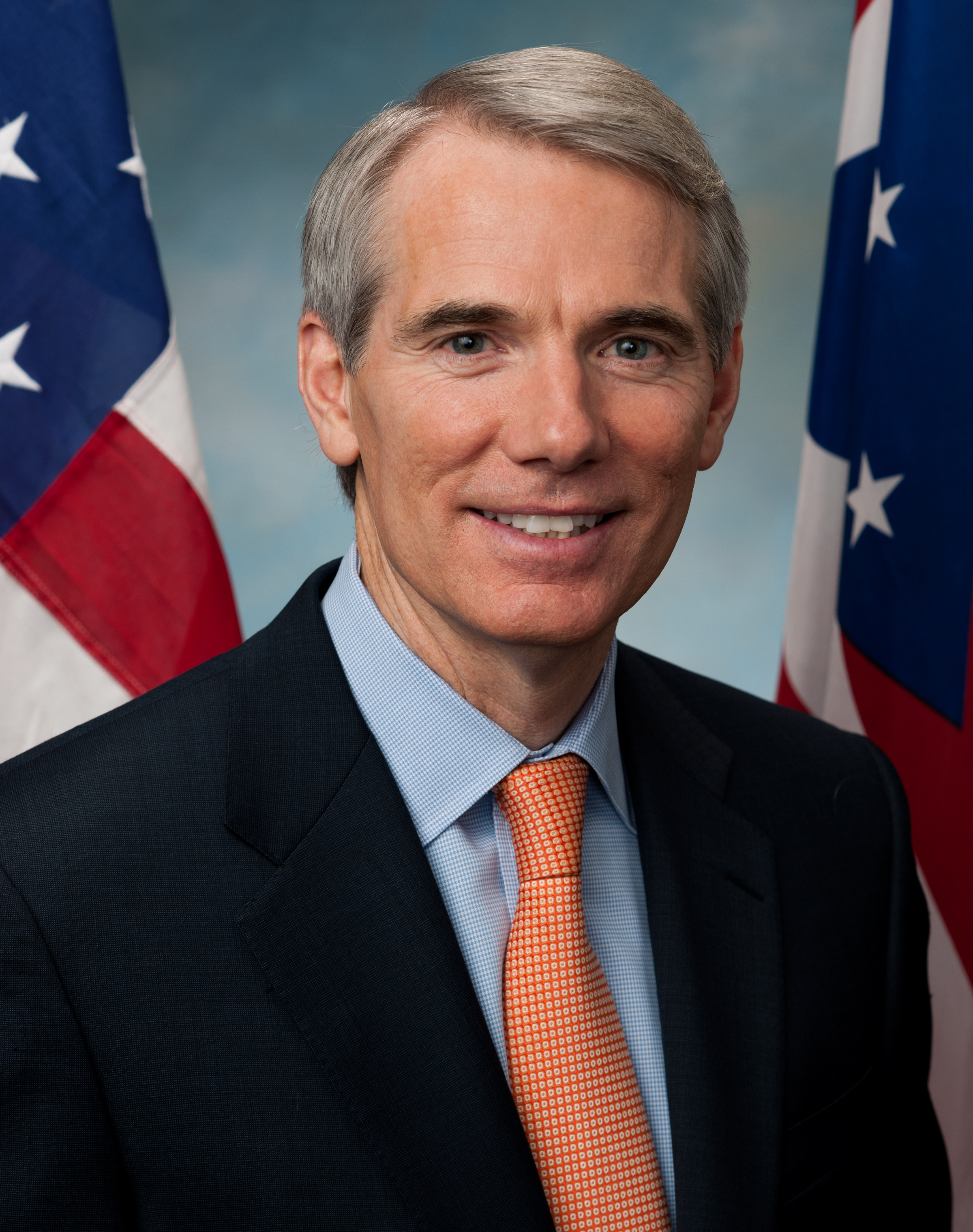
Sen. Portman will vote to defund Obamacare


Gongwer is reporting that Sen. Rob Portman will vote to keep the defunding of Obamacare in the Continuing Resolution before the Senate.

Gongwer is a subscription news service so the link may not work without a subscription.

Here is their report:

U.S. Sen. Rob Portman (R-Terrace Park) said Thursday he would vote to keep as part of the continuing resolution a provision that would defund the Affordable Care Act.

The Republican also said he planned to reintroduce as an amendment his "End Government Shutdowns Act."

The CR that would keep the government running beyond the end of the fiscal year Sept. 30 is in the hands of the Senate, having left the House not only with appropriations moving forward but with language that would strip financial support from the health care law. The Democratic-controlled Senate is expected to vote to remove the language.

"I think it's important for us to vote to repeal and replace Obamacare and defunding is the way to do it in this legislation," Sen. Portman said during a conference call with reporters. "I hope there are enough Democrat senators who are listening to their constituents and will use this opportunity to reverse a policy that's driving up costs in Ohio, hurting working families, forcing a bunch of Ohioans to lose their doctors, others to lose their jobs."

Mr. Portman said he does not support pairing defunding the ACA with the threat of government shutdown. "What I do support is defunding Obamacare; in fact I support replacing it with better policies."

If the defunding measure is removed from the resolution, the senator said his vote on the CR will depend on what else is in it.
On the whole, however, the senator said continuing resolutions are a poor way of governing. Only one of the past 48 appropriations bills to come before the Senate has passed before the Oct. 1 deadline under Democratic leadership.

Tuesday, September 24, 2013

How much will Obamacare raise your health insurance premium?


I wanted to share this Independent Journal national map which shows the projected insurance rate increases under the Affordable Care Act, commonly referred to as Obamacare. This isn't a partisan map. It's produced from numbers crunched by the Society of Actuaries.

From the SOA website:

What is an Actuary?

An actuary is a business professional who analyzes the financial consequences of risk. Actuaries use mathematics, statistics and financial theory to study uncertain future events, especially those of concern to insurance and pension programs. They evaluate the likelihood of those events, design creative ways to reduce the likelihood and decrease the impact of adverse events that actually do occur.

SOA members work in life insurance, retirement systems, health benefit systems, financial and investment management and other emerging areas of practice. The majority of actuaries work within the insurance industry, although a growing number of actuaries work in other fields.

Their study reports the cause for the increases:

Taken together, the study predicts that shifts of currently insured people from high-risk pools, the employer market, and previously uninsured persons who must pay most or all the cost of coverage to the individual market, will overwhelm the expected lower costs anticipated by the influx of newly-insured persons in the exchanges receiving federal benefit and premium subsidies. As a result, the underlying claims cost of insurance in the individual market will increase by an average of 32 percent nationally, when compared to what it would have been without the reform law.

Note that Ohio is showing an 80% increase - the highest in the nation. They explain this for us:

“In simplest terms, the states that will see large increases generally have low current individual costs and those showing decreases have high current individual costs, with all states moving closer together but at a higher level overall,” Bohn added.

In some cases, the model projects that currently low-cost states, such as Ohio and Wisconsin, could see increases of 80 percent, while other currently high-costs states, such as New York and Massachusetts, may see double-digit decreases.

So with this - and the rest of the information that's been discovered now that the bill has passed - it's no wonder so many Americans are opposed to it. Defunding Obamacare is being debated as part of the continuing resolution to fund the operations of the federal government. You should call your members of Congress and let them know:

We really can't afford this.

Thursday, September 12, 2013

AFL-CIO: Obamacare 'highly disruptive' to union health plans


The AFL-CIO is holding their national convention this week and they have approved a resolution that says the Affordable Care Act, also known as Obamacare, is being implemented in way that is "highly disruptive" to union health care plans.

At issue is how the regulations impact union-sponsored health plans. They also want the subsidizes for low-income workers who enroll in the exchanges to be available to low-income union members who participate in union-sponsored health plans.

Here is one report from Fox News:

The AFL-CIO approved a resolution saying that President Obama's health care overhaul will drive up the costs of union-sponsored health plans to the point that workers and employers are forced to abandon them.

In a strongly worded resolution released Wednesday, the federation said that labor unions still support the Affordable Care Act's overall goals of reducing health costs and bringing coverage to all Americans, but added that the law is being implemented in a way that is "highly disruptive" to union health care plans.

Some individual unions have complained about the law's impact for months, but the resolution marks the first time the nation's largest labor federation has gone on record embracing that view. Unions were among the most enthusiastic backers of the law when it passed in 2010.

A labor official told The Associated Press that White House officials had been calling labor leaders for days to urge them not to voice their concerns in the form of a resolution. The official, who wasn't authorized to discuss the conversations publicly and requested anonymity, said many union leaders insisted that they wanted to highlight their concerns.

Continue reading...

And here is the AFL-CIO post on the resolution where they identify it as calling for "fixes" in the act.

Monday, August 26, 2013

Guest Post - Oops! A whopping $47B Obamacare-Medicaid expansion error for Ohio


Opportunity Ohio found a whopping error in the recent claims that expanding Medicaid in Ohio would save us money. Aside from the fact that adding more people into a program cannot possibly result in less cost, the key is capping the rates. But what if we cap the rates and don't expand Medicaid?

As the Bard says, "Aye, there's the rub."

Here's the text of the report. For the full details, including footnotes, go here.


A number of individuals have falsely characterized a recent PowerPoint presentation given to the Ohio Senate Finance Committee’s Medicaid Subcommittee by the Health Policy Institute of Ohio (HPIO).

The Columbus Dispatch flashed a headline that erroneously claims the presentation proved “Medicaid expansion would cost Ohio less than doing nothing.” The Dispatch’s editorial board followed up by asserting that the presentation proved that expanding Medicaid would “save the state money in the long term.” The Columbus Business First reported that the presentation showed that “Ohio could actually save by expanding Medicaid.” These headlines and reports would have Ohioans believe expanding one of the largest and fastest-growing line items in the state budget can reduce spending. But this is not what the HPIO actually found.

The authors created three different scenarios. In the first scenario, Ohio does not expand Medicaid and the program grows at 7.2 percent annually, what HPIO reports as the average annual growth rate since 2004. It should be noted that in a report released earlier this year, HPIO expected future Medicaid growth to average 5.6 percent per year without expansion, based on Ohio’s most recent actuarial analysis of Medicaid. It does not explain why it now assumes 7.2 percent growth as the baseline (without expansion) moving forward.

In the second scenario, Ohio caps its annual Medicaid spending growth at 5 percent and also expands Medicaid eligibility. In the final scenario, Ohio caps its annual Medicaid spending growth at 4.5 percent while also expanding Medicaid eligibility. Capping Medicaid spending growth is not related to expanding Medicaid eligibility. If Ohio wished to impose such a cap, it could do so without expanding Medicaid. The only valid comparison is one in which the only changing variable is whether or not the state expands Medicaid eligibility.

For example, the presentation asserts that by capping annual Medicaid spending growth at 5 percent, Ohio can expand Medicaid and still save $2 billion between now and 2025, when compared to 7.2 percent annual growth. But, using that same data, Ohio could save more than $48 billion during the same time period by capping annual growth at 5 percent and not expanding Medicaid eligibility. So, when using an honest comparison, Medicaid expansion will actually increase taxpayers’ costs by $46 billion, even if the state is able to aggressively reduce annual growth.

Choosing not to provide any specific recommendations to reduce the annual growth in Medicaid, HPIO instead provides a listing of possible new revenues to offset higher costs. Of course, increasing revenues does not lower spending. But even at the assumed lower annual growth rates, Medicaid spending would still double within the next 15 years. For comparison, the U.S. economy is expected to grow only 4.9 percent during the next decade. Ohio can expect to see slower growth, as the U.S. economy has historically grown 1.5 times as fast as Ohio’s economy.  If this trend continues, Ohio’s economy will grow by just 3.3 percent during the next decade. The Ohio Department of Development also expects Ohio’s economy to grow slower than the national average in the coming years.

This means Medicaid will continue to consume more and more funding, crowding out resources for other state priorities, even under the HPIO’s assumed lower Medicaid growth rates. Worse yet, the HPIO spending projections are based on the same flawed designs highlighted in a  Foundation for Government Accountability-Opportunity Ohio report published earlier this year. For example, HPIO uses Medicaid managed care rates for current adult enrollees to estimate the costs of covering newly-eligible individuals. However, evidence from states that previously expanded Medicaid eligibility to cover working-age adults without children found this population to be much more expensive to cover than parents. Additional research published by the federal Centers for Medicare and Medicaid Services found that costs were an average of 60 percent higher to provide the same benefits package to childless adults as they were for low- income parents.

HPIO flawed analysis is also evident in its assumption that just 58 percent of all newly-eligible individuals will sign up for Medicaid after expansion. Even among the uninsured, HPIO assumes just 70 percent of newly-eligible individuals will enroll. These are much lower than other projections of participation, including projections by actuaries at the Centers for Medicare and Medicaid Services. States that have previously expanded Medicaid to cover working-age adults without children also relied on projections similar to those given by HPIO.  Those states experienced participation rates that far exceeded what was initially expected.

The HPIO presentation given to the Medicaid Subcommittee adds very little to the debate over Medicaid expansion in Ohio. It recycles old projections based upon faulty assumptions. The only “new” material is the conclusion that capping the annual growth in Medicaid spending will reduce total Medicaid spending, but this has no relevance to the debate at hand. Such a cap has nothing to do with Medicaid expansion, and conflating the two is intellectually dishonest. When comparing apples to apples, where the only changing variable is whether or not the state expands Medicaid, the only valid and fact-based conclusion is that Medicaid expansion will cost taxpayers much more.”

Monday, August 12, 2013

AFP-Ohio says Rep. Sears and Pres. Obama are the same when it comes to Medicaid expansion


Press release from Americans for Prosperity - Ohio:

Americans for Prosperity-Ohio: No Difference Between Rep. Sears’ and President Obama on Medicaid Expansion 

COLUMBUS - Americans for Prosperity – Ohio is expressing their strong opposition to proposed legislation aimed at expanding Medicaid in the state of Ohio.  According to a recent Columbus Dispatch story, Rep. Barbara Sears (R-47) plans to introduce roughly a dozen Medicaid bills in the next few weeks with the end-goal of expanding Medicaid in the state.  The expansion of Medicaid is made possible through Obamacare.

“Rep. Sears and President Obama are both calling for the expansion of the Medicaid system.  How many blank checks and empty promises are we going to allow Washington to pass onto the states before we stop falling for it?,” said Eli Miller, State Director of Americans for Prosperity – Ohio. “The federal government can barely meet its current financial obligations.  We cannot allow Ohio families and businesses to be left holding the bag when, not if, the federal government realizes they cannot meet the financial obligations promised surrounding Medicaid expansion.”

According to the Columbus Dispatch story, Medicaid expansion legislation would need to pass the Ohio General Assembly in October of this year so that enrollment could begin in January 2014.

“At a time when even the Obama Administration is essentially admitting defeat by delaying key provisions of Obamacare, Rep. Sears should not recklessly and irresponsibly tie our state’s finances and the physical health and well-being of our most vulnerable citizens to this eventual disaster,” continued Miller. “We call on all members of the Ohio General Assembly to support Ohio families, stand up for fiscal responsibility, and oppose Rep. Sears and President Obama’s Medicaid expansion.”


Americans for Prosperity (AFP) is a nationwide organization of citizen-leaders committed to advancing every individual’s right to economic freedom and opportunity. AFP believes reducing the size and intrusiveness of government is the best way to promote individual productivity and prosperity for all Americans.  For more information, visit www.americansforprosperity.org
###

Friday, August 02, 2013

Ohio insurance rates to increase 41 percent due to Obamacare; subsidies may not help


Here's the latest from the Ohio Department of Insurance:

Health Insurance Premiums to Increase 41 Percent Due to Affordable Care Act

Premiums for Federal Exchange Show Higher Costs for Ohio Consumers and Small Businesses


COLUMBUS — The Ohio Department of Insurance announced today that individual consumers buying health insurance on the federal government's health insurance exchange for Ohio will pay an average of 41 percent more than they did in 2013.

In addition, ODI confirmed previously-released preliminary calculations that insurance companies’ costs to provide individual health coverage will increase by 83 percent.

“Ohio has traditionally had a more competitive health insurance market than other states with a wider range of prices and choices – from simple, high deductible coverage to comprehensive, full service plans,” Lieutenant Governor Mary Taylor said. “That level of diversity is essentially outlawed under Obamacare so Ohio's rates and premiums are going up significantly, and going up more than in other states where prices were already high.”

Wonderful.

So Ohioans had a wide diversity of options and costs and with Obamacare, that much diversity is 'essentially outlawed'???

Did anyone who voted for and supported the Affordable Care Act really think about the implications?

Oh - wait - they had to pass to it to know what was in it. Even Congress doesn't like what it sees in the law and the IRS chief, charged with enforcing it, doesn't like it either.

For individuals plans in Ohio, the average cost is $236.29 per month. That cost will increase to $332.58 in 2014 due to the provisions of the Act.

The ACA is actually driving rates across the country closer together, the press release notes. Since Ohio had lower costs to begin with, we're seeing rate increases that are higher than other states, while some states with higher costs are seeing steady or even lower rates. Since the ACA is really a one-size-fits-all approach, Ohioans are also seeing fewer options when it comes to type of insurance because of the minimum level of coverage mandated by the federal law.

The states were supposed to be the place where innovations and 'experiments' could be tried. If a state was successful with an idea, other states could duplicate it. Conversely, they could avoid failures after seeing them elsewhere. Our federal government was never designed to be this involved in such affairs and the results, perhaps good for some, are very costly for Ohio.

Benjamin Franklin said:

"History affords us many instances of the ruin of states, by the prosecution of measures ill suited to the temper and genius of their people. The ordaining of laws in favor of one part of the nation, to the prejudice and oppression of another, is certainly the most erroneous and mistaken policy. An equal dispensation of protection, rights, privileges, and advantages, is what every part is entitled to, and ought to enjoy... These measures never fail to create great and violent jealousies and animosities between the people favored and the people oppressed; whence a total separation of affections, interests, political obligations, and all manner of connections, by which the whole state is weakened."

Apparently, our federal government took that as a prescription and not a warning when it came to Obamacare...

Photo from NetrootsNation.org
Interestingly, I received an email from ProgressOhio about the latest estimate which said:

** This statement can be attributed in whole or in part to Brian Rothenberg, Executive Director, ProgressOhio.

"It goes against the trends seen in big states and doesn’t include the discounts created by the subsidies. Announcing them without the subsidies is cynical because that’s not how people are going to buy insurance. If the goal is to enroll people, announcing rates without examples of subsidies makes no sense.

It’s not surprising that this is how Republican Lt. Gov. Mary Taylor would handle this. Her well known hatred for the Affordable Care Act is causing her to take an action as the state's insurance commissioner that hurts the people of Ohio. She shouldn’t announce rates without illustrating what that means for real people benefiting from tax credits that can be substantial in some moderate income categories."

It raises a good point about including the offset due to expected subsidies, but it misses the bigger picture regarding the basic concept that taxpayers are seeing increased rates while at the same time paying for others to have those higher rates subsidized.

And the subsidies might not be there for Ohioans.

According to this article in the Washington Free Beacon, the legality of the subsidies is being challenged.

As the article explains, the subsidies were part of the deal for the states to set up exchanges.

The law says that the government can provide subsidies for insurance sold on an “Exchange established by the state.” Thirty-four states have refused to set up their own exchanges, leaving the federal government set them instead.

The Obama administration maintains that the subsidies can be applied to a federal exchange as well, though some legal experts and Republicans in Congress say that's outside the scope of the law.

“When Congress passed the health care act, they presented states a choice,” (Oklahoma Attorney General Scott) Pruitt told the congressmen. “That choice was to establish a state health care exchange or to opt for a federal exchange. The ACA included with that choice a set of consequences and benefits.”

If states opted to create an exchange themselves, then their citizens would receive federal subsidies to buy insurance on the exchange, but employers would also be subject to fines for not offering affordable health insurance, Pruitt argued. However, if they opted against the exchange, they would not receive subsidies and employers would not be subject to fines.

Pruitt has launched a lawsuit against the administration arguing that they do not have the power to offer the subsidies on federally run exchanges. Experts predict that Oklahoma’s lawsuit, if successful, could fatally cripple the law.

Since Ohio did not set up its own exchange, defaulting to the federal one, residents may not see any subsidies if the lawsuit is successful.

Of course, states will then be criticized as being evil, uncaring and 'responsible for deaths' along with all sorts of terrible things for not wanting their residents to have that handout. But if it could "fatally cripple the law," Ohioans would benefit by not having such huge increases in insurance rates while maintaining a large diversity of plan options and costs.

The problem is that no one in Congress writing this law could have the depth of knowledge to re-design an insurance program/health care coverage that will fit the needs of so many people. This is where a free market comes into play.

In a 'free' market, entrepreneurs can create a product or service that fits the needs of some, while not needing to fit the needs of all. Ohio is a good example with our current variety of options that fit a multitude of needs and budgets.

With the federal government, they've decided what everyone must have (forced it upon us, actually) and then told us we'll have to pay for it, even if we don't need or want it.

Well-baby care is an example. My husband and I don't have kids and have no need for well-baby care which includes office visits, immunizations, etc... But that coverage is mandated by the ACA and the state of Ohio. So I'm paying for a portion of insurance that I don't need and will never use. A 'free' market, would give me the option to have a plan that didn't include that at, hopefully, a lesser cost than one that did.

Another example is young people who are generally healthy and don't need a full-service comprehensive plan. In a 'free' market, they could choose something like the old 80-20 insurance plans where routine doctor visits were not covered, but hospital bills for emergencies, injuries or serious illness were covered at 80%.

The Affordable Care Act - Obamacare - has removed those options from us, forcing us to have to what a bunch of bureaucrats in D.C. *think* we need. There is no way they can ever meet individual wants and needs the way a free market does so we are all forced into the one-size-fits-all mandate - and you and I will pay more as a result.

Wednesday, July 10, 2013

Kasich, new TV ads, Obamacare and Medicaid expansion in Ohio


Despite the fact that it's summer when political things usually slow down, there's a lot of activity going on when it comes to Medicaid and Obamacare...

At a rally yesterday in Columbus, Ohio Gov. John Kasich continued his push for an expansion of Medicaid and enrolling up to 366,000 new members by the end of the year.

The General Assembly rejected this expansion as part of the state's two-year budget which they passed last month.

Jason Hart at MediaTrackers has good coverage of the event starting with:

Governor John Kasich stuck to his practiced Medicaid expansion pitch – a mix of progressive pseudo-Christianity and outright falsehoods about the program’s funding – during a speech at a July 9 Statehouse rally for socialized medicine.

As his administration has done for months, the Republican governor conflated Medicaid coverage with “health care,” though 28 percent of Ohio’s office-based physicians were already refusing new Medicaid patients in 2011 and a recent study found that Medicaid coverage does not improve physical health.

Americans for Prosperity - Ohio, one of the leading critics of expanding the state's Medicaid rolls (as allowed under law), argues that expanding Medicaid rolls will push thousands of low-income Ohioans into a shoddy system at enormous cost.

"AFP will continue to educate Ohioans about the problems with Medicaid expansion. Ohioans need more health care choices, not more sub-par, bureaucrat-controlled health care and higher taxes," Eli Miller, State Director of AFP-Ohio, said.

Also yesterday, in conjunction with the AFP-Ohio efforts, broadcast and cable networks in Ohio started airing a new ad from Americans for Prosperity. The goal of the ad is to "expose the major problems with the Pres. Obama's health care law, the Affordable Care Act also known as Obamacare."

It's called “Questions,” and features the story of Julie, a mother of two who started paying close attention to her family’s health care options after her son began having seizures. The threat of shrinking options, higher premiums, and Washington bureaucrats making health care decisions leaves her with serious concerns about ObamaCare.


"The American people have serious questions and concerns about the negative impact of ObamaCare," Miller said."Ohioans are waking up to higher premiums and fewer choices, but are being told by President Obama and outside groups that everything is just fine. Well President Obama, everything isn't just fine. We feel it is important to educate Ohioans on the true consequences of government intrusion into the private health care decisions of families."

AFP-OH and state chapters across the nation plan to host events and meet-ups to further educate and provide information on the negative consequences of ObamaCare.

AFP describes itself as "a nationwide organization of citizen-leaders committed to advancing every individual’s right to economic freedom and opportunity. AFP believes reducing the size and intrusiveness of government is the best way to promote individual productivity and prosperity for all Americans."

The AFP ad competes with a national buy from the pro-Obama Organizing for Action, though both groups say the timing is coincidental.

Called "Better Coverage," the OFA ad features Stacey Lihn, who is also a young mom, and focuses on the Obamacare provision that eliminates a lifetime cap on benefits. “Thanks to Obamacare, we can now afford the care that Zoe needs. And for her, that’s a lifesaver,” she says.


Both ads are going after a key demographic in the health care debate, as this quote from a 2010 Time article explains:

Women make the primary health care decisions in two-thirds of American households. They account for 80 cents out of every dollar spent in drugstores and are likelier than men to choose the family's health insurance. Even when both parents work, wives shoulder 75% of domestic responsibilities, including making the kids' doctor appointments and getting them there on time. "Women are the main brokers of health care in the United States," says Dr. William Norcross, a family physician and faculty member at the University of California, San Diego, School of Medicine. "This has long been the case and is probably true elsewhere in the world too."

But be ready, Ohio, because the push for Ohio to expand the Medicaid program and the ad wars on Obamacare are just getting started.

Thursday, June 27, 2013

Bill to put Ohio into multi-state health care compact introduced


Press release received today via email:

Reps. Retherford and Boose Introduce Health Care Compact Legislation

Proposal will give Ohio more control over costs and health care outcomes


COLUMBUS—State Representatives Wes Retherford (R-Hamilton) and Terry Boose (R-Norwalk) recently introduced legislation that would enter Ohio into a multi-state health care compact.

Rep. Mark Romanchuk, Rep. John Becker,
Rep. Wes Retherford, Rep. Terry Boose
A multi-state health care compact would allow Ohio to have full control over the federal health care dollars spent within the state, which in Ohio alone would equate to $35 billion annually. Additionally, states within the compact have the authority to craft their own health care systems and regulations to best suit their individual needs, rather than relying on centralized control by the federal government.

“Entering into an interstate health care compact would have tremendous long-term benefits for the state of Ohio,” said Rep. Retherford. “It will allow us to retain local control over tax dollars and help us to reduce waste, increase efficiency and provide better health outcomes for our citizens.”

“We need to allow our health care system the flexibility to provide sustainable, quality health care for Ohioans,” said Rep. Boose. “With health care decisions made at the state level rather than by unaccountable, distant federal bureaucrats, Ohio could tailor its own systems to address its needs.”

Eight states have passed health care compact legislation. The compact would go into effect with the approval of the U.S. Congress.

The legislation will be designated a bill number and assigned to a House committee in the near future.

-30-

Wednesday, May 22, 2013

Is new Sears bill another version of the Obamacare Medicaid expansion for Ohio?


I'll admit to not being an expert on the Medicaid expansion that Gov. John Kasich proposed for Ohio - as part of Affordable Care Act, also known as Obamacare - but this new bill introduced by Rep. Barbara Sears sure sounds a lot like it.

The House, after significant public pressure from conservatives and tea party groups, removed the Medicaid expansion from the budget bill (H.B. 59) earlier in the year. Rep. Sears was extensively criticized for her role in pushing the expansion and for what some considered was a violation of the Health Care Freedom Amendment overwhelmingly passed by Ohioans. She responded to those allegations, saying she did, in fact, support the Health Care Freedom Amendment, though she believed a pending bill would conflict with that amendment.

Speaker Bill Batchelder told reporters that a bill separate from the budget could be passed by the House before the end of June.

The press release below details some of the provisions of her legislation:

Rep. Sears Introduces Medicaid Reform Legislation

COLUMBUS—Today, State Representative Barbara Sears (R- Monclova Township) introduced legislation requiring the Director of Medical Assistance to implement Medicaid reforms that will identify ways to lower costs, reduce uncompensated care, and extend coverage to Ohio’s most vulnerable citizens.

The legislation would extend coverage to Ohioans under 138% of the federal poverty level and will provide critical health care services to Ohio’s poorest citizens. New enrollees in the Medicaid program will be fully funded by the federal government for the first three years. The bill provides protections for Ohio should the federal assistance percentage decrease below the specified amount after the third year.

Additional provisions of this legislation include encouraging personal responsibility through cost sharing, promoting employment-related services, and ensuring those who abuse narcotics receive proper treatment.

“Ohio’s Medicaid system has made substantial improvements over the past few years and this legislation furthers that effort,” Rep. Sears said. “By providing a ladder up and out of poverty through quality care, we are allowing for citizens to achieve greater self sufficiency and creating a healthier Ohio.”

The bill also includes requiring the Medicaid director to present a report to the General Assembly on the progress being made and specifies that the Joint Legislative Committee on Medicaid Technology and Reform consider and review the reforms implemented by this legislation.

-30-

The bill will be assigned a number Tuesday, but here is a link to the language submitted, as provided by her office.

Tuesday, May 14, 2013

IRS - Tea Party scandal timeline or deleted scenes from Idiocracy?


ABC News has obtained a (leaked) copy of a timeline created for the Inspector General report on the IRS - Tea Party scandal. It's more than just a documentation of the actions taken to target tea party/patriot/conservative groups for screening before giving them tax-exempt status. It's a damning indictment of the bureaucracy of this massive government agency that has control over all Americans.

As the introduction to Appendix VII says:

"The following chart illustrates a timeline of events from Redacted through July 2012 involving the identification and processing of potential political cases. It shows that there was confusion about how to process the applications, delays in the processing of the applications, and a lack of management oversight and guidance."

The timeline references multiple acting managers, replacement of managers and supervisors, changes in personnel over a two-year period of time. What the timeline doesn't indicate is if these changes were normal movements of personnel or if they were a result of the lack of progress on reviewing the cases.

It gets a bit confusing with the titles and departments, but basically, a Determinations Unit, a Technical Unit, Rulings and Agreement, lawyers and directors were all involved. It appears the Determinations Unit asked numerous times for guidance and direction from the Technical Unit. As the issue began to get public attention, the internal actions escalated.

If you look at the September - October 2011 entries you'll see the Determinations Unit asked the Technical Unit to 'triage' the cases to see what actions the Determinations Unit should take. They did and sent back a spreadsheet. But the Determinations Unit, which was looking for a recommendation about whether to close or further develop the cases, had no idea what to do with the information on the spreadsheet because it didn't answer the question. So back to the Technical Unit they went.

By November, they all decided that "the guidance developed would not work in its present form – it was “too lawyerly” to be
useful and needed the Determinations Unit input."


Then there was this on Feb. 29, 2012 (emphasis mine):

The Director, EO, stopped any more additional information request letters from being issued on advocacy cases until new guidance was provided to the Determinations Unit. In addition, the Acting Director, Rulings and Agreements, discussed with the Determinations Unit Program Manager, about having specialists print out website information and asking the organizations to verify the information instead of asking for applicants to print out the website information.

Yes, you read that correctly. They had to tell the specialists to go to their computers, print out information from the groups' websites and then verify the information rather than mail a request asking the groups to print out their website information and mail it back to the IRS.

I had plenty to say about this in February 2012 when I first reported on the Ohio Liberty Coalition's own experience with the IRS. I especially took issue with the demand that this tea-party group predict the future.

Isn't that something you'd expect to see in the movie, Idiocracy?

In the end, it took almost the full two years to get instructions and directions clear so that the Determinations Unit, charged with actually deciding if the various applications met the proper criteria, could actually determine if the applications should be approved or denied.

Even without the "lack of oversight and guidance," how in the world did we let any agency get so big - or laws so complicated - that it takes two years just to decide something like this???

And remember - this is the taxation agency, something I'm certain our founders would never have envisioned when they used the rallying cry of 'no taxation without representation.'

And if that's not scary enough, this is the same agency that's going to oversee your compliance with Obamacare.

Thursday, April 25, 2013

Congress exempt from Obamacare? There ought to be a law!


What's good for the goose is good for the gander.

You've heard the phrase and know what it means.

But Congress doesn't.

Politico is reporting:

Congressional leaders in both parties are engaged in high-level, confidential talks about exempting lawmakers and Capitol Hill aides from the insurance exchanges they are mandated to join as part of President Barack Obama’s health care overhaul, sources in both parties said.

The talks — which involve Senate Majority Leader Harry Reid (D-Nev.), House Speaker John Boehner (R-Ohio), the Obama administration and other top lawmakers — are extraordinarily sensitive, with both sides acutely aware of the potential for political fallout from giving carve-outs from the hugely controversial law to 535 lawmakers and thousands of their aides. Discussions have stretched out for months, sources said.

A source close to the talks says: “Everyone has to hold hands on this and jump, or nothing is going to get done.”
Yet if Capitol Hill leaders move forward with the plan, they risk being dubbed hypocrites by their political rivals and the American public. By removing themselves from a key Obamacare component, lawmakers and aides would be held to a different standard than the people who put them in office.

But what to do about this?

Erick Erickson at RedState.com says:

If this happens, the nation needs to collectively march on Washington, DC, burn it to the ground, and spread salt over the ground.

Normally, I'm not one for calling for a new law whenever a problem exists, but clearly this is an exception.

There's already a push for a 28th Amendment:

“Congress shall make no law that applies to the citizens of the United States that does not apply equally to the Senators and/or Representatives; and, Congress shall make no law that applies to the Senators and/or Representatives that does not apply equally to the citizens of the United States”.

But I'd go a step further: whenever Congress passes and the administration implements a new law, it must first be applied to members of Congress, the administration and the federal government for a period of three years before it is applied to the public at large.

Don't you think that if they had to live with the mess they create, they'd quickly repeal bad laws and provisions?

Maybe not, but it would definitely be a learning experience.

The only problem is that no such law or provision will ever be passed by people who are already discussing ways to exempt themselves from Obamacare.

Maybe Erickson is right...where's my salt?

Tuesday, April 16, 2013

Quote of the Day - a lesson on government vs. private charity


Perhaps Gov. John Kasich should pay attention to this, especially when he thinks expanding Medicaid is the 'charitable' thing to do...

"We are all doubtless bound to contribute a certain portion of our income to the support of charitable and other useful public institutions. But it is a part of our duty also to apply our contributions in the most effectual way we can to secure this object. The question then is whether this will not be better done by each of us appropriating our whole contribution to the institutions within our reach, under our own eye, and over which we can exercise some useful control? Or would it be better that each should divide the sum he can spare among all the institutions of his State or the United States? Reason and the interest of these institutions themselves, certainly decide in favor of the former practice." ~ Thomas Jefferson

Thursday, March 28, 2013

Rep. Sears responds to claim that she's helping to implement Obamacare in Ohio


This past week Rep. Barbara Sears was accused of supporting the Affordable Care Act (also known as Obamacare) and opposing Ohio's Healthcare Freedom Act.

An article appearing at RedState.com and FreedomWorks.org also called into question her motivations, stating:

"Not only has she received a substantial amount of financial contributions from the health care industry, she currently works at a health insurance provider and recently passed her own bill which helps implement Obamacare."

I noted that the article did not quote her, nor did it say that she failed to respond to a request for comment. So I contacted her and asked her to respond.

Below is her response, as sent to me, though I have modified the formatting to make it easier to read.

It is always important to get both sides before making a decision and this response allows you to do just that. I understand Rep. Sears is also scheduled to be a guest with Fred LeFebvre on 1370 WSPD tomorrow morning.

From Rep. Sears:

The following are my thoughts regarding several issues discussed in Breeanne Howe’s article. First, it’s always disappointing when someone chooses to make inferences both personal and professional without taking the time to look at facts or do even the minimum amount of research.

I appreciate that you reached out to me for some background. I have tried to summarize my comments in order of the article not to infer that the article is remotely creditable but to simply to review and comment process.

HB 91(Young – Thompson)

I am supportive of our constitutional Healthcare Freedom Amendment as passed by Ohioans. In fact, Representative Maag and I sponsored HJR2 in the 129th General Assembly which was the Healthcare Freedom resolution; the Senate companion resolution SJR 5 which was the vehicle that passed the Senate and failed in the House by 1 vote (it received 59 and needed 60) prior to the Citizens initiated Healthcare Freedom Amendment reaching the ballot.

The same provisions that were added to protect our private marketplace and passed overwhelmingly by Ohioans make HB 91 unworkable in my opinion.

Below is a summary of my thoughts regarding the interaction of HB 91 and our Constitutional amendment – Healthcare Freedom Act. It seems illogical to push legislation that would work towards the destruction of our private healthcare marketplace. I have yet to hear a workable argument that suggests that HB 91 doesn’t violate our Constitution.

From HB 91

Sec. 3964.02. (A) A health insurance issuer operating in this state shall not accept any remuneration, credit, or subsidy, as described in 42 U.S.C. 18082, that may result in the imposition of penalties against any employer or individual in this state.

(B) If a health insurance issuer violates division (A) of this section, the issuer's license to issue new business in the state shall be suspended immediately and until such time as the issuer represents it has returned that remuneration, credit, or subsidy to its source and will decline any such future remuneration, credit, or subsidy. Such suspensions shall not be construed as impairing the right of contract or the right to continue or renew existing business in the state.

I believe that if we pass HB 91, we violate Section 21(b) and Section 21(c) of the Healthcare Freedom Amendment.

To put this into practical terms, if a carrier were to accept funding under the terms outlined in the PPACA, it is possible that an employer could be penalized. How could this happen?

The PPACA requires that:

1. If an employer with more than 50 fulltime equivalent employees, who does not offers health insurance coverage and has at least one employee who receives a premium tax credit or cost sharing subsidy in the exchange, the employer would then be subject to a penalty for not offering coverage. The penalty is $2,000 annually times the number of full-time employees minus 30 in the first year, and grows annually.

2. If an employer with more than 50 fulltime equivalent employees offers health insurance that does not cover at least 60% of typical health care expenses and an employee chooses to buy on the Exchange and receive a premium tax credit, the employer would then be subject to a penalty for not offering affordable coverage. The penalty is $3,000 for each fulltime employee receiving a tax credit up to $2,000 annually times the number of full-time employees minus 30 in the first year, and grows annually.

3. If an employer with more than 50 fulltime equivalent employees offers health insurance with any employee paying more than 9.5% of family income for the employer coverage and an employee chooses to buy on the Exchange and receive a premium tax credit, the employer would then be subject to a penalty for not offering affordable coverage. The penalty is $3,000 for each fulltime employee receiving a tax credit up to $2,000 annually times the number of full-time employees minus 30 in the first year, and grows annually.

If any employer is put in a position “that may result in the imposition of penalties against any employer or individual in this state.” “[T]he issuer’s license to issue new business in the state shall be suspended immediately” (HB 91-130).

The issuer can renew policies but shall be prohibited from the sale of health insurance and Ohioans will be prohibited to purchase health insurance through the carrier. (HB 91-130)

The Healthcare Freedom Constitutional Amendment passed by 66% of Ohio and in all 88 counties in Ohio states:

• Section 21 (A) No federal, state, or local law or rule shall compel, directly or indirectly, any person, employer, or health care provider to participate in a health care system.
• Section 21 (B) No federal, state, or local law or rule shall prohibit the purchase or sale of health care or health insurance.
• Section 21 (C) No federal, state, or local law or rule shall impose a penalty or fine for the sale or purchase of health care or health insurance.

Section 21 (E) (3) “Penalty or fine” means any civil or criminal penalty or fine, tax, salary or wage withholding or surcharge or any named fee established by law or rule by a government established, created, or controlled agency that is used to punish or discourage the exercise of rights protected under this section.”

I could suggest that if we pass HB 91, then we violate Section 21(b) and Section 21(c) in that we will be prohibiting both the sale of health insurance and an individual’s right to purchase health insurance by imposing law and rules that would be specifically used to punish a carrier should they accept any remuneration, credit, or subsidy as provided in the PPACA.

I appreciate the effort to find an appropriate way to protect our healthcare freedom and our private marketplace. However I believe that HB 91 does not get that accomplished no matter how some would like to characterize the interaction of HB 91 with the Healthcare Freedom Constitutional Amendment.

HB 3(Sears)

This is what the PPACA says about the role of a Navigator:

NAVIGATORS.—
(1) IN GENERAL.—An Exchange shall establish a program under which it awards grants to entities described in paragraph (2) to carry out the duties described in paragraph (3).

(2) ELIGIBILITY.—
(A) IN GENERAL.—To be eligible to receive a grant under paragraph (1), an entity shall demonstrate to the Exchange involved that the entity has existing relationships, or could readily establish relationships, with employers and employees, consumers (including uninsured and underinsured consumers), or self-employed individuals likely to be qualified to enroll in a qualified health plan.

(B) TYPES.—Entities described in subparagraph (A) may include trade, industry, and professional associations, commercial fishing industry organizations, ranching and farming organizations, community and consumer-focused nonprofit groups, chambers of commerce, unions, small business development centers, other licensed insurance agents and brokers, and other entities that—
(i) are capable of carrying out the duties described in paragraph (3);
(ii) meet the standards described in paragraph (4); and
(iii) provide information consistent with the standards developed under paragraph (5).

(3) DUTIES.—An entity that serves as a navigator under a grant under this subsection shall—
(A) conduct public education activities to raise awareness of the availability of qualified health plans;
(B) distribute fair and impartial information concerning enrollment in qualified health plans, and the availability of premium tax credits under section 36B of the Internal Revenue Code of 1986 and cost-sharing reductions under section 1402;
(C) facilitate enrollment in qualified health plans;
(D) provide referrals to any applicable office of health insurance consumer assistance or health insurance ombudsman established under section 2793 of the Public Health Service Act, or any other appropriate State agency or agencies, for any enrollee with a grievance, complaint, or question regarding their health plan, coverage, or a determination under such plan or coverage; and
(E) provide information in a manner that is culturally and linguistically appropriate to the needs of the population being served by the Exchange or Exchanges.

(4) STANDARDS.—
(A) IN GENERAL.—The Secretary shall establish standards for navigators under this subsection, including provisions to ensure that any private or public entity that is selected as a navigator is qualified, and licensed if appropriate, to engage in the navigator activities described in this subsection and to avoid conflicts of interest. Under such standards, a navigator shall not—
(i) be a health insurance issuer; or
(ii) receive any consideration directly or indirectly from any health insurance issuer in connection with the enrollment of any qualified individuals or employees of a qualified employer in a qualified health plan.

(5) FAIR AND IMPARTIAL INFORMATION AND SERVICES.—The Secretary, in collaboration with States, shall develop standards to ensure that information made available by navigators is fair, accurate, and impartial.

(6) FUNDING.—Grants under this subsection shall be made from the operational funds of the Exchange and not Federal funds received by the State to establish the Exchange.

(j) APPLICABILITY OF MENTAL HEALTH PARITY.—Section 2726 of the Public Health Service Act shall apply to qualified health plans in the same manner and to the same extent as such section applies to health insurance issuers and group health plans.

(k) CONFLICT.—An Exchange may not establish rules that conflict with or prevent the application of regulations promulgated by the Secretary under this subtitle.

I have attached my Sponsor Testimony. The House passed HB 3. SB 9 is the Senate companion bill which has also passed the on Senate floor.

Ms. Howe states in her article “So why would a Republican propose a bill that seeks to further regulate a government created job that will cost the state untold amount of money? It would appear that insurance brokers across the country are getting nervous about the prospect of competition from navigators and have been lobbying for stricter standards on them.”

First I would like to point out to Ms. Howe, and would have if she would have contacted me, that the State of Ohio is not offering a State Exchange. The State of Ohio is not hiring nor are we paying Navigators. A quick read of the law clearly states that: “(6) FUNDING.—Grants under this subsection shall be made from the operational funds of the Exchange and not Federal funds received by the State to establish the Exchange”. We are expecting hundreds of additional pages of Federal regulation soon regarding the role of the Navigator.

In Ohio, the Federal Government will be managing the Exchange and funding will come from the Exchange. Carriers that choose to sell on the Exchange will be charged a tax that will create the funding. Ms. Howe’s statement that “California is slated to spend hundreds of millions of dollars to hire 21,000 navigators” is consistent with the fact California is opting for a State run Exchange; Ohio is not!

Second, are brokers concerned about the impacts of the PPACA on their jobs? Of course; it would be illogical to suggest otherwise. They are joined by almost every other healthcare provider who has concerns regarding how this law will impact them and their ability to provide services.

Most importantly, the PPACA does not allow carriers to require that Navigators have E&O (Errors and Omission) coverage or liability insurance. This is coverage that carriers require from licensed insurance agents. I, along with others, felt it was important to require that Ohioans have basic protections when providing detailed personal information to Navigators. HB 3 requires training and educational requirements on such topics as ethics. HB 3 requires that they submit a disclosure regarding conflict of interest and that they complete criminal records checks (requirements that are consistent with licensed agents). I believe these are important protections to have in place before Ohioans allow Navigators into their homes and provide them with detailed personal and financial information. HB 3 requires that they are certified and registered with the Ohio Department of Insurance and their employer is listed. HB 3 allows the Ohio Department of Insurance to set fees and fines, revoke or non renew Navigators or Business Entity should they act improperly.

HB 3 also includes language that permits any insurer that is a qualified health plan under the PPACA to offer their plan through the Exchange.

I believe HB 3 is very consist with Ohio regulatory position as enforced through the Department of Insurance and would be very surprised if Ms. Howe truly felt comfortable with have Navigators work in the State of Ohio without any basic protections against bad acts. I can not imagine that she would feel it appropriate if the legislature allowed unregulated, potential felons into someone home to collect their personal financial and medical data.

Personal questions:

Yes, I am employed by an independent insurance agency and I’m thankful that they consider me a “resource”. It would be personally disappointing to be employed but someone as a nonresource. I have disclosed my position freely. I believe that it is important for our elected official to work under the rules and laws that they impose. I complete disclosures both for licensing and in my elected position that are filed with the Department and with the State.

It is surprising to believe that Ms. Howe would believe that we should work to serve Ohio and our district only on committees that we have little understanding of the issues. Clearly, if we are looking at insurance issues, someone with an insurance background would be helpful; as legal issues come up we look at our attorneys; additional it would make little sense to ask our urban legislators to be the legislative lead on our farming issues and our farming legislators to solve urban issues. Being knowledgeable and specializing in specific areas of study should be valued, even when parties disagree. I am thankful that I have a reputation for being more of a legislative policy “geek” than a party politics based legislator, although I have always been considered conservative.

Ms. Howe writes “the fact that she works at an insurance agency that will benefit from her bill seems a conflict of interest.” I would refer Ms. Howe again to HB 3 which states “(3) The superintendent shall not certify as a navigator, and shall revoke any existing navigator certification of, any individual, organization, or business entity that is receiving financial compensation, including monetary and in-kind compensation, gifts, or grants, on or after October 1, 2013, from an insurer offering a qualified health benefit plan through an exchange operating in this state.”

We very specifically drafted the bill to prevent someone from working as either a licensed insurance agent or a navigator and receiving a financial gain from both the exchange and qualified health benefit plans. Quite frankly, I ensured that I could not gain from HB 3. I suppose that I could quit my position as a licensed insurance agent and work as a navigator whose expected income will be between $10 and $14 dollar hourly rate, however I will suggest that is not likely.

Currently I serve the 47th House District which includes most of Western Lucas County and much of Fulton County. As a Representative I serve as the House Majority Floor Leader andserve on the Finance and Appropriations Committee, the Human Services SubCommittee, Health and Aging Committee and the Insurance Committee.

Maggie, I thank you for reaching out to me. I am happy to provide additional information regarding any of these topics and look forward to talking to you.
Google Analytics Alternative