Showing posts with label health insurance. Show all posts
Thursday, May 29, 2014
Higher premiums coming to Ohioans using Obamacare federal exchange
The Ohio Department of Insurance is reporting that Ohioans who purchase health care through the federal exchange will see premium increases in 2015.
Individuals can expect a 13 percent increase and small businesses can expect an 11 percent increase for health plans sold on the exchanges under the Affordable Care Act (ACA) also known as Obamacare.
The average premium from the 16 companies who filed to sell plans in the individual market is $374.42 per month compared to $332.58 per month for the same coverage in 2014.
In the small group market, 8 companies filing to sell plans proposed average premiums of $446.78 compared to $401.99 in 2014.
“It’s bad news, no doubt, but it’s what we expected and it’s what the research we did in advance predicted would happen. Ohio has traditionally had a very competitive insurance market which meant our rates were lower than a lot of other states. That means that Obamacare is hitting us harder and driving our costs up significantly,” Lieutenant Governor Mary Taylor said in a press release. “Higher premiums will continue to put a strain on consumers and small businesses at a time when our state’s economy is showing strong signs of recovery and growth. Continued and unnecessary headwinds out of Washington are making it more difficult for job creators, hard-working Ohioans and their families to purchase health insurance.”
In 2010, the federal Patient Protection and Affordable Care Act (ACA) became law. It included the creation of health care exchanges in which individuals and small business owners in every state can purchase qualified coverage. The federal government launched open enrollment in October 2013.
Tuesday, September 24, 2013
How much will Obamacare raise your health insurance premium?
I wanted to share this Independent Journal national map which shows the projected insurance rate increases under the Affordable Care Act, commonly referred to as Obamacare. This isn't a partisan map. It's produced from numbers crunched by the Society of Actuaries.
From the SOA website:
What is an Actuary?
An actuary is a business professional who analyzes the financial consequences of risk. Actuaries use mathematics, statistics and financial theory to study uncertain future events, especially those of concern to insurance and pension programs. They evaluate the likelihood of those events, design creative ways to reduce the likelihood and decrease the impact of adverse events that actually do occur.
SOA members work in life insurance, retirement systems, health benefit systems, financial and investment management and other emerging areas of practice. The majority of actuaries work within the insurance industry, although a growing number of actuaries work in other fields.
Their study reports the cause for the increases:
Taken together, the study predicts that shifts of currently insured people from high-risk pools, the employer market, and previously uninsured persons who must pay most or all the cost of coverage to the individual market, will overwhelm the expected lower costs anticipated by the influx of newly-insured persons in the exchanges receiving federal benefit and premium subsidies. As a result, the underlying claims cost of insurance in the individual market will increase by an average of 32 percent nationally, when compared to what it would have been without the reform law.
Note that Ohio is showing an 80% increase - the highest in the nation. They explain this for us:
“In simplest terms, the states that will see large increases generally have low current individual costs and those showing decreases have high current individual costs, with all states moving closer together but at a higher level overall,” Bohn added.
In some cases, the model projects that currently low-cost states, such as Ohio and Wisconsin, could see increases of 80 percent, while other currently high-costs states, such as New York and Massachusetts, may see double-digit decreases.
So with this - and the rest of the information that's been discovered now that the bill has passed - it's no wonder so many Americans are opposed to it. Defunding Obamacare is being debated as part of the continuing resolution to fund the operations of the federal government. You should call your members of Congress and let them know:
We really can't afford this.
Thursday, September 12, 2013
AFL-CIO: Obamacare 'highly disruptive' to union health plans
The AFL-CIO is holding their national convention this week and they have approved a resolution that says the Affordable Care Act, also known as Obamacare, is being implemented in way that is "highly disruptive" to union health care plans.
At issue is how the regulations impact union-sponsored health plans. They also want the subsidizes for low-income workers who enroll in the exchanges to be available to low-income union members who participate in union-sponsored health plans.
Here is one report from Fox News:
The AFL-CIO approved a resolution saying that President Obama's health care overhaul will drive up the costs of union-sponsored health plans to the point that workers and employers are forced to abandon them.
In a strongly worded resolution released Wednesday, the federation said that labor unions still support the Affordable Care Act's overall goals of reducing health costs and bringing coverage to all Americans, but added that the law is being implemented in a way that is "highly disruptive" to union health care plans.
Some individual unions have complained about the law's impact for months, but the resolution marks the first time the nation's largest labor federation has gone on record embracing that view. Unions were among the most enthusiastic backers of the law when it passed in 2010.
A labor official told The Associated Press that White House officials had been calling labor leaders for days to urge them not to voice their concerns in the form of a resolution. The official, who wasn't authorized to discuss the conversations publicly and requested anonymity, said many union leaders insisted that they wanted to highlight their concerns.
Continue reading...
And here is the AFL-CIO post on the resolution where they identify it as calling for "fixes" in the act.
Friday, August 02, 2013
Ohio insurance rates to increase 41 percent due to Obamacare; subsidies may not help
Here's the latest from the Ohio Department of Insurance:
Health Insurance Premiums to Increase 41 Percent Due to Affordable Care Act
Premiums for Federal Exchange Show Higher Costs for Ohio Consumers and Small Businesses
COLUMBUS — The Ohio Department of Insurance announced today that individual consumers buying health insurance on the federal government's health insurance exchange for Ohio will pay an average of 41 percent more than they did in 2013.
In addition, ODI confirmed previously-released preliminary calculations that insurance companies’ costs to provide individual health coverage will increase by 83 percent.
“Ohio has traditionally had a more competitive health insurance market than other states with a wider range of prices and choices – from simple, high deductible coverage to comprehensive, full service plans,” Lieutenant Governor Mary Taylor said. “That level of diversity is essentially outlawed under Obamacare so Ohio's rates and premiums are going up significantly, and going up more than in other states where prices were already high.”
Wonderful.
So Ohioans had a wide diversity of options and costs and with Obamacare, that much diversity is 'essentially outlawed'???
Did anyone who voted for and supported the Affordable Care Act really think about the implications?
Oh - wait - they had to pass to it to know what was in it. Even Congress doesn't like what it sees in the law and the IRS chief, charged with enforcing it, doesn't like it either.
For individuals plans in Ohio, the average cost is $236.29 per month. That cost will increase to $332.58 in 2014 due to the provisions of the Act.
The ACA is actually driving rates across the country closer together, the press release notes. Since Ohio had lower costs to begin with, we're seeing rate increases that are higher than other states, while some states with higher costs are seeing steady or even lower rates. Since the ACA is really a one-size-fits-all approach, Ohioans are also seeing fewer options when it comes to type of insurance because of the minimum level of coverage mandated by the federal law.
The states were supposed to be the place where innovations and 'experiments' could be tried. If a state was successful with an idea, other states could duplicate it. Conversely, they could avoid failures after seeing them elsewhere. Our federal government was never designed to be this involved in such affairs and the results, perhaps good for some, are very costly for Ohio.
Benjamin Franklin said:
"History affords us many instances of the ruin of states, by the prosecution of measures ill suited to the temper and genius of their people. The ordaining of laws in favor of one part of the nation, to the prejudice and oppression of another, is certainly the most erroneous and mistaken policy. An equal dispensation of protection, rights, privileges, and advantages, is what every part is entitled to, and ought to enjoy... These measures never fail to create great and violent jealousies and animosities between the people favored and the people oppressed; whence a total separation of affections, interests, political obligations, and all manner of connections, by which the whole state is weakened."
Apparently, our federal government took that as a prescription and not a warning when it came to Obamacare...
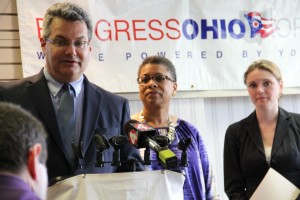
| Photo from NetrootsNation.org |
** This statement can be attributed in whole or in part to Brian Rothenberg, Executive Director, ProgressOhio.
"It goes against the trends seen in big states and doesn’t include the discounts created by the subsidies. Announcing them without the subsidies is cynical because that’s not how people are going to buy insurance. If the goal is to enroll people, announcing rates without examples of subsidies makes no sense.
It’s not surprising that this is how Republican Lt. Gov. Mary Taylor would handle this. Her well known hatred for the Affordable Care Act is causing her to take an action as the state's insurance commissioner that hurts the people of Ohio. She shouldn’t announce rates without illustrating what that means for real people benefiting from tax credits that can be substantial in some moderate income categories."
It raises a good point about including the offset due to expected subsidies, but it misses the bigger picture regarding the basic concept that taxpayers are seeing increased rates while at the same time paying for others to have those higher rates subsidized.
And the subsidies might not be there for Ohioans.
According to this article in the Washington Free Beacon, the legality of the subsidies is being challenged.
As the article explains, the subsidies were part of the deal for the states to set up exchanges.
The law says that the government can provide subsidies for insurance sold on an “Exchange established by the state.” Thirty-four states have refused to set up their own exchanges, leaving the federal government set them instead.
The Obama administration maintains that the subsidies can be applied to a federal exchange as well, though some legal experts and Republicans in Congress say that's outside the scope of the law.
“When Congress passed the health care act, they presented states a choice,” (Oklahoma Attorney General Scott) Pruitt told the congressmen. “That choice was to establish a state health care exchange or to opt for a federal exchange. The ACA included with that choice a set of consequences and benefits.”
If states opted to create an exchange themselves, then their citizens would receive federal subsidies to buy insurance on the exchange, but employers would also be subject to fines for not offering affordable health insurance, Pruitt argued. However, if they opted against the exchange, they would not receive subsidies and employers would not be subject to fines.
Pruitt has launched a lawsuit against the administration arguing that they do not have the power to offer the subsidies on federally run exchanges. Experts predict that Oklahoma’s lawsuit, if successful, could fatally cripple the law.
Since Ohio did not set up its own exchange, defaulting to the federal one, residents may not see any subsidies if the lawsuit is successful.
Of course, states will then be criticized as being evil, uncaring and 'responsible for deaths' along with all sorts of terrible things for not wanting their residents to have that handout. But if it could "fatally cripple the law," Ohioans would benefit by not having such huge increases in insurance rates while maintaining a large diversity of plan options and costs.
The problem is that no one in Congress writing this law could have the depth of knowledge to re-design an insurance program/health care coverage that will fit the needs of so many people. This is where a free market comes into play.
In a 'free' market, entrepreneurs can create a product or service that fits the needs of some, while not needing to fit the needs of all. Ohio is a good example with our current variety of options that fit a multitude of needs and budgets.
With the federal government, they've decided what everyone must have (forced it upon us, actually) and then told us we'll have to pay for it, even if we don't need or want it.
Well-baby care is an example. My husband and I don't have kids and have no need for well-baby care which includes office visits, immunizations, etc... But that coverage is mandated by the ACA and the state of Ohio. So I'm paying for a portion of insurance that I don't need and will never use. A 'free' market, would give me the option to have a plan that didn't include that at, hopefully, a lesser cost than one that did.
Another example is young people who are generally healthy and don't need a full-service comprehensive plan. In a 'free' market, they could choose something like the old 80-20 insurance plans where routine doctor visits were not covered, but hospital bills for emergencies, injuries or serious illness were covered at 80%.
The Affordable Care Act - Obamacare - has removed those options from us, forcing us to have to what a bunch of bureaucrats in D.C. *think* we need. There is no way they can ever meet individual wants and needs the way a free market does so we are all forced into the one-size-fits-all mandate - and you and I will pay more as a result.
Monday, September 10, 2012
I agree with Romney on health care - sort of
Over the weekend, Republican presidential candidate Mitt Romney said he wants to repeal Obamacare - the Affordable Care Act - but that there are portions of it he likes, including covering pre-existing conditions and children.
Actually, I believe that insurance companies should offer coverage to individuals with pre-existing conditions. I don't believe they should be forced to, but it would be to their advantage to do so.
But (yes, the infamous 'but') - they should not be forced to accept individuals with pre-existing conditions at the same rate as other customers without such conditions.
Life insurance for a healthy person is cheaper than for someone who has heart disease and a history of heart attacks. Why shouldn't health insurance work the same way?
Why shouldn't individuals with pre-existing conditions pay more for their health insurance, especially if they wait until after they are sick to obtain it?
If the government doesn't insist that individuals are absolved from the potential negative consequences of their actions, they might just be inclined to take the appropriate action ahead of time.
If you know you can get away with being irresponsible, you're more likely to be irresponsible. That's human nature. Just like children as they are growing up, you tell them repeatedly that touching a hot stove will hurt, but they keep trying until they succeed and learn, because it hurts, that it was the wrong thing to do.
So I agree with Romney that individuals with pre-existing conditions should have access to health care, but I believe that such 'access' should come at a higher cost.
And should 'children' be able to be covered? Sure. But then, I define 'chidren' as descendants (legal or biological) under the age of 18 or over 18 and still attending school.
I would even go so far as to say that insurance companies would find an abundance of clients if they allowed relatives living in the same household to be covered under an insurance plan. They do this with car insurance - why not with health insurance?
Of course, this would work best if health insurance were purchased like car insurance and not just through your employer - with individuals receiving the same tax advantages as employers currently do.
Car insurance rates are affordable and there are plenty of policy options and coverage levels to fit every need. If health insurance were reformed to mirror the structure of car insurance, wouldn't that be a huge improvement?
These are good ideas, but the devil is in the details. Will government mandate such things, or open up the market so such structures can develop?
There's the rub...
Monday, March 26, 2012
Obamacare lawsuit update from Mike DeWine
Received via email and sharing:
I was in the U.S. Supreme Court today as arguments began on Obamacare. Twenty-six states, including Ohio, are joined in the lawsuit challenging the act's constitutionality. As you will recall, the first thing I did after taking office as Attorney General was to authorize Ohio to join this lawsuit.
Today's arguments dealt with whether the case was ready to be decided, which we believe it is. Judging by the questions that the justices asked, it would appear they believe that, as well.
There were large crowds outside the Supreme Court, with a ton of media. Inside, while the normal routine was followed, there was a sense that we were witnessing a historic moment.
Tomorrow, the Court will hear arguments on the most contentious issue -- the constitutionality of the individual mandate. We do not expect a decision until June. I will keep you updated as things progress.
Saturday, January 21, 2012
Contradiction abounds in requirement to provide free birth control
Friday, the Obama Administration announced final regulations requiring health care plans to cover birth control without charging any co-pays or deductibles to their participants. The requirement will begin Aug. 1.
The administrative rule will require organizations like religious schools and Catholic hospitals to offer birth control - at no cost - to employees covered by their health plans, though not until 2013. Houses of worship are exempt.
I'm certain that many people are going to be writing about the infringement on religion, and the Catholic religion specifically, but I want to focus on the clear contradiction in thought: that requiring health care plans to provide contraception (or any service/treatment/drug) without a co-pay or deductible somehow 'saves money.'
First, there isn't anyone who doesn't have 'access' to contraception. Any person can purchase condoms and anti-spermicide at the drug store counter - and the effectiveness of each is increased by using them together.
Any woman can get a prescription for birth control from numerous outlets. A doctor may recommend a specific type over another based upon the woman's personal and medical history, but there are so many doctors willing to write the prescriptions that no woman is without 'access.'
This regulation isn't about 'access' - it's about a woman not having to pay for the contraception she wants to use.
From The Hill:
As Richards readily admits, women already have access, but they're paying "$15 to $50 per month." With this new rule, they won't be required to pay anything - at least, not up front.
But someone always pays, hence the contradiction.
The manufacturer will still need to be compensated for the product they provide. So while the individual woman won't have to fork over any money at the time she actually get her contraceptive, insurance companies will still have a cost that will need to be covered. Without the ability to charge the individual user, they'll raise their rates on everyone to cover the expense.
This means higher rates for all - including the ones who think they're now getting their contraception for free. Talk about a contradiction between hype and reality.
So of course, it should come as no surprise that the overwhelming comments on the HHS rule were in favor of the requirement. All those people who supported it think they'll no longer have to pay. But that's just a bigger comment on their intelligence and reasoning skills - or perhaps our education system - than it is on the rule itself.
So what about seniors who don't need contraception? Or a single person who is celibate? What about men and women who have had a medical procedure that eliminates the need for contraception? Or individuals who are sterile?
All of these people will now be covering the costs so some can have the luxury of not having any out-of-pocket expenses for a product only they are using.
This is un-American. And it's no different than if my co-worker stole money out of my wallet in order to pay for her birth control pills.
The administrative rule will require organizations like religious schools and Catholic hospitals to offer birth control - at no cost - to employees covered by their health plans, though not until 2013. Houses of worship are exempt.
I'm certain that many people are going to be writing about the infringement on religion, and the Catholic religion specifically, but I want to focus on the clear contradiction in thought: that requiring health care plans to provide contraception (or any service/treatment/drug) without a co-pay or deductible somehow 'saves money.'
First, there isn't anyone who doesn't have 'access' to contraception. Any person can purchase condoms and anti-spermicide at the drug store counter - and the effectiveness of each is increased by using them together.
Any woman can get a prescription for birth control from numerous outlets. A doctor may recommend a specific type over another based upon the woman's personal and medical history, but there are so many doctors willing to write the prescriptions that no woman is without 'access.'
This regulation isn't about 'access' - it's about a woman not having to pay for the contraception she wants to use.
From The Hill:
"Birth control is not just basic health care for women, it is an economic concern," Cecile Richards, president of Planned Parenthood Federation of America, said in a statement. "This common sense decision means that millions of women, who would otherwise pay $15 to $50 a month, will have access to affordable birth control, helping them save hundreds of dollars each year."
As Richards readily admits, women already have access, but they're paying "$15 to $50 per month." With this new rule, they won't be required to pay anything - at least, not up front.
But someone always pays, hence the contradiction.
The manufacturer will still need to be compensated for the product they provide. So while the individual woman won't have to fork over any money at the time she actually get her contraceptive, insurance companies will still have a cost that will need to be covered. Without the ability to charge the individual user, they'll raise their rates on everyone to cover the expense.
This means higher rates for all - including the ones who think they're now getting their contraception for free. Talk about a contradiction between hype and reality.
So of course, it should come as no surprise that the overwhelming comments on the HHS rule were in favor of the requirement. All those people who supported it think they'll no longer have to pay. But that's just a bigger comment on their intelligence and reasoning skills - or perhaps our education system - than it is on the rule itself.
So what about seniors who don't need contraception? Or a single person who is celibate? What about men and women who have had a medical procedure that eliminates the need for contraception? Or individuals who are sterile?
All of these people will now be covering the costs so some can have the luxury of not having any out-of-pocket expenses for a product only they are using.
This is un-American. And it's no different than if my co-worker stole money out of my wallet in order to pay for her birth control pills.
Thursday, September 22, 2011
Report shows Obamacare will have costly impact on Ohio
The Ohio Department of Insurance has analyzed Obamacare and its impacts on Ohio - and it's not good news.
From the press release about the report (emphasis added):
The report, available here, anticipates that premiums individuals pay could increase from 55-85% in 2014 - and that's not counting the existing trend of yearly increases which have averaged from 7-8% nationwide.
They expect that some people, depending on their individual health conditions, could see premiums rise by up to 130%, though they do show that some might actually see a decrease in costs.
The news for small group employers (those with 2-50 employees) could go up by as much as 15%, again, not including the yearly increases everyone sees. But groups with high numbers of employees with health issues could see their premiums rise by as much as 150%. Small groups with employees that have good health could see some decreases.
The report also predicts that more than 1,000,000 will be added to the state's Medicaid rolls while more than 500,000 will probably end up in the government-subsidized individual exchange. They anticipate that, when Obamacare is fully implemented, roughly half of Ohioans would be in some type of government-subsidized health care.
As Ohio Lieutenant Governor and Department of Insurance Director Mary Taylor said,
And how much will that financial burden be?
The report projects that the annual operating costs, for which the state is responsible, will be between $19-34 million once the exchange is up and running - and that doesn't include any of the costs of the computer systems necessary to run the mandated exchange.
So while our own costs will go up - either through our employer passing along their increases or directly for those of us who purchase our own insurance coverage - our taxes will have to go up to cover the yearly operating costs of the federally mandated exchanges.
Again - we'll be paying for ourselves and then paying for everyone else, too.
What a bargain!
From the press release about the report (emphasis added):
The report, conducted by Milliman, Inc., projects the impacts of the federal health care reform law starting in 2014, which is when most of the law’s provisions go into effect. The report shows significant changes that will increase premiums while dramatically expanding government programs.
"As I have been saying, the impacts of Obamacare will be widespread and expensive," Taylor said. "This report clearly shows what I have long predicted; Obamacare will result in bigger government, unsustainable costs, and ultimately, less consumer choice."
The report, available here, anticipates that premiums individuals pay could increase from 55-85% in 2014 - and that's not counting the existing trend of yearly increases which have averaged from 7-8% nationwide.
They expect that some people, depending on their individual health conditions, could see premiums rise by up to 130%, though they do show that some might actually see a decrease in costs.
The news for small group employers (those with 2-50 employees) could go up by as much as 15%, again, not including the yearly increases everyone sees. But groups with high numbers of employees with health issues could see their premiums rise by as much as 150%. Small groups with employees that have good health could see some decreases.
The report also predicts that more than 1,000,000 will be added to the state's Medicaid rolls while more than 500,000 will probably end up in the government-subsidized individual exchange. They anticipate that, when Obamacare is fully implemented, roughly half of Ohioans would be in some type of government-subsidized health care.
As Ohio Lieutenant Governor and Department of Insurance Director Mary Taylor said,
"These results are alarming when you consider what is going to happen to Ohio's already competitive insurance market. While Obamacare supporters may argue these changes are necessary to ensure access, the results mean even more financial burden on the backs of taxpayers."
And how much will that financial burden be?
The report projects that the annual operating costs, for which the state is responsible, will be between $19-34 million once the exchange is up and running - and that doesn't include any of the costs of the computer systems necessary to run the mandated exchange.
So while our own costs will go up - either through our employer passing along their increases or directly for those of us who purchase our own insurance coverage - our taxes will have to go up to cover the yearly operating costs of the federally mandated exchanges.
Again - we'll be paying for ourselves and then paying for everyone else, too.
What a bargain!
Labels:
health insurance,
mandatory health insurance,
Obamacare,
Ohio
Tuesday, November 10, 2009
Two must-read petitions
I urge you to read these two petitions:
The Candlemaker's Petition - Petition of the Manufacturers of Candles, Waxlights, Lamps, Candlelights, Street Lamps, Snuffers, Extinguishers, and the Producers of Oil, Tallow, Resin, Alcohol, and, Generally, of Everything Connected with Lighting
The Healthcare Producers Petition - A Petition from the Producers of Health Insurance, Medical Equipment, Drugs, Diagnostic and Surgical Procedures, Physical Therapy, and, Generally, of Everything Connected with Healthcare
See how far we've come???
The Candlemaker's Petition - Petition of the Manufacturers of Candles, Waxlights, Lamps, Candlelights, Street Lamps, Snuffers, Extinguishers, and the Producers of Oil, Tallow, Resin, Alcohol, and, Generally, of Everything Connected with Lighting
The Healthcare Producers Petition - A Petition from the Producers of Health Insurance, Medical Equipment, Drugs, Diagnostic and Surgical Procedures, Physical Therapy, and, Generally, of Everything Connected with Healthcare
See how far we've come???
Monday, November 09, 2009
If health care bill just like Social Security and Medicare, how long until bankruptcy?
In looking at the news coverage of Saturday's vote on the Pelosi health care bill, nearly all reports include this statement:
And I just have to shake my head and wonder what happened to the brains these people were born with.
Why in the world would anyone liken this bill to two failing and bankrupt programs?
Do they not care that both Social Security and Medicare are insolvent and are paying out more than they're taking in? Do they not care that people who are paying into the system now are probably never going to see any benefit from those taxes they've paid?
Do they not understand that these two programs are just ponzi schemes that would put them into prison if they were in the private sector? As the Wall Street Journal reports:
Maybe they understand all this - and are doing it BECAUSE of these facts. After all, we've continued to let them. And the more people they put onto the programs, the more support they have for extending them.
Under these rules and outcomes, they expect the same thing with health care. They'll make Americans dependent upon the government for health decisions and can then make all the decisions for the American people. We let them do this with our retirement, so why not health?
And when we are dependent upon government - that is, the politicians - we'll vote for the ones who promise to give us more, even if there is no way to pay for it.
Eventually, there won't be anyone left to tax to pay for the 'free' services others are getting. Then what? Will the politicians just borrow the money from China? And what if China stops buying debt?
Ah, those pesky 'what if' questions that politicians avoid like the plague.
If this health care bill is just like Social Security and Medicare, you can be sure it is not sustainable, will result in higher taxes, have limited service and, eventually, will result in bankruptcy for the program.
Pelosi said so herself.
Side Note: The Wall Street Journal has a great take on this as well.
"A triumphant Speaker Nancy Pelosi, D-San Francisco, likened the legislation to the passage of Social Security in 1935 and Medicare 30 years later."
And I just have to shake my head and wonder what happened to the brains these people were born with.
Why in the world would anyone liken this bill to two failing and bankrupt programs?
Do they not care that both Social Security and Medicare are insolvent and are paying out more than they're taking in? Do they not care that people who are paying into the system now are probably never going to see any benefit from those taxes they've paid?
Do they not understand that these two programs are just ponzi schemes that would put them into prison if they were in the private sector? As the Wall Street Journal reports:
The House also contains a new government long-term insurance program that starts collecting premiums in 2011 but doesn't starting paying benefits until 2016 and then runs out of money in 2029. North Dakota Democrat (Senator) Kent Conrad called it "a Ponzi scheme of the first order, the kind of thing that Bernie Madoff would have been proud of" in an interview with the Washington Post in late October.(emphasis added)
Maybe they understand all this - and are doing it BECAUSE of these facts. After all, we've continued to let them. And the more people they put onto the programs, the more support they have for extending them.
Under these rules and outcomes, they expect the same thing with health care. They'll make Americans dependent upon the government for health decisions and can then make all the decisions for the American people. We let them do this with our retirement, so why not health?
And when we are dependent upon government - that is, the politicians - we'll vote for the ones who promise to give us more, even if there is no way to pay for it.
Eventually, there won't be anyone left to tax to pay for the 'free' services others are getting. Then what? Will the politicians just borrow the money from China? And what if China stops buying debt?
Ah, those pesky 'what if' questions that politicians avoid like the plague.
If this health care bill is just like Social Security and Medicare, you can be sure it is not sustainable, will result in higher taxes, have limited service and, eventually, will result in bankruptcy for the program.
Pelosi said so herself.
Side Note: The Wall Street Journal has a great take on this as well.
Sunday, November 08, 2009
Thanks, Marcy Kaptur, for destroying liberty
"The powers delegated by the proposed Constitution to the federal government are few and defined. Those which are to remain in the State governments are numerous and indefinite. The former will be exercised principally on external objects, as war, peace, negotiation and foreign commerce." ~ James Madison
Some may say that her position was undecided, but most of us who know her voting record were very sure she was going to vote in favor of the government takeover of health care.
Final vote on the House version was 220 - 215 with only one Republican voting yes, though 39 Democrats voted no.
Sadly, the basic, core issue of the Constitutionality of the measure was never researched, though Republicans and at least one news source tried to raise the issue..
CNSNews asked many members of Congress where the Constitution grants the authority for mandating that citizens purchase a product and go to jail/be fined for failure to comply.
Answers ranged from 'for the common good' (a position our founders and authors of the document clearly did not intend) and 'general welfare' to 'we mandate car insurance so we can mandate health insurance.' Of course, it's the states that mandate car insurance - not the federal government, so this really isn't a valid argument for justifying the law.
Even worse was the claim that government isn't telling people WHICH insurance they have to buy - just that they have to have coverage. But the bill details what coverage you must have, so that 'logic' ends up looking as fallacious as it actually is.
Senate Judiciary Chairman Patrick Leahy said 'nobody questions' the authority.
House Speaker Nancy Pelosi said the issue of Constitutionality of the bill was "not a serious question."
Pelosi's spokesman later said it was covered under the 'interstate commerce' clause. But how that's possible is beyond me. I'm not participating in trade between the states when I purchase my insurance. In fact, irony of all ironies, I'm not even allowed to purchase insurance across state lines!
White House Spokesman Robert Gibbs said he had no idea if White House lawyers had reviewed the Constitutionality of forcing Americans to purchase health insurance. Gibbs went so far as to say, "... I don’t think it has gotten to the point where anybody questions the legitimacy of it.”
The reporter followed up: “Well, Orrin Hatch questions the legitimacy of it.” Gibbs quipped, “Well, you should ask him.”
The reporter asked, “Do you not feel there is any concern at all about whether it is constitutional for Congress to impose a mandate?”
“No,” Gibbs said.
So Congress 'assumed' they had the authority and then went about finding 'justification' for requiring Americans, as a condition of citizenship, to purchase a health insurance plan designed by government (regardless of their needs or wants) and to face fines, penalties and jail time for non-compliance.
And this isn't worth a discussion of the Constitutionality of the measure???? Shouldn't they settle the question of Constitutionality before they get sued over it???
In 1994, the Congressional Budget Office issued a report on the health care plan proposed by then President Bill Clinton. They wrote:
A mandate requiring all individuals to purchase health insurance would be an unprecedented form of federal action. The government has never required people to buy any good or service as a condition of lawful residence in the United States. An individual mandate would have two features that, in combination, would make it unique. First, it would impose a duty on individuals as members of society. Second, it would require people to purchase a specific service that would be heavily regulated by the federal government.
This is exactly the plan that the House passed yesterday.
As of today, 220 members of the House of Representatives, including Marcy Kaptur, think that the government has the authority to order to you purchase a product you may not want. Or, if you do want it, to purchase the product they define, rather than the one you believe best meets your needs.
This is not a question of health insurance, it's a question of freedom, as Terence P. Jeffrey, writes:
Can President Obama and Congress enact legislation that orders Americans to buy health insurance? They might as well order Americans to buy broccoli. They have no legitimate authority to do either. Yet neither Obama nor the current leadership in Congress seems to care about the constitutional limits on their power.
They are now attempting to exert authority over the lives of Americans in a way no president and Congress has done before.
...
... imagine an American sitting on his back porch casually enjoying the would-be anathematized state of not owning health insurance. When it comes to health insurance, this American has not been, is not and never intends to be engaged in any form of commerce with any entity in any foreign nation, distant state or Indian tribe.
If he did decide to engage in health-insurance related commerce with any entity in a foreign nation, distant state or Indian tribe, Congress could constitutionally regulate that action. But this American simply won’t oblige. As a free person—like generations of Americans before him—he has weighed the risks and benefits of buying health insurance, and he has decided not to buy it. He is fully ready to accept the good and bad consequences of this decision.
All he wants from the government is to be left alone.
For President Obama and Congress to reach into this American’s backyard and force him to buy health insurance would be a blatantly unconstitutional act.
...
All versions of the health care bill under consideration in Congress would order Americans to buy health insurance. If any of these bills is enacted, the first thing it would accomplish is the amputation of a vital part of our Constitution, and the death of another measure of our liberty.
Thanks, Marcy, for helping to destroy my liberty and for the arrogance of thinking that you know better than the majority of Americans who believe they can make better decisions with their money than you can.
Lest you think this is nothing to be concerned over, just take a look at this chart of how it all works...and they say this is supposed to help????
Sunday, October 11, 2009
The end of personal responsibility in America - from dependence to bondage
If I 'need' a new furnace, should I be able to go out and get one and then tell the seller that I really can't afford it so he should just give it to me - or not make me go into debt to pay for it?
If I 'need' a car, should I get a new one with state-of-the-art accessories and then tell the dealer that, because I have a low-paying job, I'm entitled to have it for what I can pay, despite the price, and not go into debt for it?
If I fail to convince the suppliers of these products that they should grant them to me based upon my need and not my ability to pay, should I turn to government to force, through law, my 'right' to a new furnace and/or the new car?
Of course not.
But so many people think that other 'services' should be treated this way, especially when it comes to the service of health care. A letter-writer in today's paper has a tragic sob story based upon her experience as a 'medical insurance biller.'
The author somehow believes that because you might 'need' a particular service, it should be provided at no cost - or at whatever cost you can pay - rather than at the cost of producing the product. She also seems to believe that individuals who provide a service should not expect payment for those services simply because the costs are too high for some to afford.
What she doesn't account for is the personal responsibility of the individual receiving such services. She doesn't address the fact that said person may not have pursued a higher paying job by getting more training or education. She doesn't address the fact that said person might have chosen to have children and pay those costs rather than save money for future expenses. She doesn't address whether or not said person has family who can (and probably should) help in such circumstances. She also doesn't address why a person should not be obligated, over time, to pay for services rendered, as if there is something bad about owing a debt to a person who has helped extend your life through the application of their knowledge.
No - she assumes that one individual's 'need' requires another individual's sacrifice - rather than assume a mutually beneficial exchange between the two. Her letter indicates she thinks that because a person cannot afford a product, they 'need,' government to step in and mandate it be provided. Which means she thinks you and I should pay for someone else to have something based upon her concept of what is right. (And she apparently misses the contradiction of why the receiver of services shouldn't have to pay but you and I should, despite our lack of involvement in the transaction.)
And why shouldn't she? Look at what people have come to expect of government - rather than of themselves: food, housing, child care, higher education, bus tokens, cars for transportation, refrigerators, help in finding a job, supplements, pensions (Social Security), and medical care...as well as a host of other things that enshrine in law personal preferences, like preventing your neighbors from planting trees because you don't like the location they pick.
What we are seeing is the end of personal responsibility in America - and with that comes the end of liberty.
We've become a nation where all things are 'rights' and must be granted by government, despite the fact that your 'right' to something necessarily infringes upon my 'right' to keep my own money and not to pay for you to have something - especially when I'm also paying for my 'right' to have the same thing and at the same time.
Everything these days seems to revolve around 'rights talk.' As George Will recently wrote:
But this talk of 'rights' is even more insidious.
When everyone has a 'right' to the product of other's labor (and health services are a prime example), there is no private ownership of that labor. It is, at that point, government ownership of that labor - and the means of production, where government dictates what you must provide to others and at what costs and under what conditions. Even if you can choose which doctor to go to, that doctor must follow the government's laws of the exchange of his services for your payment, regardless of what the two of may agree to otherwise. Government's determination of your 'rights' to this type of service means that the doctor's liberty - and yours - no longer exist in the transaction.
That is certainly contrary to what our founders fought for and, in fact, exactly what they fought against in the struggle to form these United States. They firmly rejected the idea of 'rights' granted by governments or kings and embraced the idea that 'rights' are inherent, granted by God. As a result, governments are supposed to guarantee the protection of each person's rights - not create new ones in order to put government in control of their management.
And yet, we find many of our countrymen embracing such concepts and ideas when it comes to what they're 'entitled' to. When government provides, rather than protects, what we've always believed were 'rights granted by our Creator,' we have lost our liberty. And without our liberty, we are reduced to tyranny, with an ever-growing government constantly expanding its ability to determine what is and is not a 'right' and then graciously giving it to us - and, inevitably, taking credit for it during a re-election campaign.
Thankfully, there is also a letter writer (third letter down in the link above) who understands that health care is a benefit - not a right - and urges people to work to attain such benefits. Sadly, though, that opinion is not shared by enough people. It's too easy to allow government to provide, rather than work hard in order to provide for yourself.
And now that we find a majority of Americans receiving rather than contributing to the costs, we are truly at the stage we were warned of:
We are, I believe, already fully entrenched in dependence.
So what about bondage and tyranny?
Think about the fact that more of the average American's work effort goes to supporting governments (federal, state, local ... and all the related quasi-governmental agencies or property tax levies) than it does to supporting themselves and their families. I once heard a phrase: there is no greater form of tyranny than when government seizes your funds to pay for items that you would never pay for yourself.
Consider these quotes:
Considering this, can bondage be right around the corner? Or are we already at that stage?
When that bondage arrives, it will not come with pronouncements and chains ... it will come wrapped in the guise of 'safety,' and 'greater good' and 'compassion' or 'saving the planet' or 'for the children' or any number of catch phrases designed to mask what is really happening - that government has become the master and we its slaves.
If I 'need' a car, should I get a new one with state-of-the-art accessories and then tell the dealer that, because I have a low-paying job, I'm entitled to have it for what I can pay, despite the price, and not go into debt for it?
If I fail to convince the suppliers of these products that they should grant them to me based upon my need and not my ability to pay, should I turn to government to force, through law, my 'right' to a new furnace and/or the new car?
Of course not.
But so many people think that other 'services' should be treated this way, especially when it comes to the service of health care. A letter-writer in today's paper has a tragic sob story based upon her experience as a 'medical insurance biller.'
The author somehow believes that because you might 'need' a particular service, it should be provided at no cost - or at whatever cost you can pay - rather than at the cost of producing the product. She also seems to believe that individuals who provide a service should not expect payment for those services simply because the costs are too high for some to afford.
What she doesn't account for is the personal responsibility of the individual receiving such services. She doesn't address the fact that said person may not have pursued a higher paying job by getting more training or education. She doesn't address the fact that said person might have chosen to have children and pay those costs rather than save money for future expenses. She doesn't address whether or not said person has family who can (and probably should) help in such circumstances. She also doesn't address why a person should not be obligated, over time, to pay for services rendered, as if there is something bad about owing a debt to a person who has helped extend your life through the application of their knowledge.
No - she assumes that one individual's 'need' requires another individual's sacrifice - rather than assume a mutually beneficial exchange between the two. Her letter indicates she thinks that because a person cannot afford a product, they 'need,' government to step in and mandate it be provided. Which means she thinks you and I should pay for someone else to have something based upon her concept of what is right. (And she apparently misses the contradiction of why the receiver of services shouldn't have to pay but you and I should, despite our lack of involvement in the transaction.)
And why shouldn't she? Look at what people have come to expect of government - rather than of themselves: food, housing, child care, higher education, bus tokens, cars for transportation, refrigerators, help in finding a job, supplements, pensions (Social Security), and medical care...as well as a host of other things that enshrine in law personal preferences, like preventing your neighbors from planting trees because you don't like the location they pick.
What we are seeing is the end of personal responsibility in America - and with that comes the end of liberty.
We've become a nation where all things are 'rights' and must be granted by government, despite the fact that your 'right' to something necessarily infringes upon my 'right' to keep my own money and not to pay for you to have something - especially when I'm also paying for my 'right' to have the same thing and at the same time.
Everything these days seems to revolve around 'rights talk.' As George Will recently wrote:
If our vocabulary is composed exclusively of references to rights, aka entitlements, we are condemned to endless jostling among elbow-throwing individuals irritably determined to protect, or enlarge, the boundaries of their rights. Among such people, all political discourse tends to be distilled to what Mary Ann Glendon of Harvard Law School calls "rights talk."
Witness the inability of people nowadays to recommend this or that health care policy as merely wise or just. Each proposal must be invested with the dignity of a right. And since not all proposals are compatible, you have not merely differences of opinion but apocalyptic clashes of rights.
Rights talk is inherently aggressive, even imperial; it tends toward moral inflation and militates against accommodation. Rights talkers, with their inner monologues of pre-emptive resentments, work themselves into a simmering state of annoyed vigilance against any limits on their willfulness. To rights talkers, life -- always and everywhere -- is unbearably congested with insufferable people impertinently rights talking, and behaving, the way you and I of course have a real right to.
But this talk of 'rights' is even more insidious.
When everyone has a 'right' to the product of other's labor (and health services are a prime example), there is no private ownership of that labor. It is, at that point, government ownership of that labor - and the means of production, where government dictates what you must provide to others and at what costs and under what conditions. Even if you can choose which doctor to go to, that doctor must follow the government's laws of the exchange of his services for your payment, regardless of what the two of may agree to otherwise. Government's determination of your 'rights' to this type of service means that the doctor's liberty - and yours - no longer exist in the transaction.
That is certainly contrary to what our founders fought for and, in fact, exactly what they fought against in the struggle to form these United States. They firmly rejected the idea of 'rights' granted by governments or kings and embraced the idea that 'rights' are inherent, granted by God. As a result, governments are supposed to guarantee the protection of each person's rights - not create new ones in order to put government in control of their management.
And yet, we find many of our countrymen embracing such concepts and ideas when it comes to what they're 'entitled' to. When government provides, rather than protects, what we've always believed were 'rights granted by our Creator,' we have lost our liberty. And without our liberty, we are reduced to tyranny, with an ever-growing government constantly expanding its ability to determine what is and is not a 'right' and then graciously giving it to us - and, inevitably, taking credit for it during a re-election campaign.
Thankfully, there is also a letter writer (third letter down in the link above) who understands that health care is a benefit - not a right - and urges people to work to attain such benefits. Sadly, though, that opinion is not shared by enough people. It's too easy to allow government to provide, rather than work hard in order to provide for yourself.
And now that we find a majority of Americans receiving rather than contributing to the costs, we are truly at the stage we were warned of:
A democracy cannot exist as a permanent form of government. It can only exist until the voters discover that they can vote themselves largesse from the public treasury. From that moment on, the majority always votes for the candidates promising the most benefits from the public treasury with the result that a democracy always collapses over loose fiscal policy, always followed by a dictatorship. The average age of the world's greatest civilizations has been 200 years.
Great nations rise and fall. The people go from bondage to spiritual truth, to great courage, from courage to liberty, from liberty to abundance, from abundance to selfishness, from selfishness to complacency, from complacency to apathy, from apathy to dependence, from dependence back again to bondage.
We are, I believe, already fully entrenched in dependence.
So what about bondage and tyranny?
Think about the fact that more of the average American's work effort goes to supporting governments (federal, state, local ... and all the related quasi-governmental agencies or property tax levies) than it does to supporting themselves and their families. I once heard a phrase: there is no greater form of tyranny than when government seizes your funds to pay for items that you would never pay for yourself.
Consider these quotes:
"Of all tyrannies, a tyranny exercised for the good of its victims may be the most oppressive. It may be better to live under robber barons than under omnipotent moral busybodies. The robber baron's cruelty may sometimes sleep, his cupidity may at some point be satiated; but those who torment us for our own good will torment us without end, for they do so with the approval of their own conscience." ~ C. S. Lewis
"Government initiatives tend to fail because they lack competitive pricing mechanisms that measure effectiveness and value. This trend is getting worse as more and more authority moves away from local control toward higher levels of central control. Governments based on politically expedient special interest (instead of moral principle) tend to use our money and their version of how people should live, to dictate "feel-good" solutions. The truth is government does not have insider knowledge on what individuals need and how they will respond. The U. S. government has become nothing more than a massive tyranny of good intentions. God gave us freedom to choose. Why does government attempt to do what even God did not?" ~ Wes Alexander
Considering this, can bondage be right around the corner? Or are we already at that stage?
When that bondage arrives, it will not come with pronouncements and chains ... it will come wrapped in the guise of 'safety,' and 'greater good' and 'compassion' or 'saving the planet' or 'for the children' or any number of catch phrases designed to mask what is really happening - that government has become the master and we its slaves.
Wednesday, October 07, 2009
Did you know? Government already coerces your health care choice
I guess I wasn't aware of this fact until reading this article in the Wall Street Journal:
That's right. If you want to collect your Social Security, you MUST enroll in Medicare, even if you don't want it or need it. If you've got a great health plan already and decide to 'opt out' of Medicare, the government will deny you the ability to collect your Social Security.
Seems contrary to everything we know and the rhetoric we're hearing in today's health coverage debates, doesn't it? Especially since the two are completely different programs, each funded by the individual through different taxes.
But there is some logic and reason making its way through this situation:
The Obama administration opposed the suit saying that the plaintiffs had not yet exhausted their administrative remedies for challenging these agency rules. But the judge disagreed:
The article continues with what appears to be just common sense - but also points out the contradiction when it comes to the actions in this situation versus the words coming out of politicians' mouths:
We need to keep this situation in mind and remember the excesses of government when it comes to a so-called 'choice' of health coverage in the future. Despite their words, we have a present-day example that demonstrates the words cannot be trusted.
"A centerpiece of the debate over ObamaCare is government coercion and the right to choose a health-care plan. So it's worth watching a lawsuit now making its way through the federal courts that seeks to let seniors keep their Social Security benefits even if they reject Medicare. This could be a big deal."
That's right. If you want to collect your Social Security, you MUST enroll in Medicare, even if you don't want it or need it. If you've got a great health plan already and decide to 'opt out' of Medicare, the government will deny you the ability to collect your Social Security.
Seems contrary to everything we know and the rhetoric we're hearing in today's health coverage debates, doesn't it? Especially since the two are completely different programs, each funded by the individual through different taxes.
But there is some logic and reason making its way through this situation:
POMS were imposed in 1993 during the Clinton Administration and set forth rules that aren't in the statute or regulations governing Medicare. The three plaintiffs—Brian Hall, John Kraus and former U.S. House Majority Leader Richard Armey—all had health-care plans they preferred to the coverage they were compelled to receive through Medicare.
In her ruling this week, the judge said that "neither the statute nor the regulation specifies that Plaintiffs must withdraw from Social Security and repay retirement benefits in order to withdraw from Medicare." Article I of the Constitution gives Congress sole power to legislate—so when agency rules conflict with federal statute, the statute takes precedence.
The Obama administration opposed the suit saying that the plaintiffs had not yet exhausted their administrative remedies for challenging these agency rules. But the judge disagreed:
Judge Collyer rejected that notion, noting that one plaintiff had sought an administrative hearing but "received no response from the SSA for approximately three years." Exhaustion of remedies was therefore "futile." A three-year wait is precisely the kind of bureaucratic hassle, or deliberate stonewalling, that government is famous for.
The article continues with what appears to be just common sense - but also points out the contradiction when it comes to the actions in this situation versus the words coming out of politicians' mouths:
Keep in mind that the plaintiffs are merely asking for the freedom to spend their own money for their own health insurance. With Medicare careening toward bankruptcy, letting seniors opt out could help save the taxpayers money. The plaintiffs argue, and reasonably so, that they have paid a lifetime of taxes into Social Security and shouldn't have those benefits denied merely because they are willing to pay for their own medical care. Social Security and Medicare are separate programs, and both are financed by separate payroll contributions.
The response of the Obama Administration to this lawsuit is revealing about its principles, as opposed to its rhetoric. President Obama says his plan for a "public option" wouldn't be coercive, saying that "If you like your health-care plan, you keep your health-care plan. Nobody is going to force you to leave your health-care plan." But here is a case where federal bureaucrats are using their power to force Medicare on seniors. Let's hope the courts restore a genuine right to choose.
We need to keep this situation in mind and remember the excesses of government when it comes to a so-called 'choice' of health coverage in the future. Despite their words, we have a present-day example that demonstrates the words cannot be trusted.
Monday, October 05, 2009
And they said we wouldn't end up with 'death panels'
I thought this was an interesting article from the National Post, addressing Canadian health care decisions:
While this is not labeled a 'death panel,' it is the end result: a government bureaucracy making a decision about what treatments are 'worth' the cost, and deciding life and death issues.
Many people will make the argument that insurance companies do the same thing. But comparing the force of government to a voluntary contract with a private organization is not comparing apples to apples.
Since we pay for our own insurance (yes, despite the fact that we are both healthy and have no medical issues), I examined multiple plans, what they offered, the cost and the limitations and we decided to contract with a particular company. We know the limits of our policy and are making our own arrangements for the costs we are obligated to pay out-of-pocket. We know that, should there be any changes to the terms of our contract, we have a mandated notification time frame and if we do not like it, we can go elsewhere.
In our options, we had different levels of deductibles, different items covered, different restrictions as to hospitals and/or doctors, etc. Interestingly, though we did not want a plan that included well-baby care, that's a mandate in Ohio so despite the fact that we do not have children, we are forced to have that coverage - and we are paying for it, knowing that we'll never utilize it.
Our choices would have been more numerous if we'd been able to purchase 'across state lines,' but that's not something included in H.R. 3200, America's Affordable Health Choices Act of 2009, though it should be.
If the Democrat plans for 'health reform' take effect, we'll be paying for everyone else's coverage for everything while having government mandate coverage for even more things that we don't need.
And with government paying for everything and everyone, eventually the bureaucrats will realize that there really isn't enough money to cover the costs and they'll start rationing service, services, drugs, treatments, etc... just like the article above indicates.
In the end, the problem with 'health care' in America isn't that people don't have it - they do. No one is ever 'denied' care - it's available. The problem is that not everyone has set aside the money necessary to cover the costs of their treatments, but they want them anyway - even if others have to pay for it.
Two things that would reduce costs - tort reform and competition across state lines - are not part of the plan, even though they'd do more to help Americans than anything in either Senate or House plan would.
SIDE NOTE: I'm just sick and tired of liberals saying that insurance companies are 'bad' and 'evil' because they, in effect, ration care. As I've noted above, there's a difference between a voluntary contract for services and the force of government. But if you listen to the arguments, liberals say that conservatives shouldn't object to a government plan that 'rations' because insurance companies already do. But if we need a government plan so people don't have to suffer the consequences of insurance companies 'doing terrible things to sick people,' how can you then support a the exact same 'terrible things' being done by the government plan you support? Because it's the 'government' it's somehow now okay????
Apparently, the irony/double standard/contradiction - call it what you will - is missed by those who believe government is the solution to every problem.
Choosing health
National Post
Published: Monday, October 05, 2009
Opponents of U.S. President Barack Obama's proposed health care reforms have just been handed a powerful talking point by Ontario's government.
Democrats cobbling together the U.S. plan want to include a "public option" -- a taxpayer-funded health-care alternative that would enable Americans to choose between private medical insurance plans or a government-backed system similar to Canada's. Opponents of the public option maintain that Canadian-style health care would entail rationing, caps on care, bureaucratic interference in medical decision-making and even "death panels" deciding when the ill become too expensive to save.
Most Canadians believe this is a gross exaggeration of reality. But then how to characterize Ontario's decision to cut off funding for colorectal cancer patients taking a life-prolonging drug, in order to save $9-million a year?
Andre Marin, the province's plain-speaking ombudsman, said the decision "verges on cruelty." Marin said the "arbitrary" limit on the number of cycles of the drug Avastin that Ontario will fund forces patients to pay out of their own pockets or abandon treatment.
Avastin does not cure cancer, but prolongs life when taken in conjunction with chemotherapy treatment, adding, on average, nine months of survival.
"For patients whose cancer has already metastasized, it stops their tumours from growing and prolongs their lives, at least for a while. It is, without exaggeration, their lifeline," Mr. Marin said.
Ontario Health Minister David Caplan rejected the suggestion that the cap on treatment was a financial decision alone, arguing it was based on clinical evidence. But it's easy to reach the conclusion that the province decided nine extra months of life for a dying patient wasn't worth the money. Which is pretty much the kind of decision a "death panel" would be confronted with.
While this is not labeled a 'death panel,' it is the end result: a government bureaucracy making a decision about what treatments are 'worth' the cost, and deciding life and death issues.
Many people will make the argument that insurance companies do the same thing. But comparing the force of government to a voluntary contract with a private organization is not comparing apples to apples.
Since we pay for our own insurance (yes, despite the fact that we are both healthy and have no medical issues), I examined multiple plans, what they offered, the cost and the limitations and we decided to contract with a particular company. We know the limits of our policy and are making our own arrangements for the costs we are obligated to pay out-of-pocket. We know that, should there be any changes to the terms of our contract, we have a mandated notification time frame and if we do not like it, we can go elsewhere.
In our options, we had different levels of deductibles, different items covered, different restrictions as to hospitals and/or doctors, etc. Interestingly, though we did not want a plan that included well-baby care, that's a mandate in Ohio so despite the fact that we do not have children, we are forced to have that coverage - and we are paying for it, knowing that we'll never utilize it.
Our choices would have been more numerous if we'd been able to purchase 'across state lines,' but that's not something included in H.R. 3200, America's Affordable Health Choices Act of 2009, though it should be.
If the Democrat plans for 'health reform' take effect, we'll be paying for everyone else's coverage for everything while having government mandate coverage for even more things that we don't need.
And with government paying for everything and everyone, eventually the bureaucrats will realize that there really isn't enough money to cover the costs and they'll start rationing service, services, drugs, treatments, etc... just like the article above indicates.
In the end, the problem with 'health care' in America isn't that people don't have it - they do. No one is ever 'denied' care - it's available. The problem is that not everyone has set aside the money necessary to cover the costs of their treatments, but they want them anyway - even if others have to pay for it.
Two things that would reduce costs - tort reform and competition across state lines - are not part of the plan, even though they'd do more to help Americans than anything in either Senate or House plan would.
SIDE NOTE: I'm just sick and tired of liberals saying that insurance companies are 'bad' and 'evil' because they, in effect, ration care. As I've noted above, there's a difference between a voluntary contract for services and the force of government. But if you listen to the arguments, liberals say that conservatives shouldn't object to a government plan that 'rations' because insurance companies already do. But if we need a government plan so people don't have to suffer the consequences of insurance companies 'doing terrible things to sick people,' how can you then support a the exact same 'terrible things' being done by the government plan you support? Because it's the 'government' it's somehow now okay????
Apparently, the irony/double standard/contradiction - call it what you will - is missed by those who believe government is the solution to every problem.
Wednesday, September 09, 2009
Obama's speech to Congress
Politico has talking points that have been released in advance of President Barack Obama's speech to a joint session of Congress tonight.
I thought this particular point was very interesting, in light of what polls have said:
Actually, according to Rasmussen, that's not true. From an Aug. 17th article on RasmussenReports.com:
Doing nothing is an option, especially with 70% of Americans rating their own health insurance coverage as good or excellent.
However, if Senators and Representatives really want to do something that the American public would welcome, they could make the Congressional health plan available to everyone.
Note, too, the use of words in the talking point: "...any member who really spent time talking to constituents last month..." This is, I believe, a not-so-subtle slam on all the individuals who showed up at town halls to protest the specifics of the plan - or ask unanswered questions about the cost.
Many representatives didn't hold public meetings for their constituents, though many made appearances at friendly-crowd places like union halls. And while representatives 'talked to' constituents, many did not listen.
But that's the focus of the talking point: if Congress talked to the 'right' people, they heard what they wanted to hear and have 'approval' to go forward, when in actuality, going forward with a health care bill would mean Congress is overriding the 'will of the people.'
It will be interesting to see how closely the speech mirrors these released talking points.
And just for fun, you can play "Obama Health-Care Speech Bingo"
I thought this particular point was very interesting, in light of what polls have said:
"Members heard a lot from their constituents over August including stories from people who are struggling with the rising cost of health care or who have been denied coverage because they or someone in their family got sick. One thing has became crystal clear to any member who really spent time talking to constituents last month: Doing nothing is not an option."
Actually, according to Rasmussen, that's not true. From an Aug. 17th article on RasmussenReports.com:
Most voters (54%) now say no health care reform legislation this year would be better than passage of the bill currently working its way through Congress. This does not mean that most voters are opposed to health care reform, but it does highlight the level of concern about the specifics now being discussed in Washington.
Doing nothing is an option, especially with 70% of Americans rating their own health insurance coverage as good or excellent.
However, if Senators and Representatives really want to do something that the American public would welcome, they could make the Congressional health plan available to everyone.
Seventy-eight percent (78%) of U.S. voters say every American should be allowed to purchase the same health insurance plan that members of Congress use.
Note, too, the use of words in the talking point: "...any member who really spent time talking to constituents last month..." This is, I believe, a not-so-subtle slam on all the individuals who showed up at town halls to protest the specifics of the plan - or ask unanswered questions about the cost.
Many representatives didn't hold public meetings for their constituents, though many made appearances at friendly-crowd places like union halls. And while representatives 'talked to' constituents, many did not listen.
But that's the focus of the talking point: if Congress talked to the 'right' people, they heard what they wanted to hear and have 'approval' to go forward, when in actuality, going forward with a health care bill would mean Congress is overriding the 'will of the people.'
It will be interesting to see how closely the speech mirrors these released talking points.
And just for fun, you can play "Obama Health-Care Speech Bingo"
Saturday, August 29, 2009
How much SHOULD we pay for prescription drugs?
The other day, there was a man in front of me at the pharmacy counter picking up his prescriptions and he was complaining about the cost.
Now, my husband and I choose not to have prescription drug coverage in our insurance plan because of the cost versus our need (we purchase our insurance ourselves). We have only one drug item we need and it is available in a generic, so the additional money per month in the insurance plan was much greater than just purchasing the drug on its own - especially with the $4 generic prescription program offered by most pharmacies. We made this decision because of our own relatively good health after a cost-benefit analysis. Even if we would need more drugs, we estimate that the overall cost of obtaining them would be less than the cost of prescription drug coverage. We recognize that this may change in the future, and we retain the ability to add drug coverage on the insurance plan renewal dates.
So, considering our own circumstances and our willingness to make a financial decision, I was struck by the man in front of me complaining about the cost of his prescription. He was not that much older than me and he had insurance, so he was paying his co-pay of $15 and was mad that it wasn't less. When the clerk pointed out that the $15 was much less than what the actual cost would have been, he was still angry.
This exchange made me wonder just how much people think they *should* pay for prescriptions. There was a 12-pack of Corona beer in his cart - isn't that roughly about $10-15? (I don't drink beer and hubby is the one who usually buys it so I have no idea...) Why would $15 be too much to pay for a prescription, but not too much to pay for beer? While some might disagree, beer is not a necessity where a potentially life-saving drug is.
In doing some research for this post, I came across numerous articles that cite the average time to bring a drug to market as between 10-15 years. This article, from Healthcare Economist, addresses the cost of drugs:
This article, from Dr. Elizabeth M. Whelan, president of the American Council on Science and Health (ACSH.org, HealthFactsAndFears.com), echoes that amount and points out that profits for drug companies are necessary to fund future research:
So considering the extended amount of time it takes to produce a new drug, the cost of paying researchers and scientists for the 10-15 years to bring the drug to market, the number of drugs that are pursued but never pan out, just how much *should* a 30-day supply of any drug cost? Shouldn't the cost be enough to cover all expenses and set aside some profit for further development of other drugs?
Why do people think that they shouldn't have to pay the actual costs of these items? Why do people complain about the relatively minor cost of something that will save their lives while not even blinking at the costs of other, non-essential things? What is it about the entitlement perspective that makes people think they should have something they 'need' without being responsible for the actual cost of it?
And who do they think is actually paying for the difference between what they're charged at the pharmacy counter and what the drug actually costs? Because someone always pays, even if you don't see it.
I guess I was struck by the man's idea that $15 was somehow too much money to pay for his health, and his misconception that he should have the benefit of others knowledge, technology and product at what he wanted to pay for it rather than at what it was worth. Or, rather, without regard to the actual cost of producing the item.
All this boiled down to my thought that he had no real idea of economics 101 - or that if he did, he wasn't willing to admit to the principles because of his desire to have his money to spend elsewhere. Of course, if others are paying for your necessities, it makes it easy to think you should be able to spend your dollars on amenities.
And that's part of the overall problem with our health care system today. As employers (and/or government) have provided insurance coverage, individuals have been removed from the impact of the spending. They utilize the product without real understanding of the dollars necessary to have the product in the first place. Without that direct relationship, people become accustomed to using without knowledge of the actual costs, so they 'use' and then get mad when others make the decisions about cost-effectiveness or priorities or choice.
I think the best thing that could happen is to put consumers back in charge of the spending on their health.
Will some make bad decisions? Certainly. That is to be expected because we're all human beings and all make a bad choice at some point in our life. But suffering the consequences of a bad decision will help us learn not to make the same - or similar - mistakes in the future.
Will some refuse to purchase insurance because they're in good health and believe they don't need it at this point in their lives? Absolutely. And that's okay, too. And if something should happen and they find they need medical treatment? Then they'll pay for it themselves, rather than expect others to do so for them (unless it's family and friends who've decided on their own to help out).
Will this mean they could owe a hospital huge amounts of money that will take years to pay off? Probably, especially if their need was drastic. But expecting the individual to be responsible for their own decisions is the 'fair' and right thing to do - much more 'fair' than expecting me and others who've set aside funds to cover our own expenses to pick up the bill.
We've got to change the idea and attitude that all people are somehow 'entitled' to treatment for their own health needs at no cost. Should someone injured in a car accident be treated at a local emergency room? Absolutely! Should they expect to have such treatment without accountability for the cost? Never! Should they also have the ability to refuse treatment because they don't want to pay for it? Yes. And if they later die as a result? Then they made a decision that had consequences others don't like - but it was their choice.
Is this cruel and heartless? No - not in any way whatsoever. This is personal responsibility and freedom of choice. That's how it goes in a free world - and I'd rather be free to make such choices on my own, even when they may be contrary to my own best interests, than allow government to make them for me.
Freedom is more important than security.
Now, my husband and I choose not to have prescription drug coverage in our insurance plan because of the cost versus our need (we purchase our insurance ourselves). We have only one drug item we need and it is available in a generic, so the additional money per month in the insurance plan was much greater than just purchasing the drug on its own - especially with the $4 generic prescription program offered by most pharmacies. We made this decision because of our own relatively good health after a cost-benefit analysis. Even if we would need more drugs, we estimate that the overall cost of obtaining them would be less than the cost of prescription drug coverage. We recognize that this may change in the future, and we retain the ability to add drug coverage on the insurance plan renewal dates.
So, considering our own circumstances and our willingness to make a financial decision, I was struck by the man in front of me complaining about the cost of his prescription. He was not that much older than me and he had insurance, so he was paying his co-pay of $15 and was mad that it wasn't less. When the clerk pointed out that the $15 was much less than what the actual cost would have been, he was still angry.
This exchange made me wonder just how much people think they *should* pay for prescriptions. There was a 12-pack of Corona beer in his cart - isn't that roughly about $10-15? (I don't drink beer and hubby is the one who usually buys it so I have no idea...) Why would $15 be too much to pay for a prescription, but not too much to pay for beer? While some might disagree, beer is not a necessity where a potentially life-saving drug is.
In doing some research for this post, I came across numerous articles that cite the average time to bring a drug to market as between 10-15 years. This article, from Healthcare Economist, addresses the cost of drugs:
"The final estimate is that it costs – including the expense of failed drugs – $802 million to take a drug from phase I trials to approval. Over 50% of this figure is the cost of capital needed to finance the R&D over such a long period."
This article, from Dr. Elizabeth M. Whelan, president of the American Council on Science and Health (ACSH.org, HealthFactsAndFears.com), echoes that amount and points out that profits for drug companies are necessary to fund future research:
"New drugs will not be developed and brought to market if there is no economic incentive for investors. To illustrate: if every time a life-saving drug finally came to market, activists and politicians demanded it be distributed free to anyone who needed it, there would be no further miracle drugs because there would be no fiscal incentive for research, development, and running the risk of failure."
So considering the extended amount of time it takes to produce a new drug, the cost of paying researchers and scientists for the 10-15 years to bring the drug to market, the number of drugs that are pursued but never pan out, just how much *should* a 30-day supply of any drug cost? Shouldn't the cost be enough to cover all expenses and set aside some profit for further development of other drugs?
Why do people think that they shouldn't have to pay the actual costs of these items? Why do people complain about the relatively minor cost of something that will save their lives while not even blinking at the costs of other, non-essential things? What is it about the entitlement perspective that makes people think they should have something they 'need' without being responsible for the actual cost of it?
And who do they think is actually paying for the difference between what they're charged at the pharmacy counter and what the drug actually costs? Because someone always pays, even if you don't see it.
I guess I was struck by the man's idea that $15 was somehow too much money to pay for his health, and his misconception that he should have the benefit of others knowledge, technology and product at what he wanted to pay for it rather than at what it was worth. Or, rather, without regard to the actual cost of producing the item.
All this boiled down to my thought that he had no real idea of economics 101 - or that if he did, he wasn't willing to admit to the principles because of his desire to have his money to spend elsewhere. Of course, if others are paying for your necessities, it makes it easy to think you should be able to spend your dollars on amenities.
And that's part of the overall problem with our health care system today. As employers (and/or government) have provided insurance coverage, individuals have been removed from the impact of the spending. They utilize the product without real understanding of the dollars necessary to have the product in the first place. Without that direct relationship, people become accustomed to using without knowledge of the actual costs, so they 'use' and then get mad when others make the decisions about cost-effectiveness or priorities or choice.
I think the best thing that could happen is to put consumers back in charge of the spending on their health.
Will some make bad decisions? Certainly. That is to be expected because we're all human beings and all make a bad choice at some point in our life. But suffering the consequences of a bad decision will help us learn not to make the same - or similar - mistakes in the future.
Will some refuse to purchase insurance because they're in good health and believe they don't need it at this point in their lives? Absolutely. And that's okay, too. And if something should happen and they find they need medical treatment? Then they'll pay for it themselves, rather than expect others to do so for them (unless it's family and friends who've decided on their own to help out).
Will this mean they could owe a hospital huge amounts of money that will take years to pay off? Probably, especially if their need was drastic. But expecting the individual to be responsible for their own decisions is the 'fair' and right thing to do - much more 'fair' than expecting me and others who've set aside funds to cover our own expenses to pick up the bill.
We've got to change the idea and attitude that all people are somehow 'entitled' to treatment for their own health needs at no cost. Should someone injured in a car accident be treated at a local emergency room? Absolutely! Should they expect to have such treatment without accountability for the cost? Never! Should they also have the ability to refuse treatment because they don't want to pay for it? Yes. And if they later die as a result? Then they made a decision that had consequences others don't like - but it was their choice.
Is this cruel and heartless? No - not in any way whatsoever. This is personal responsibility and freedom of choice. That's how it goes in a free world - and I'd rather be free to make such choices on my own, even when they may be contrary to my own best interests, than allow government to make them for me.
Freedom is more important than security.
Monday, August 24, 2009
Miscellaneous Monday Matters
* Chris Stirewalt, of the Washington Examiner, has an interesting column about President Barack Obama and his relationship with the media. I recommend you read "The thrill is gone for Obama and the media" and note toward the end of the column where he says something similar to my comments in this post about how Obama is still in campaign mode.
* Thomas Sowell, one of my all-time favorites, has a (currently) four-part series called "Whose Medical Decisions?" which are a must-read for anyone who'd like a fresh perspective on the health care bill components currently being considered by Congress.
His first one emphasizes what Dr. Ezekiel Emanuel, Obama's own "Special Advisor for Health Policy," has to say about the type of medical care Americans get and how a government-run program will end up rationing care:
His second one explains why it is important that you get to decide how to spend your own money, regardless of how 'society' (meaning politicians) thinks you should spend it - especially when it comes to your health care. He also makes a distinction between 'health' care and 'medical' care - which is rather important when it comes to the legislation.
His Part III column points out Congress's 'bait and switch' - saying the legislation is supposedly to address the 'millions' of Americans who don't have health insurance, but the actual language in the bill has "nothing whatever to do with insuring the uninsured — and everything to do with taking medical decisions out of the hands of doctors and their patients, and transferring those decisions to Washington bureaucrats." He also points out the overlooked fact that many people without insurance can afford it, but choose a different priority for the money - a priority Congress doesn't like and wants to control.
His Part IV urges us to really think not only about the legislation, but about the mindset that leads to such rules, regulations and elimination of our freedom.
Take the time to read the entire columns - it's well worth it.
* I remember reading an article once about how political decisions overrode medical/scientific ones when the issue of AIDS and H.I.V.-infection first became known. I've looked for the article, but cannot find it on line. However, the premise was that standard or routine medical protocols for treating an infectious disease were not implemented in the early days of knowledge of the disease because of political considerations having to do with the gay community and many of the civil rights issues they were bringing forward at the time. Even the original name given the illness - Gay-Related Immune Disease (GRID) - was changed to Acquired Immune Deficiency Syndrome (AIDS) to address some of these political concerns as well as the spread of the disease among intravenous drug users and hemophiliacs who'd received blood transfusions.
As I remember it, the concern of the article was that a push to make the disease seem more mainstream than it really was prevented a reduction in the spread of the disease because it focused efforts on reducing the stigma of associating the illness with the homosexual lifestyle.
I couldn't help but recall this perspective on the disease as I read this article about potentially requiring circumcision for all baby boys to reduce the risk of H.I.V., even though "the procedure does not seem to protect those at greatest risk here, men who have sex with men."
I suggest you read the news story for more details on the issue.
* Two quotes to remember when it comes to freedom:
"Whatever the individual motives of the censors may be, censorship is a form of social control. It is a means of holding a society together, of arresting the flux which censors fear. And since the fear cannot be appeased, the demands for censorship mount in volume and intensity. And one form of censorship can easily lead to other forms." ~ Carey McWilliams
"As Hitler showed us, a press suppressed does not make a recovery. As Lenin indicated, a press controlled does not revert to a critic’s role. As history reminds us, free speech surrendered is rarely recovered." ~ William J. Small
* Thomas Sowell, one of my all-time favorites, has a (currently) four-part series called "Whose Medical Decisions?" which are a must-read for anyone who'd like a fresh perspective on the health care bill components currently being considered by Congress.
His first one emphasizes what Dr. Ezekiel Emanuel, Obama's own "Special Advisor for Health Policy," has to say about the type of medical care Americans get and how a government-run program will end up rationing care:
Americans also have more of what the article calls "amenities" with their medical care. "Hospital rooms in the United States offer more privacy, comfort and auxiliary services than do hospital rooms in most other countries."
In other words, it is not quantity but quality that is different — and more expensive — about American medical care. This is what Dr. Emanuel's "over-utilization" consists of.
At one time, it would have been none of Dr. Emanuel's business if your physician prescribed the latest medications for you, rather than the cheaper and obsolete medications they replaced. It would have been none of his business if you preferred to have a nice hospital room with "amenities" rather than being in an unsanitary ward with inadequate nursing care, as under the National Health Service in Britain.
The involvement of government gives Dr. Emanuel the leverage to condemn other Americans' choices — and a larger involvement of government will give him the power to force both doctors and patients to change their choices.
His second one explains why it is important that you get to decide how to spend your own money, regardless of how 'society' (meaning politicians) thinks you should spend it - especially when it comes to your health care. He also makes a distinction between 'health' care and 'medical' care - which is rather important when it comes to the legislation.
His Part III column points out Congress's 'bait and switch' - saying the legislation is supposedly to address the 'millions' of Americans who don't have health insurance, but the actual language in the bill has "nothing whatever to do with insuring the uninsured — and everything to do with taking medical decisions out of the hands of doctors and their patients, and transferring those decisions to Washington bureaucrats." He also points out the overlooked fact that many people without insurance can afford it, but choose a different priority for the money - a priority Congress doesn't like and wants to control.
His Part IV urges us to really think not only about the legislation, but about the mindset that leads to such rules, regulations and elimination of our freedom.
What we also should stop to think about is the mindset behind this legislation, which is very consistent with the mindset behind other policies of this administration, whether the particular issue is bailing out General Motors, telling banks who to lend to or appointing "czars" to tell all sorts of people in many walks of life what they can and cannot do.
The idea that government officials can play God from Washington is not a new idea, but it is an idea that is being pushed with new audacity.
Take the time to read the entire columns - it's well worth it.
* I remember reading an article once about how political decisions overrode medical/scientific ones when the issue of AIDS and H.I.V.-infection first became known. I've looked for the article, but cannot find it on line. However, the premise was that standard or routine medical protocols for treating an infectious disease were not implemented in the early days of knowledge of the disease because of political considerations having to do with the gay community and many of the civil rights issues they were bringing forward at the time. Even the original name given the illness - Gay-Related Immune Disease (GRID) - was changed to Acquired Immune Deficiency Syndrome (AIDS) to address some of these political concerns as well as the spread of the disease among intravenous drug users and hemophiliacs who'd received blood transfusions.
As I remember it, the concern of the article was that a push to make the disease seem more mainstream than it really was prevented a reduction in the spread of the disease because it focused efforts on reducing the stigma of associating the illness with the homosexual lifestyle.
I couldn't help but recall this perspective on the disease as I read this article about potentially requiring circumcision for all baby boys to reduce the risk of H.I.V., even though "the procedure does not seem to protect those at greatest risk here, men who have sex with men."
I suggest you read the news story for more details on the issue.
* Two quotes to remember when it comes to freedom:
"Whatever the individual motives of the censors may be, censorship is a form of social control. It is a means of holding a society together, of arresting the flux which censors fear. And since the fear cannot be appeased, the demands for censorship mount in volume and intensity. And one form of censorship can easily lead to other forms." ~ Carey McWilliams
"As Hitler showed us, a press suppressed does not make a recovery. As Lenin indicated, a press controlled does not revert to a critic’s role. As history reminds us, free speech surrendered is rarely recovered." ~ William J. Small
Saturday, August 22, 2009
Scary reality: $107 trillion in liabilities
An editorial in the Charleston Daily Mail spells it out in stark - but factual terms: we're in trouble because (t)he nation can't pay for Social Security and the health entitlement programs it has now.
If corporations had such unfunded obligations, we'd have members of Congress demanding appearances and accountability in front of committees and lots of cameras. But they ignore their own house while complaining about others.
And these same people want to create a new government program based on the same pyramid scheme that puts non-elected people into jail?
Can you say stuck on stupid?
$107 trillion in liabilities
Congress needs to fix existing programs if it creates new ones
AS Americans listened to people yammer on about "death panels" and other distortions of some of the health "reform" proposals circulating in Congress, larger and more important questions have gone unasked and unanswered.
First on the list should be: Are members of Congress out of touch with reality?
The nation can't pay for Social Security and the health entitlement programs it has now.
The Social Security and Medicare Trustees Reports for 2009, released in early May, laid out the situation plainly:
Social Security and Medicare have a combined unfunded liability of almost $107 trillion.
According to Pamela Villarreal, a senior policy analyst with the National Center for Policy Analysis, that's about seven times the size of the American economy, and 10 times as much as today's national debt.
Members of Congress have, over the decades, promised Americans $107 trillion more in benefits under these two existing programs over the next 75 years than they have provided for in taxes.
Medicare alone has an unfunded liability of almost $38 trillion.
By some people's reckoning, when today's college students reach retirement in about 2054, the burden of paying Social Security and Medicare benefits would consume one in three dollars of taxable payroll.
Yet some in Congress would create a costly new medical entitlement program to deflect attention from the fact that they don't want to deal with the problems they already face.
All responsible Americans should insist on better than that.
If corporations had such unfunded obligations, we'd have members of Congress demanding appearances and accountability in front of committees and lots of cameras. But they ignore their own house while complaining about others.
And these same people want to create a new government program based on the same pyramid scheme that puts non-elected people into jail?
Can you say stuck on stupid?
Friday, August 21, 2009
Obama doesn't get it - this isn't a campaign anymore
In this Breitbart article, Obama fires back at political critics, President Barack Obama tries to draw a parallel between a couple of incidences in his campaign for the Democratic Party nomination and what he's going through now with the failure of his economic stimulus plan and the overwhelming rejection of his health care reform.
And the comparison shows he just doesn't get it.
This is no longer a campaign - this is governance.
During the primary, he was trying to win over the votes of fellow Democrats who believe, pretty much, what he does. There are many who will say they were swayed by his rhetoric and lofty ideals but really didn't know what he stood for - and for that I fault the voting public and the press, who didn't ask the tough questions which would have revealed his intentions during the campaign.
But that point aside, trying to convince people with the same ideology that you're the best one of several to represent that ideology is much different from convincing an entire nation, the majority of whom claim no party or are Republicans, to join your cause.
Obama isn't going to the opposing side and presenting his viewpoint on the issue, he's handpicking audiences and 'preaching to the choir' and trying to re-energize his base. But that will only go so far as the vast majority of Americans are not in that group to begin with.
He's still in campaign mode, trying to sell an idea, when the public would rather have the facts and the details - all the things they were too busy to bother with during the actual campaign. Now that Obama is in the White House, the public expects him to manage the operations, though he's had absolutely no experience whatsoever in doing something even remotely similar. And now it shows, especially in how he blames everyone else for his failure in this regard.
He also, wrongly, thinks the opposition is all about him - that Republicans are trying to deny him a victory, rather than acknowledge that it's the general public that doesn't like the idea.
That's what you do in a campaign - demonize and blame the other side, appeal to the sympathy of the voters for your position, and promise you'll do better if just given the chance. Now that he's got the chance, though, he's failing.
His win demonstrates that he knows how to persuade people to an idea, but his actions since January 20 show he doesn't know what it takes to actually follow through with the details and documentation and evidence to support those ideas.
So he reverts to what his knows and what put him in this position in the first place - campaigning ... trying to convince his base that his ideas are still the right ones. In doing so, he neglects those he really needs to persuade, reinforcing their opinion that they are, indeed, right on the issue.
***
Sidenote: Obama is not the only one to find himself in such a position. Voters routinely elect legislators and other similarly-experienced individuals into the management positions of administrative/executive office. Voters - and political parties who endorse - rarely stop to think about the skills necessary to actually do a job once elected. Rather, they focus on the electability of the individual or the person's stated prior accomplishments. Getting a bill passed in a legislative body is much different than implementing it when approved - and voting on a budget or advocating for a particular funding line item is very different from creating the budget in the first place. The skill sets necessary for those functions are very different, and may, in fact, be opposite, but people rarely distinguish that fact or vote accordingly. This sets everyone up for failure: the elected official who finds they don't have the skills they need to actually to govern, and the public who expected governance but gets none from someone they never should have put into such a position to begin with.
***
And the comparison shows he just doesn't get it.
This is no longer a campaign - this is governance.
During the primary, he was trying to win over the votes of fellow Democrats who believe, pretty much, what he does. There are many who will say they were swayed by his rhetoric and lofty ideals but really didn't know what he stood for - and for that I fault the voting public and the press, who didn't ask the tough questions which would have revealed his intentions during the campaign.
But that point aside, trying to convince people with the same ideology that you're the best one of several to represent that ideology is much different from convincing an entire nation, the majority of whom claim no party or are Republicans, to join your cause.
Obama isn't going to the opposing side and presenting his viewpoint on the issue, he's handpicking audiences and 'preaching to the choir' and trying to re-energize his base. But that will only go so far as the vast majority of Americans are not in that group to begin with.
He's still in campaign mode, trying to sell an idea, when the public would rather have the facts and the details - all the things they were too busy to bother with during the actual campaign. Now that Obama is in the White House, the public expects him to manage the operations, though he's had absolutely no experience whatsoever in doing something even remotely similar. And now it shows, especially in how he blames everyone else for his failure in this regard.
"Voters, it seems, want to understand a little more about what ObamaCare will mean for them, what it will do to the doctor-patient relationship, and what it will cost future generations in higher taxes and, yes, rationed supply.
Rather than examine the public’s concerns, the plans’ inconsistencies or the sheer irresponsibility of trying to ram something this big and complicated through Congress without a small-scale trial, the Obama administration is pointing fingers. Lots of them."
He also, wrongly, thinks the opposition is all about him - that Republicans are trying to deny him a victory, rather than acknowledge that it's the general public that doesn't like the idea.
That's what you do in a campaign - demonize and blame the other side, appeal to the sympathy of the voters for your position, and promise you'll do better if just given the chance. Now that he's got the chance, though, he's failing.
His win demonstrates that he knows how to persuade people to an idea, but his actions since January 20 show he doesn't know what it takes to actually follow through with the details and documentation and evidence to support those ideas.
So he reverts to what his knows and what put him in this position in the first place - campaigning ... trying to convince his base that his ideas are still the right ones. In doing so, he neglects those he really needs to persuade, reinforcing their opinion that they are, indeed, right on the issue.
***
Sidenote: Obama is not the only one to find himself in such a position. Voters routinely elect legislators and other similarly-experienced individuals into the management positions of administrative/executive office. Voters - and political parties who endorse - rarely stop to think about the skills necessary to actually do a job once elected. Rather, they focus on the electability of the individual or the person's stated prior accomplishments. Getting a bill passed in a legislative body is much different than implementing it when approved - and voting on a budget or advocating for a particular funding line item is very different from creating the budget in the first place. The skill sets necessary for those functions are very different, and may, in fact, be opposite, but people rarely distinguish that fact or vote accordingly. This sets everyone up for failure: the elected official who finds they don't have the skills they need to actually to govern, and the public who expected governance but gets none from someone they never should have put into such a position to begin with.
***
Tuesday, August 18, 2009
The only health care question you need to ask
"I know no safe depository of the ultimate powers of the society but the people themselves; and if we think them not enlightened enough to exercise their control with a wholesome discretion, the remedy is not to take it from them, but to inform their discretion by education. This is the true corrective of abuses of constitutional power." ~ Thomas Jefferson, letter to William Charles Jarvis, 1820
People are rightly concerned about what's in HR 3200, the America's Affordable Health Choices Act of 2009, and, when they can find a representative, are asking tough and pointed questions about the components of the bill and how it will work.
But the questions are all about the details - who will do what, how will it work, what does section 1151 really mean?
These questions, while pertinent and important, miss the overriding and first principle of any legislation or action of congress: The Constitution.
Members of Congress have taken an oath to uphold the Constitution of the United States.
The first question we should ask - and demand an answer to - is this:
Where in the Constitution does Congress get the authority to implement any health care law?
If they cannot provide the section number, then they are bound by their oath to vote no on this bill.
If they cite their ability to provide for the 'general welfare' of the United States, you can remind them what James Madison wrote in vetoing a public works bill in 1817:
To refer the power in question to the clause "to provide for common defense and general welfare" would be contrary to the established and consistent rules of interpretation, ...
Such a view of the Constitution would have the effect of giving to Congress a general power of legislation instead of the defined and limited one hitherto understood to belong to them, the terms "common defense and general welfare" embracing every object and act within the purview of a legislative trust.
It would have the effect of subjecting both the Constitution and laws of the several States in all cases not specifically exempted to be superseded by laws of Congress, it being expressly declared "that the Constitution of the United States and laws made in pursuance thereof shall be the supreme law of the land, and the judges of every state shall be bound thereby, anything in the constitution or laws of any State to the contrary notwithstanding." Such a view of the Constitution, finally, would have the effect of excluding the judicial authority of the United States from its participation in guarding the boundary between the legislative powers of the General and the State Governments, inasmuch as questions relating to the general welfare, being questions of policy and expediency, are unsusceptible of judicial cognizance and decision.
A restriction of the power "to provide for the common defense and general welfare" to cases which are to be provided for by the expenditure of money would still leave within the legislative power of Congress all the great and most important measures of Government, money being the ordinary and necessary means of carrying them into execution.
...
I am not unaware of the great importance of roads and canals and the improved navigation of water courses, and that a power in the National Legislature to provide for them might be exercised with signal advantage to the general prosperity. But seeing that such a power is not expressly given by the Constitution, and believing that it can not be deduced from any part of it without an inadmissible latitude of construction and reliance on insufficient precedents; believing also that the permanent success of the Constitution depends on a definite partition of powers between the General and the State Governments, and that no adequate landmarks would be left by the constructive extension of the powers of Congress as proposed in the bill, I have no option but to withhold my signature from it, and to cherishing the hope that its beneficial objects may be attained by a resort for the necessary powers to the same wisdom and virtue in the nation which established the Constitution in its actual form and providently marked out in the instrument itself a safe and practicable mode of improving it as experience might suggest. (emphasis added)
You don't have to use the entire quote - you can summarize. But if this is too long, you can try these:
"If Congress can do whatever in their discretion can be done by money, and will promote the General Welfare, the Government is no longer a limited one, possessing enumerated powers, but an indefinite one, subject to particular exceptions." - James Madison, Letter to Edmund Pendleton, January 21, 1792 _Madison_ 1865, I, page 546
"I cannot undertake to lay my finger on that article of the Constitution which granted a right to Congress of expending, on objects of benevolence, the money of their constitutents." - James Madison, regarding an appropriations bill for French refugees, 1794
"With respect to the words general welfare, I have always regarded them as qualified by the detail of powers connected with them. To take them in a literal and unlimited sense would be a metamorphosis of the Constitution into a character which there is a host of proofs was not contemplated by its creators." - James Madison, Letter to James Robertson, April 20, 1831 _Madison_ 1865, IV, pages 171-172
"Congress has not unlimited powers to provide for the general welfare, but only those specifically enumerated." - Thomas Jefferson
Without an enumerated power in the Constitution to implement HR 3200, our members of Congress have a choice: they can uphold their oath and our Constitution by voting 'no'; or they can show their disdain for the the supreme law of the land - and suffer the consequences.
They work for us and should tell us now - before they return to Congress for the next session - which option they choose.
Subscribe to:
Posts (Atom)