


"The nature of the encroachment upon American constitution is such, as to grow every day more and more encroaching. Like a cancer; it eats faster and faster every hour. The revenue creates pensioners, and the pensioners urge for more revenue. The people grow less steady, spirited and virtuous, the seekers more numerous and more corrupt, and every day increases the circles of their dependents and expectants, until virtue, integrity, public spirit, simplicity and frugality become the objects of ridicule and scorn, and vanity, luxury, foppery, selfishness, meanness, and downright venality swallow up the whole of society." ~ John Adams
Showing posts with label U.S. Constitution. Show all posts
Showing posts with label U.S. Constitution. Show all posts
Thursday, November 14, 2013
Quote of the Day - encroachment on the Constitution


Tuesday, September 17, 2013
Constitution Day 2013 - how much do you know?
 Today is Constitution Day.
It seems a bit ridiculous that Congress had to pass a law in 2004 to mandate the teaching of the U.S. Constitution in all publicly-funded educational institutions on this day, but they did.
You'd think that such an important document - unique in that it bound the actions of the federal government to specific, limited items - would be taught throughout a person's public education since it is the foundation of the principles of the nations. But alas...
If you've not read it in a while, you should do so - here.
And if you don't have your own pocket version, you can get one for free from multiple sources, including TheCapital.net or ConstitutionFacts.com. Others charge minimal fees from $1 on up, or provide copies with a donation to the organization.
And if you think you know the Constitution, you can take this quiz from ConstitutionFacts.com.
Surprisingly, Washington, D.C., had 15.21% of quiz takers achieving perfect scores. I say surprisingly because you'd think with being the top in the nation in terms of perfect scores, they'd be following it a bit more, but (again) alas...
Sadly, only 15% get perfect scores. Also, sadly, Ohio doesn't make the top in terms of perfect scores or highest average score. California has the highest average score of 6.68 out of 10. They don't give individual state scores but the East North Central region which includes Ohio, Illinois, Indiana, Michigan and Wisconsin had an average score of 6.16, which is above the national average of 5.982.
But if you take the quiz, you'll see that the average score for people from Ohio is now 7.18 and the average score nationally is now 7.3. That's probably because more people are taking it since today is Constitution Day.
So take the quiz and share it with your family and friends. I scored a 9 - comment here and let me know how you did.
Thursday, August 22, 2013
Ohio Watchdog roundup: theft in office, good bills, bad bills, balanced budget amendment
I wanted to share with you a roundup of some of the stories on Ohio Watchdog:
Two thefts paint strange tales in Ohio takes a look at the two public officials who stole from their employer - and the way the public bodies dealt with the crime:
Gary Madrzykowski, director of the Olander Park System in Sylvania, Ohio, wrote himself a $2,500 check from the park’s bank account.
He also was taking cash out of the park’s cash drawer, but replaced it the next day so it would go unnoticed.
Earlier this month, Madrzykowski was questioned about the check after the park’s bookkeeper brought it to the attention of a board member. He resigned his $71,000 per year position.
The three-member park board does not plan to press charges. The $2,500 has not yet been repaid.
Sharon R. Vankanegan was the clerk and treasurer of the Kinsman Free Public Library in Kinsman, Ohio, a small community about a half-hour north of Youngstown.
For two years beginning in January 2010, she used the library’s credit card and Sam’s Club card to make $22,830 worth of purchases that were not for the library or for which receipts could not be located.
Continue reading...
OH court ruling hurts bonding companies, taxpayers examines the story of former Toledo Public Schools business manager Dan Burns who stole hundreds of thousands from the district and continued the thefts when he moved to the Cleveland school system.
Should a school official convicted of theft in office still get a state pension?
According to Ohio law he does, and bonding companies that insure against such illegalities are not entitled to restitution, an appeals court has ruled.
In Ohio, many public officials, especially those who handle money, are bonded to ensure the “faithful execution of their duties.” The public employer pays the cost of bond, like an insurance policy, and if money goes missing or is misspent, the bonding company will reimburse the public employer.
But with this latest ruling, the courts have made it clear a public employee’s pension cannot be garnished to recoup any money paid by a bonding company when an employee steals from a public employer.
Continue reading...
The good, the bad and the ugly in Ohio’s summer recess bills examines some of the bills that state legislators have introduced - from outlawing special elections in February and August to mandating the color of car headlights.
Then there is the latest from Gov. John Kasich who wants a constitutional convention to address a balanced budget amendment. My concern is whether or not a constitutional convention can be limited to just one topic and, if not, what damage might be done if some decide to just start re-writing it?
Wednesday, July 10, 2013
Quote of the Day - George Washington on amending the Constitution
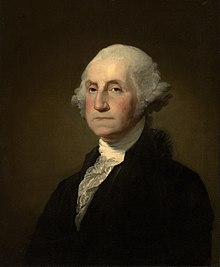
George Washington, and our founding fathers, recognized the danger of such a perspective, but anticipated a potential need for modifying the Constitution, so they built into the document the ability to modify it, should we desire to. To modify the powers of government in any other way was considered usurpation - the wrongful seizure or exercise of authority.
"If in the opinion of the people the distribution or modification of the constitutional powers be in any particular wrong, let it be corrected by an amendment in the way which the Constitution designates. But let there be no change by usurpation; for though this in one instance may be the instrument of good, it is the customary weapon by which free governments are destroyed. The precedent must always greatly overbalance in permanent evil any partial or transient benefit which the use can at any time yield." ~ Pres. George Washington in his Farewell Address of 1796
Sadly, too many abuses of the legitimate powers and too many violations of the limitations specified in the Constitution have resulted in a federal government more like the one the United States fought a war to escape from than the 'more perfect union' our founders left us.
Friday, June 28, 2013
Quote of the Day - The Constitution's permanent construction
To all those who believe the Constitution is a 'living' document subject to the whims of the day:
"Temporary delusions, prejudices, excitements, and objects have irresistible influence in mere questions of policy. And the policy of one age may ill suit the wishes or the policy of another. The constitution is not subject to such fluctuations. It is to have a fixed, uniform, permanent construction. It should be, so far at least as human infirmity will allow, not dependent upon the passions or parties of particular times, but the same yesterday, to-day, and for ever." ~ Joseph Story
Thursday, January 17, 2013
Quote of the Day - radicals
I came across this quote a while back when the Tea Party was being described as a bunch of radicals. Today, Second Amendment advocates are being called radical because they want no infringement upon their God-given right, enumerated in the Constitution, to keep and bear arms. The Constitution puts no restrictions on that right - such as how many or what type of arms nor on how much ammunition you can collect for those arms.
Yet leftists and statists want to do exactly that, while calling opponents to their plans 'radicals.' This is for them - and anyone else who might think they're possibly correct:
"The notion that a radical is one who hates his country is naive and usually idiotic. He is, more likely, one who likes his country more than the rest of us, and is thus more disturbed than the rest of us when he sees it debauched. He is not a bad citizen turning to crime; he is a good citizen driven to despair." ~ H. L. Mencken
***Personal note: between a funeral for our dearest friend and my father-in-law's complications from surgery, I've not been posting very much. While we're still helping our friend's family, my father-in-law is doing better so I should be back to regular posting by the weekend.
Tuesday, December 18, 2012
Why they want our guns
A Facebook friend of mine posted a comment on my wall saying that he wouldn't mind a ban on assault weapons. Why would you need one, he asked.
My response was that it wasn't the type of weapon being banned, but the fact that Congress was infringing upon a right to keep and bear arms in direct violation of the Constitution which forbids them to do so.
We do need to have a discussion on guns because, as inevitably happens following any tragedy in which guns are involved, those who would infringe upon our right are massing and getting ready to act.
They are using a crisis to further erode our ability not just to protect ourselves, but to determine what equipment is necessary in order to do so.
The Ludwig von Mises Institute sends out a daily email and today's was Tyranny and the Monopoly of Arms, an article by Stephen P. Halbrook that originally ran as "Gun Laws" on October 15, 1970 in The Libertarian Forum.
This article is 44 years old and its message is even more vital for being so.
It starts off talking about "the extreme shackles placed on actual or potential gun owners by the acts snowballing into the Gun Control Act of 1968 (Public Law 90-618)."
It details all the requirements for purchasing a weapon, the restrictions and monitoring that existed then as retailers were required to keep track of who purchased ammunition.
Local rules were no less onerous, including mandates for background checks and exorbitant fees in order to be granted a license - read "permission" - to own a weapon.
The ultimate goal of the power structure is the total abolition of private (non-ruling class) gun ownership. In mid-January 1969 the Illinois Academy of Criminology spoke favorably of this goal, and hundreds of other groups and individuals openly admit similar ambitions. The minimum they will settle for is complete police control of all firearms as is the case in Soviet Russia.
The masses are taught to believe the lie that such laws will reduce crime. Nothing could be further from the truth, because gun ownership by the general population simply does not cause crime.
Halbrook gives several examples to support this statement - and there are numerous others after 44 years. He then states a truth we all know, though some refuse to admit:
Since criminals will always have guns (no criminals would register their guns, and besides, zip guns are easy to make), it is necessary that potential victims be able to arm themselves to prevent crime.
So why do they want our guns?
What, then, is the real reason why the power elite wants to leave the people defenseless?
It has already been observed that guns are necessary for peaceful individuals to protect themselves from criminals. But who has been the most ferocious criminal in history? It is obvious: the State!
He details why regulation of the means to defend ourselves is necessary:
The U. S. Government, though they trust themselves with the largest arsenal the world has ever known, including everything from napalm and M-16’s to tanks and H-bombs, will not trust its thralls with .22-cal. revolvers. Why does this trust not exist? The people want to be free, a great number of blacks as well as many non-ruling class whites desire self-determination, and the Establishment must frustrate these movements. Laissez-faire gun ownership is feared for the same reason that Hitler would have been afraid of a gun-owning Jewish population or Stalin a bunch of pistol-packing Ukrainians. Well does the State know Mao’s dictum: political power grows out of the barrel of a gun.” The rulers realize that the only way to retain their control over the people is to monopolize the firearms. The powers-that-be perceive that the people can never exercise their right to be free if they have no might to be free. Thus it is in part by gun control that Big Brother perpetuates his hegemony.
In 1995, Eric Holder, the man who would become the Attorney General of the United States, said we need to "just really brainwash people into thinking about guns in a vastly different way."
Have we already reached that point? Have people come to think of guns as something only the government can control? Have people gotten to the point where they believe government shouldn't ban guns outright, but definitely should be allowed to place some restrictions - yes, infringements - on their ownership?
My Facebook friend believes this. He even makes the argument, used by many on left, that our Founding Fathers could not possibly have anticipated the types of weapons that are available today.
His implied position is this: had they imagined a gun that could hold hundreds of rounds which would also fire continuously, they would never have forbidden the government from passing "reasonable" laws restricting our right to keep and bear arms. Surely, our Founders (and the states and people who ratified the document) would have approved of some infringements - right?
Wrong!
The wording is clear "...the right of the people to keep and bear Arms, shall not be infringed." In legalese, 'shall not' is a command.
In 1776, there were numerous types of weapons and arms. The ability of the government to confiscate the means of defense was the issue - not the type of weapon that was used to provide that defense.
Swords were more common than guns or rifles, and more individuals had those weapons than had cannons. Certainly if the founders thought that it would be okay for government to infringe upon the right to keep and bear any type of arms, they would have designated which arms they meant - right?
The Bill of Rights makes no distinction between the arms of that day.
It doesn't need to be 'adapted' to make that distinction today.
If we allow government to infringe in one way, what is to prevent them from infringing in others?
This is the proverbial slippery slope that leads us down the path of complete government control - not only of the arms we may keep (own) and bear (carry), but over our ability to decide what types of arms are necessary for our own defense.
If you live in a gang-infested section of a city and the gangs have handguns and semi-automatic weapons and you want to defend yourself from the criminals, will a knife really work? Why shouldn't you, rather than any government, be able to decide what tool is the appropriate one to protect yourself and your family?
But, as my Facebook friend also opined, the government has tanks - does that mean we should be able to have them too?
Yes - why not? If I want to spend the money to purchase a functioning tank, what constitutional authority does the government have to tell me I can't?
But then comes the argument that it might be okay for me to own such weapons, but what about other people who aren't okay? What about mentally ill people? Should they be allowed? Shouldn't we have 'reasonable' laws to prevent unstable people from getting access to tools that can kill? And who ends up deciding the definition of 'reasonable'?
Most people will say 'yes'. But a mentally ill person who wants to hurt others doesn't need a gun, or even a knife. We don't stop sick people from driving, do we? A person intent on doing harm will find a way and a tool, regardless of the laws we put into place to restrict access to the most obvious of methods.
"Laws do not curb the lawless. After all, that's why we call them 'lawless.'" ~ Joel Miller
Since we know this is a truth, why would we want to violate the Constitution and infringe upon everyone's ability/right in order to - doubtfully - stop one evil person from hurting others?
As my friend and fellow blogger Andrew Lawton wrote, There is no antidote for Evil:
A sane man does not look at a gun and become a murder. But a murderer looks at a gun and sees a weapon, just as he would were he to see a knife, an automobile or a lead pipe.
If individuals want to engage in a discussion about accessibility to firearms and regulations for firearm owners, that’s reasonable. But why does every one of those discussions need to take place in the days following a shooting? Such tragedies force people to beg for answers. For events like the shooting at Sandy Hook, where nothing can ever come close to answering the question of “Why?”, people will look for absolutely anything they can cling to. That is what we are programmed to do.
The notion that simply changing the laws will take away the pain and suffering of this tragedy or even prevent future ones from occurring is simply not true. And it’s a dangerous myth being purported by the mainstream media.
There are laws that exist that imprison individuals motivated by Evil, but it is impossible to rid the world of that motivator itself. The true source of it is a philosophical question that, to me, is not nearly as important as recognizing its presence. The fact is, Evil cannot be fixed, and even if it could, the government is not the body to do that.
Some will say now is not the time for a discussion on weapons as we have not yet buried all those killed in Sandy Hook.
But this is war and the enemies of freedom are not waiting for us to finish grieving.
It is up to those of us who are not intimately associated with the victims to follow Thomas Paine's words:
"Those who expect to reap the blessings of freedom, must, like men, undergo the fatigues of supporting it."
Wednesday, July 18, 2012
Chuck Schumer: limit the First Amendment
"I believe there ought to be limits because the First Amendment is not absolute. No amendment is absolute. You can’t scream ‘fire’ falsely in a crowded theater. We have libel laws. We have anti-pornography laws. All of those are limits on the First Amendment. Well, what could be more important than the wellspring of our democracy? And certain limits on First Amendment rights that if left unfettered, destroy the equality — any semblance of equality in our democracy — of course would be allowed by the Constitution.
"And the new theorists on the Supreme Court who don’t believe that, I am not sure where their motivation comes from, but they are just so wrong. They are just so wrong." ~ Sen. Chuck Schumer (D-NY) on the DISCLOSE Act
I wish he would tell me how the exercise of freedom of speech could possible "destroy the equality - any semblance of equality in our democracy..."
Apparently that whole "Congress shall make no law...abridging the freedom of speech," is "more what you'd call 'guidelines' than actual rules."
First, we're a Republic - and a limited-government one at that.
Our rights are God-given - they do not spring from the government. Our Constitution limits what the Federal government can do, leaving all other matters to the states or the people, which is why we have state and local laws on yelling fire or libel or pornography - or any number of things like red-light cameras and breaking-and-entering.
His complete and total lack of understanding of the Constitution he swore to uphold is appalling.
Or maybe he understands it completely and just doesn't care, or thinks we no longer care.
Or maybe he doesn't have a clue and thinks he can get away with saying whatever he wants because he'll continue to get elected by people who also have no clue.
Or - better yet - this is just an incumbent protection act, rather than a First Amendment issue.
Between this, which is by far not the only time our federal elected officials have so blatantly twisted the meaning, intent and clear language of the Constitution, and our local Toledo city council which voted to spend unbudgeted funds while telling us we need to pass a levy because they don't have enough money, I may run out of duct tape to hold my head together.
Saturday, March 31, 2012
Quotes of the Day - Supreme Court
Considering that the U.S. Supreme Court justices have completed their hearings on Obamacare are in now in the process of writing their decision, I thought these quotes from Chief Justices were especially relevant. And here's a bit a trivia for you: the title is Chief Justice of the United States, not Chief Justice of the Supreme Court.
"The power of the state to impose restraints and burdens upon persons and property in conservation and promotion of the public health, good order, and prosperity is a power originally and always belonging to the states, not surrendered to them by the general government, nor directly restrained by the constitution of the United States, and essentially exclusive." ~ Justice Melville Fuller, Chief Justice of the United States (1888-1910)
"State inspection laws, health laws, and laws for regulating the internal commerce of a State, and those which respect turnpike roads, ferries, &c. are not within the power granted to Congress. ... Inspection laws, quarantine laws, health laws of every description, as well as laws for regulating the internal commerce of a State, and those which respect turnpike roads, ferries, &c., are component parts of this mass. No direct general power over these objects is granted to Congress, and, consequently, they remain subject to State legislation." ~ Justice John Marshall, Chief Justice of the United States (1801–1835)
"To hold that Congress has general police power would be to hold that it may accomplish objects not intrusted to the general government, and to defeat the operation of the 10th Amendment, declaring that 'the powers not delegated to the United States by the Constitution, nor prohibited by it to the states, are reserved to the states respectively, or to the people.' " ~ Justice Melville Fuller, Chief Justice of the United States (1888-1910)
Thursday, January 05, 2012
Two very important facts to remember about Obama's 'recess' appointments
Two very important and critical facts to remember about President Barack Obama's 'recess' appointments of Richard Cordray to the Consumer Financial Protection Bureau and three nominees to the National Labor Relations Board:
1) Congress is NOT in recess!
Yes, the President does have the ability to make recess appointments, meaning that people serve in his cabinet without the "advice and consent" of Congress - a Constitutional mandate.
However, there is no authority to make an appointment when Congress is still in session. Doing so violates the oath the President took to uphold the Constitution, and is contrary to the procedures designed to serve as a check-and-balance between the branches of government.
The current definition of 'recess' is when Congress is officially not in session for more than three days. Through a procedural action used by Democrats (and supported by then Sen. Obama) when they were trying to prevent President George W. Bush from making recess appointments, the Congress continues to hold "pro forma" sessions every three days. This policy, and the standard of three days, was supported by Democrats as well as Pres. Obama's own administration official, former Acting Solicitor General Neal Katyal.
Katyal, during arguments before the U.S. Supreme Court in 2010, responded to a question about why the President could not bring the NLRB to full strength through a recess appointment by saying, “I think our office has opined the recess has to be longer than three days.”
Between 2007 and the end of his term, Pres. Bush made no recess appointments because the Democrat-controlled House and Senate did not go into recess and, instead, held "pro forma" sessions specifically to prevent such appointments. Unlike our current President, Pres. Bush did not whine and complain and decide to circumvent the Constitution in order to get his way.
In fact, a president hasn’t made a recess appointment during a Senate break of fewer than three days since 1949, according to Betty Koed, an associate Senate historian.
The outrageous hypocrisy of the President and Democrats who supported this procedure in order to prevent a Republican from making recess appointments, but who now praise the violation because it's being done by a Democrat, is simply astounding! And the failure of the media to point out the hypocrisy and double standard is unconscionable and certainly a dereliction of their duty to the public.
2) There are good and valid reasons these people have not been approved by the Senate!
Pres. Obama had warned us that if Congress didn't do what he wanted, he'd go ahead with out them. Despite the clear unconstitutionality (and perhaps impeach-ability) of such actions, we should have believed him. He's out to "fundamentally change" our nation and what better way to do so than to ignore and flaunt the Constitutional mandates placed upon him?
In response to the announcements, United Steel Workers president Leo Gerard said:
The SEIU, on the NLRB appointments, stated:
Note the future tense: "measures they would employ."
The fact of the matter is that Pres. Obama only submitted the names for the NLRB on December 15th. The Senate has not, as far as I could tell, even held a hearing on two of them: International Union of Operating Engineers General Counsel Richard Griffin and former attorney to Ted Kennedy, Sharon Block.
As Moe Lane writes:
So at least for the NLRB, the Congress hasn't even had a chance to act on the nominations, putting lie to the claim that Pres. Obama had to act because of a "do-nothing" Congress or obstruction by the Republicans.
When it comes to the Cordray appointment, the issue has been over the CFPB itself and its accountability, as well as scope of authority.
Pres. Obama nominated Cordray in July and his confirmation was blocked by Republicans only last month. In what has been a stalemate with Pres. Obama, the Republicans have blocked the confirmation as a way to prevent the new agency from being fully operational because they believe the consumer agency's powers are too broad.
CFPB was created under the Frank-Dodd bill, which says the CFPB can't commence operations until after its head is confirmed by the Senate, as Ohio Sen. Rob Portman explains:
Contrary to the President's claim, the Congress isn't doing 'nothing.' It is, in fact, doing something: taking seriously its charge to advise and consent. Pres. Obama, not liking the advice and not getting his consent, is acting like a child in going ahead anyway.
Of course, he believes that 'standing up to Republicans' and painting himself as 'trying against a do-nothing Congress' is going to help him in the 2012 election - and he may be right politically.
But it's certainly wrong for our nation and our future to blatantly ignore the checks and balances and separation of powers in our Constitution for some hoped-for political advantage.
1) Congress is NOT in recess!
Yes, the President does have the ability to make recess appointments, meaning that people serve in his cabinet without the "advice and consent" of Congress - a Constitutional mandate.
However, there is no authority to make an appointment when Congress is still in session. Doing so violates the oath the President took to uphold the Constitution, and is contrary to the procedures designed to serve as a check-and-balance between the branches of government.
The current definition of 'recess' is when Congress is officially not in session for more than three days. Through a procedural action used by Democrats (and supported by then Sen. Obama) when they were trying to prevent President George W. Bush from making recess appointments, the Congress continues to hold "pro forma" sessions every three days. This policy, and the standard of three days, was supported by Democrats as well as Pres. Obama's own administration official, former Acting Solicitor General Neal Katyal.
Katyal, during arguments before the U.S. Supreme Court in 2010, responded to a question about why the President could not bring the NLRB to full strength through a recess appointment by saying, “I think our office has opined the recess has to be longer than three days.”
Between 2007 and the end of his term, Pres. Bush made no recess appointments because the Democrat-controlled House and Senate did not go into recess and, instead, held "pro forma" sessions specifically to prevent such appointments. Unlike our current President, Pres. Bush did not whine and complain and decide to circumvent the Constitution in order to get his way.
In fact, a president hasn’t made a recess appointment during a Senate break of fewer than three days since 1949, according to Betty Koed, an associate Senate historian.
The outrageous hypocrisy of the President and Democrats who supported this procedure in order to prevent a Republican from making recess appointments, but who now praise the violation because it's being done by a Democrat, is simply astounding! And the failure of the media to point out the hypocrisy and double standard is unconscionable and certainly a dereliction of their duty to the public.
2) There are good and valid reasons these people have not been approved by the Senate!
Pres. Obama had warned us that if Congress didn't do what he wanted, he'd go ahead with out them. Despite the clear unconstitutionality (and perhaps impeach-ability) of such actions, we should have believed him. He's out to "fundamentally change" our nation and what better way to do so than to ignore and flaunt the Constitutional mandates placed upon him?
In response to the announcements, United Steel Workers president Leo Gerard said:
"Republicans left the President with no choice but to recess appoint these four people, three to the National Labor Relations Board (NLRB) and one to direct the Consumer Financial Protection Bureau. President Obama showed today that he will use every means at his disposal to circumvent Republican opposition to safeguarding workers and consumers."
The SEIU, on the NLRB appointments, stated:
The appointments bypasses the predictable Republican filibusters or other obstructionist measures they would employ. There is no doubt that if given the shot, the GOP would have done away with the Board entirely, probably the very worst thing working families need right now.
Note the future tense: "measures they would employ."
The fact of the matter is that Pres. Obama only submitted the names for the NLRB on December 15th. The Senate has not, as far as I could tell, even held a hearing on two of them: International Union of Operating Engineers General Counsel Richard Griffin and former attorney to Ted Kennedy, Sharon Block.
As Moe Lane writes:
They have not been in point of fact filibustered; the question hasn’t even arisen yet, given that it’s been all of nineteen days since the names were submitted and a huge chunk of that time was the Christmas/New Year’s break. I’ve heard of… anticipation, but that’s just absurd. If you’re going to try to paint the opposition party as obstructionists, common courtesy dictates that you at least give the opposition party a chance to actually obstruct. Otherwise you’re just being silly.
One hopes that the President is not going to make a habit of this sort of thing…
PS: What’s that I hear? “The GOP was going to obstruct anyway, so it’s perfectly all right for the President to get it over with quickly!” …Do tell. And God, but do I feel sorry for the wife of any man making that particular argument…
So at least for the NLRB, the Congress hasn't even had a chance to act on the nominations, putting lie to the claim that Pres. Obama had to act because of a "do-nothing" Congress or obstruction by the Republicans.
When it comes to the Cordray appointment, the issue has been over the CFPB itself and its accountability, as well as scope of authority.
Pres. Obama nominated Cordray in July and his confirmation was blocked by Republicans only last month. In what has been a stalemate with Pres. Obama, the Republicans have blocked the confirmation as a way to prevent the new agency from being fully operational because they believe the consumer agency's powers are too broad.
CFPB was created under the Frank-Dodd bill, which says the CFPB can't commence operations until after its head is confirmed by the Senate, as Ohio Sen. Rob Portman explains:
The irony is that while this recess appointment may advance the White House’s political goals, it does nothing to advance the work of the CFPB. The statute creating the CFPB makes clear that only Senate confirmation of a Director – not a recess appointment – can activate the new powers of this agency to regulate consumer transactions with Main Street businesses.
As I have said many times, this is not about Rich Cordray, who I believe is a good public servant. Long before he was nominated to be CFPB Director, I expressed my strong concerns about the impact this new regulator would have on all of us as consumers, on job creation, and on our economy, and recommended some commonsense reforms. No other federal regulator has so much authority over personal economic decisions, with so little responsibility to answer to the American people and their elected representatives. These concerns -- voiced by 44 Senators -- cannot be addressed if the White House continues to refuse to work together despite my and others' efforts to reach out to them to find a way forward.
Contrary to the President's claim, the Congress isn't doing 'nothing.' It is, in fact, doing something: taking seriously its charge to advise and consent. Pres. Obama, not liking the advice and not getting his consent, is acting like a child in going ahead anyway.
Of course, he believes that 'standing up to Republicans' and painting himself as 'trying against a do-nothing Congress' is going to help him in the 2012 election - and he may be right politically.
But it's certainly wrong for our nation and our future to blatantly ignore the checks and balances and separation of powers in our Constitution for some hoped-for political advantage.
Saturday, September 17, 2011
Constitution Day 2011
"We the people are the rightful masters of both Congress and the courts, not to overthrow the Constitution but to overthrow the men who pervert the Constitution." ~ Abraham Lincoln
It was on this day in 1787 that the first 39 signatures were placed on the Constitution - the document that became the defining principles of our nation's limited government.
"The liberties of our country, the freedom of our civil constitution, are worth defending against all hazards: And it is our duty to defend them against all attacks." ~ Samuel Adams
On December 8, 2004, the Congress of the United States, one branch of the government established by the Constitution, passed a "Consolidated Appropriations Act, 2005" (118 Stat. 2809, 3344-45), establishing Constitution Day in the United States.
"Do not separate text from historical background. If you do, you will have perverted and subverted the Constitution, which can only end in a distorted, bastardized form of illegitimate government." ~ James Madison
I've previously written about the irony of this day on which Congress mandates that "all federal agencies and schools receiving federal funds hold educational programs pertaining to the Constitution." I guess the Constitutional limits on our federal government don't really apply to the members of Congress who passed this law - and many others.
"The U. S. Constitution doesn't guarantee happiness, only the pursuit of it. You have to catch up with it yourself." ~ Benjamin Franklin
But it is right and proper that we remember what our Constitution says and be especially vigilant in insisting that our elected officials honor those words and abide by the limits the document places on them.
"To live under the American Constitution is the greatest political privilege that was ever accorded to the human race." ~ Calvin Coolidge
If it's been a while since you read it, please take the time to do so now. Know what it says, what it does in terms of granting only limited powers to our federal government and pay attention to what our elected officials are saying and doing when it comes to carrying out those 'limited' tasks. And when they exceed the authority of the Constitution, hold them accountable.
"I will always vote what I have promised, and always vote the Constitution..." ~ Ron Paul
If you'd like more information, you can visit The Constitution Center, Constitution Facts or Constitution Day.
"The Constitution is the guide which I never will abandon." ~ George Washington
Monday, August 29, 2011
The Constitution: Timeless Principles for a Nation
The Northwest Ohio Conservative Coalition, the member organizations of the Northwest Ohio Patriot Coalition and Owens Community College will sponsor an educational event entitled The Constitution: Timeless Principles for a Nation on September 18th.
The educational sessions will focus on the principles of the Constitutional republic provided by the Founding Fathers and their relevance to issues of today.
There is a $25 registration fee and you can register here or by calling (567) 661-7357 or (800)-GO-OWENS, Ext. 7357. The fee covers all sessions and a box lunch.
Lunch and Learn Speakers include:
* Professor Lee Strang from the University of Toledo
* Charlie Earl, former libertarian candidate for Ohio Secretary of State and one of the hosts of Eye On Toledo on WSPD
* Gary Rathbun, President and CEO of Private Wealth Consultants
* Maurice Thompson from the 1851 Center for Constitutional Law
* Brian Wilson from WSPD
* Michael Young
There will be three separate breakout sessions with presenters and round table discussions on topics such as:
* Enumerated Powers;
* History of Taxation;
* Abigail Adams Project;
* State Sovereignty;
* Religion and Morality;
* Original Intent;
* Media: The 4th Branch;
* The 10th Amendment;
* The Anti-Federalist;
* Hot Button: Labor;
* Hot Button: Healthcare;
* Hot Button: Abortion
The Closing Session will be to test your knowledge with Brian Wilson and “The Famous Constitutional Quote Game.”
The event begins at 12:30 in rooms AVCC 125-128 at Owens Community College, 30355 Oregon Road, Perrysburg, OH.
Thursday, June 02, 2011
A horse, a horse! My kingdom for a horse!
I picked the title of this blog post from Shakespeare's Richard the Third because it seemed so appropriate. In the play, Richard is about to meet his doom at the hands of Henry VII and his horse is dead. This line is supposed to be his valiant cry, signifying his determination to continue to fight.
I think today I'd change it to:
This thought came to me as I read today's Patriot Post 'Founder's Quote Daily' from James Madison:
I realized that, given similar circumstances today, I don't believe we'd be able to find more than 10 individuals who would be 'pure in their motives' and capable of producing a document like our Constitution.
Our founders were actually ordinary men with ordinary jobs and lives - but they did an extraordinary thing. "Exclusively or anxiously devoted" to the task of giving us a document that would establish a government capable of surviving longer than just about any other, rooted in the idea that men are inherently free and that governments should serve men by ensuring that freedom, rather than being served by people who were essentially slaves to the authority.
What a brilliant concept!
In developing the structure of government, they placed limits on it while leaving citizens with the power and authority. They studied the histories and did their best to address deficits that led other governments to their downfall. They considered future needs (the amendment process) and thought through the way things would work. They anticipated consequences and posed - and answered - questions about how things should be conducted and 'what if...' scenarios.
In thinking about all of this, I couldn't help but wonder if we have that capacity today? Sadly, I do not think so.
Too many of our elected representatives are interested only in catering to the special interests that put them in the position in the first place. We have politicians at all levels refer to 'working families' which we all know is code for 'union.' They emphasize that their votes/actions are for the 'working families.' But they are not elected to represent only a specific portion of our population; they are supposed to be doing what is in the best interest of ALL!
In the last 90 years, we've expanded our federal government beyond all imagination of our founders. Government rules us - through regulations and codes and laws - even to the point where we cannot possibly understand it all and often have to consult 'experts' (accountants, attorneys, specialists) to help us know what it is we're supposed to do to be in compliance.
Government tells us what kind of car we can buy, what kind of light bulb we can use, how much water our toilets can process, what information must be present on our food packaging, what kind of bag to use at the grocery store, what kind of fence we can put up, what kind of dock we can build on our waterfronts (if we can even build one at all!), what the volume level of our commercials on TV can be, and on and on and on.
WSPD's afternoon show host Brian Wilson regularly offers a prize to the person who can name the one thing that government doesn't regulate, control, tax, etc... As far as I know, it's a trick question: there isn't anything.
With this type of government today, is it any surprise that I'm so pessimistic about the ability to find an honest man who could engage upon the task our founders faced?
Some people, recognizing that government is so out of control, have suggested a Constitutional Convention. I wholeheartedly reject that idea - out of fear that what we'd end up with would be so distant in scope and meaning from the one we currently have that, when completed, we'd be slaves by Constitution, rather than just by recent practice.
And then I look at the people who comprise this great nation. Yes, there are lots of good, honest people. But do they have the training and capacity to ask the right questions in order to obtain the right answers? I don't think there are as many as most of us would like.
Throughout my political career, I was often told (by supporters and opponents alike) that I asked good questions. I attribute that to my excellent training in college from men like Bill Rosenberg (retired managing editor of The Blade and my advisor on The Collegian newspaper) and William Day (former Blade editor and one of my professors and informal adviser - he recommended me for my Dow Jones Newspaper Fund internship), who taught me the value of not only asking the right question, but knowing what the answer should be.
It was training that served me well, but it still strikes me how often others didn't seem to think about issues and next steps and 'what ifs' in order to come up with similar questions on their own. Don't get me wrong, I'm not saying I'm smarter than everyone else - just trained in a different manner.
But if that was my experience in elective office, how much more so is it a problem among the general populace, with today's failed public education system and especially in an age where American Idol gets more participation than an election and everyone expects problems to be solved in 30 minutes like in a sitcom?
Where would we find individuals capable of acting like our founders? And could we be sure that they wouldn't succumb to the pressures of lobbyists and special interests and various groups and agents?
Are we, like King Richard, facing our doom, willing to trade everything for an honest man who would abide by the Constitution and not seek to expand government into a slave master? Or one who would begin to repeal the damage done over the past several decades?
Thinking about this makes me very sad about what our nation has become. And I wonder if we're not witnessing the beginning of our end.
For more on this subject, I recommend the following links:
Leslie Carbone's "Constitutional Limits"
Bill Collier's "Freedom Faces A Progressive Assault"
Skip Murphy's "Is there an honest man - even one?" and "Given no honest men - 'what do we do'?"
Dr. Bill Smith's "Constitutional Convention - Not A Good Idea!"
I think today I'd change it to:
An honest man, an honest man! Our nation for an honest man!
This thought came to me as I read today's Patriot Post 'Founder's Quote Daily' from James Madison:
"Whatever may be the judgement pronounced on the competency of the architects of the Constitution, or whatever may be the destiny of the edifice prepared by them, I feel it a duty to express my profound and solemn conviction ... that there never was an assembly of men, charged with a great and arduous trust, who were more pure in their motives, or more exclusively or anxiously devoted to the object committed to them."
I realized that, given similar circumstances today, I don't believe we'd be able to find more than 10 individuals who would be 'pure in their motives' and capable of producing a document like our Constitution.
Our founders were actually ordinary men with ordinary jobs and lives - but they did an extraordinary thing. "Exclusively or anxiously devoted" to the task of giving us a document that would establish a government capable of surviving longer than just about any other, rooted in the idea that men are inherently free and that governments should serve men by ensuring that freedom, rather than being served by people who were essentially slaves to the authority.
What a brilliant concept!
In developing the structure of government, they placed limits on it while leaving citizens with the power and authority. They studied the histories and did their best to address deficits that led other governments to their downfall. They considered future needs (the amendment process) and thought through the way things would work. They anticipated consequences and posed - and answered - questions about how things should be conducted and 'what if...' scenarios.
In thinking about all of this, I couldn't help but wonder if we have that capacity today? Sadly, I do not think so.
Too many of our elected representatives are interested only in catering to the special interests that put them in the position in the first place. We have politicians at all levels refer to 'working families' which we all know is code for 'union.' They emphasize that their votes/actions are for the 'working families.' But they are not elected to represent only a specific portion of our population; they are supposed to be doing what is in the best interest of ALL!
In the last 90 years, we've expanded our federal government beyond all imagination of our founders. Government rules us - through regulations and codes and laws - even to the point where we cannot possibly understand it all and often have to consult 'experts' (accountants, attorneys, specialists) to help us know what it is we're supposed to do to be in compliance.
Government tells us what kind of car we can buy, what kind of light bulb we can use, how much water our toilets can process, what information must be present on our food packaging, what kind of bag to use at the grocery store, what kind of fence we can put up, what kind of dock we can build on our waterfronts (if we can even build one at all!), what the volume level of our commercials on TV can be, and on and on and on.
WSPD's afternoon show host Brian Wilson regularly offers a prize to the person who can name the one thing that government doesn't regulate, control, tax, etc... As far as I know, it's a trick question: there isn't anything.
With this type of government today, is it any surprise that I'm so pessimistic about the ability to find an honest man who could engage upon the task our founders faced?
Some people, recognizing that government is so out of control, have suggested a Constitutional Convention. I wholeheartedly reject that idea - out of fear that what we'd end up with would be so distant in scope and meaning from the one we currently have that, when completed, we'd be slaves by Constitution, rather than just by recent practice.
And then I look at the people who comprise this great nation. Yes, there are lots of good, honest people. But do they have the training and capacity to ask the right questions in order to obtain the right answers? I don't think there are as many as most of us would like.
Throughout my political career, I was often told (by supporters and opponents alike) that I asked good questions. I attribute that to my excellent training in college from men like Bill Rosenberg (retired managing editor of The Blade and my advisor on The Collegian newspaper) and William Day (former Blade editor and one of my professors and informal adviser - he recommended me for my Dow Jones Newspaper Fund internship), who taught me the value of not only asking the right question, but knowing what the answer should be.
It was training that served me well, but it still strikes me how often others didn't seem to think about issues and next steps and 'what ifs' in order to come up with similar questions on their own. Don't get me wrong, I'm not saying I'm smarter than everyone else - just trained in a different manner.
But if that was my experience in elective office, how much more so is it a problem among the general populace, with today's failed public education system and especially in an age where American Idol gets more participation than an election and everyone expects problems to be solved in 30 minutes like in a sitcom?
Where would we find individuals capable of acting like our founders? And could we be sure that they wouldn't succumb to the pressures of lobbyists and special interests and various groups and agents?
Are we, like King Richard, facing our doom, willing to trade everything for an honest man who would abide by the Constitution and not seek to expand government into a slave master? Or one who would begin to repeal the damage done over the past several decades?
Thinking about this makes me very sad about what our nation has become. And I wonder if we're not witnessing the beginning of our end.
For more on this subject, I recommend the following links:
Leslie Carbone's "Constitutional Limits"
Bill Collier's "Freedom Faces A Progressive Assault"
Skip Murphy's "Is there an honest man - even one?" and "Given no honest men - 'what do we do'?"
Dr. Bill Smith's "Constitutional Convention - Not A Good Idea!"
Wednesday, June 01, 2011
The Blade vs. The Constitution
Recently, Lucas County commissioners decided to form a storm-water district to address mandates from the U. S. Environmental Protection Agency. The district encompasses several of the county's townships, including Sylvania Township.
The proposal is to charge all the property owners in the district for the costs associated with the EPA requirements - about $48.72 per year for residences with businesses being charged based upon the size of their paved areas, roofs, etc...
The problem is that Sylvania Township has looked at the requirements and determined that it can meet their EPA obligations at less cost, so they don't want to be a part of the district. And why should they? The obligation of Sylvania Township Trustees to represent their residents - and meeting these EPA mandates on their own will cost their residents less. And the EPA doesn't care how the requirements are met - so long as they are.
But that doesn't sit well with the socialists/collectivists at The Blade. They slam Trustee Kevin Haddad for, basically, doing a good job on behalf of Sylvania Township.
In their editorial, they admit that Sylvania Township can perform their EPA obligations at roughly half what they'd pay as part of the district. But that's a bad thing, according to unknown author of the editorial who points out:
There you have it.
The Blade has, for a long time, believed that other communities should subsidize the efforts of the major city, Toledo. And here is another example where it believes that well-run, proportionally-taxed communities should pay for the things other jurisdictions have to do - but have no money with which to pay for them. And, just to be sure we're clear, the reason many of those 'other' communities don't have the funds to do these mandates is because their elected officials are too busy jumping to spend money on things the paper promotes.
The Blade has also been a proponent for regionalism, including a push for a county-wide council to govern the entire 88 square miles of Lucas County. But in their push for uni-gov, they forget a critical component - cost. You see, to the editors at our local daily, the idea is the critical thing and the costs are to be born, regardless.
No community wants to subsidize the outcome of another community's bad fiscal decisions - and they shouldn't!
But that's not the worst of it. The reason they promote these types of illogical ideas is because they start from an incorrect premise. It's no wonder they come to bad conclusions. Here, in their own words, is the problem - their idea of the function of government is not constitutionally based - but rather based upon the failed socialistic perspective:
Note how closely that aligns with Karl Marx's "From each according to his abilities, to each according to his needs."
And compare that to the U.S. Constitution, which explains why we established our government:
Unlike the editors, our founders created our form of government to 'secure the blessings of liberty' not to redistribute the wealth.
The Blade and its editors have a warped sense of government. Even in the clause, providing for the common defense, they are talking about doing so in order to protect the individual liberties of the people within the nation.
If they want to try and twist their position into saying it's to 'establish justice,' they would fail as there is nothing 'just' in taking from one to give to another. In fact, that is routinely called 'theft' when done by anyone but the government these days.
Even if they tried to claim their philosophy was to 'promote the general welfare,' well, perhaps a study of James Madison quotes about that phrase would be educational:
...or Thomas Jefferson:
"Congress has not unlimited powers to provide for the general welfare, but only those specifically enumerated."
The scary part is how close we are today to the warning in the second quote from Madison.
But here we are, with a local paper that clearly has no concept of the proper function of government and is excoriating a local elected official who has the temerity to suggest that bigger is not better simply because it's called 'cooperation' and believes that the overreaching federal government mandates can be met at less cost to his constituents if he doesn't capitulate.
The Blade is on the wrong side in this issue, but when you believe as Marx did, is it any wonder?
The proposal is to charge all the property owners in the district for the costs associated with the EPA requirements - about $48.72 per year for residences with businesses being charged based upon the size of their paved areas, roofs, etc...
The problem is that Sylvania Township has looked at the requirements and determined that it can meet their EPA obligations at less cost, so they don't want to be a part of the district. And why should they? The obligation of Sylvania Township Trustees to represent their residents - and meeting these EPA mandates on their own will cost their residents less. And the EPA doesn't care how the requirements are met - so long as they are.
But that doesn't sit well with the socialists/collectivists at The Blade. They slam Trustee Kevin Haddad for, basically, doing a good job on behalf of Sylvania Township.
In their editorial, they admit that Sylvania Township can perform their EPA obligations at roughly half what they'd pay as part of the district. But that's a bad thing, according to unknown author of the editorial who points out:
It is not known what effect removing the most populous community from the water district would have on the cost in the other six townships.
There you have it.
The Blade has, for a long time, believed that other communities should subsidize the efforts of the major city, Toledo. And here is another example where it believes that well-run, proportionally-taxed communities should pay for the things other jurisdictions have to do - but have no money with which to pay for them. And, just to be sure we're clear, the reason many of those 'other' communities don't have the funds to do these mandates is because their elected officials are too busy jumping to spend money on things the paper promotes.
The Blade has also been a proponent for regionalism, including a push for a county-wide council to govern the entire 88 square miles of Lucas County. But in their push for uni-gov, they forget a critical component - cost. You see, to the editors at our local daily, the idea is the critical thing and the costs are to be born, regardless.
Mr. Haddad has an odd idea of regional cooperation. He says he is all for it — as long as his community doesn’t end up subsidizing work anywhere else. In February, he trashed the county commissioners’ regional refuse-collection plan, calling it a ruse by the City of Toledo to get other municipalities to subsidize its garbage collection.
No community wants to subsidize the outcome of another community's bad fiscal decisions - and they shouldn't!
But that's not the worst of it. The reason they promote these types of illogical ideas is because they start from an incorrect premise. It's no wonder they come to bad conclusions. Here, in their own words, is the problem - their idea of the function of government is not constitutionally based - but rather based upon the failed socialistic perspective:
One of the reasons governments exist is to collect resources from a broad base and redistribute them, not necessarily equally but rather where they are needed most.
Note how closely that aligns with Karl Marx's "From each according to his abilities, to each according to his needs."
And compare that to the U.S. Constitution, which explains why we established our government:
"We the People of the United States, in Order to form a more perfect Union, establish Justice, insure domestic Tranquility, provide for the common defence, promote the general Welfare, and secure the Blessings of Liberty to ourselves and our Posterity, do ordain and establish this Constitution for the United States of America."
Unlike the editors, our founders created our form of government to 'secure the blessings of liberty' not to redistribute the wealth.
The Blade and its editors have a warped sense of government. Even in the clause, providing for the common defense, they are talking about doing so in order to protect the individual liberties of the people within the nation.
If they want to try and twist their position into saying it's to 'establish justice,' they would fail as there is nothing 'just' in taking from one to give to another. In fact, that is routinely called 'theft' when done by anyone but the government these days.
Even if they tried to claim their philosophy was to 'promote the general welfare,' well, perhaps a study of James Madison quotes about that phrase would be educational:
"With respect to the words general welfare, I have always regarded them as qualified by the detail of powers connected with them. To take them in a literal and unlimited sense would be a metamorphosis of the Constitution into a character which there is a host of proofs was not contemplated by its creators."
"If Congress can employ money indefinitely to the general welfare, and are the sole and supreme judges of the general welfare, they may take the care of religion into their own hands; they may appoint teachers in every State, county and parish and pay them out of their public treasury; they may take into their own hands the education of children, establishing in like manner schools throughout the Union; they may assume the provision of the poor; they may undertake the regulation of all roads other than post-roads; in short, every thing, from the highest object of state legislation down to the most minute object of police, would be thrown under the power of Congress... Were the power of Congress to be established in the latitude contended for, it would subvert the very foundations, and transmute the very nature of the limited Government established by the people of America."
"I cannot undertake to lay my finger on that article of the Constitution which granted a right to Congress of expending, on the objects of benevolence, the money of their constituents."
...or Thomas Jefferson:
"Congress has not unlimited powers to provide for the general welfare, but only those specifically enumerated."
The scary part is how close we are today to the warning in the second quote from Madison.
But here we are, with a local paper that clearly has no concept of the proper function of government and is excoriating a local elected official who has the temerity to suggest that bigger is not better simply because it's called 'cooperation' and believes that the overreaching federal government mandates can be met at less cost to his constituents if he doesn't capitulate.
The Blade is on the wrong side in this issue, but when you believe as Marx did, is it any wonder?
Saturday, February 12, 2011
Happy Birthday Abraham Lincoln
Today is President Abraham Lincoln's birthday. In honor of his birth, here is a great article from The Heritage Foundation discussing whether or not he was the father of big government:
Read the entire article here.
On February 12, America will celebrate Abraham Lincoln’s 202nd birthday, but will conservatives celebrate his legacy? Lincoln is a pivotal figure in American history, yet some conservatives are wary of him. Lincoln, the Left proclaims and the Right fears, is the father of big government.
Conservatives shouldn’t be fooled. If big government means a permanently large and growing federal budget and a vast civil service (see William Voegeli’s Never Enough: America’s Limitless Welfare State), then Lincoln may deny paternity for both. As Allen Guelzo explains, while the federal budget indeed ballooned to meet the cost of the Civil War (from $63.2 million in 1860 to $1.29 billion in 1865), it shrank once the war ended (back to $293 million by 1870). “If Lincoln had plans to create ‘big government,’” Guelzo concludes, “none of his successors seems to have known what they were.” Similarly, while the federal government employed more people during the war, the number shrank once the war ended.
In reality, big government is a Progressive invention, designed by Progressive thinkers such as Herbert Croly and John Dewey and perpetrated by Progressive presidents such as Theodore Roosevelt, Woodrow Wilson, and Franklin Delano Roosevelt. These men embraced big government, because they held certain principles opposed to the limited government framework set forth in the Declaration of Independence and Constitution.
By contrast, Lincoln held a different set of premises. He defended the Constitution and “never had a feeling politically that did not spring from the sentiments embodied in the Declaration of Independence.” To understand Lincoln, therefore, we must turn to the documents he held so dear.
Read the entire article here.
Thursday, December 16, 2010
Our founding principles transcend time
In an email from The Cato Institute:
This is why we should always look to the basic principle of an issue - not the issue itself or whether a potential governmental action is 'needed,' 'wanted' or a 'good idea' before acting on it.
Of course, Thomas Jefferson also realized that not only would the Constitution give us a foundation, it was written to prevent unlimited power for a governmental structure, thus ensuring that the basic principles would be adhered to over time.
Do you agree?
The Declaration of Independence and the Constitution, together, address mankind's most basic political questions. Resting on a firm moral foundation, they articulate the first principles of political organization. Thus, they were meant to serve not merely the 18th century but generations to come, which would face those same basic questions, whatever their particular circumstances, whatever their state of material progress. Because the principles the Founders articulated transcend both time and technology, they will serve us well as we move through the 21st century, if only we understand them correctly and apply them well.
This is why we should always look to the basic principle of an issue - not the issue itself or whether a potential governmental action is 'needed,' 'wanted' or a 'good idea' before acting on it.
Of course, Thomas Jefferson also realized that not only would the Constitution give us a foundation, it was written to prevent unlimited power for a governmental structure, thus ensuring that the basic principles would be adhered to over time.
"I consider the foundation of the Constitution as laid on this ground: That 'all powers not delegated to the United States, by the Constitution, nor prohibited by it to the States, are reserved to the States or to the people' (10th Amendment). To take a single step beyond the boundaries thus specifically drawn around the powers of Congress, is to take possession of a boundless field of power, no longer susceptible to any definition."
Do you agree?
Saturday, February 06, 2010
Will new Toledo law violate Constitutional due process?
Well, it's official. The City of Toledo is seeking a law to either immobilize or impound vehicles with unpaid red light or speed camera tickets.
And here I thought the cameras were all about safety - not money. Apparently not.
Toledo has so many of these unpaid tickets that they're using it as an excuse for part of their budget woes. Recent news reports quote Police Chief Mike Navarre as saying the total amount due (dating back to 2000) is around $6 million, though not all of that money would go to the city. Some would go to the red-light camera company, RedFlex, which has a contract with the city to provide the cameras.
Last year, Toledo budgeted $2.5 million (more than they budgeted in 2008) in revenue from these cameras, but they only collected $874,308, leaving a significant shortfall. Of course, the fact that they over budgeted in 2008 should have given them their first clue about the problem.
They've tried a collection agency, but that's not working out too well. The problem isn't that the collection agency (a local law firm) isn't very good - it's that no court has ever issued a judgment in favor of the city for these civil fees, so people are ignoring them.
Under the current law, the photograph from the camera is prima facie evidence of a civil (not criminal) violation. The only way to appeal the violation is to request a hearing before a person hired by the city to serve as a hearing officer. The way the law is written, if the camera shows a vehicle and you are the owner, you are guilty. So when you appeal, the only way to get out of the presumption of guilt is to name another person as the driver.
It's no wonder this is a civil violation and not enforced under the traffic laws. If a person accused of hit-and-run were presumed guilty with the only way out being to present the actual offender, could you imagine how quickly various groups and citizens would be expressing their outrage? There's a reason why we have a presumption of innocence and due process procedures in the United States.
But when it comes to red light and speed camera violations, all those protections are thrown under the bus, ignored and flouted.
Now, without benefit of court adjudication, the city wants to confiscate property as a penalty for the violation.
Here is what the two ordinances relating to the immobilization/impoundment proposal say:
and:
Yes, that's correct. They want to come and take your vehicle - or put a 'boot' on it, depriving you of its use - without ever having gone to court.
Your failure to cater to their desire for more income will result in the confiscation of your property.
The 5th Amendment to the Constitution states:
So how is this proposed law NOT a deprivation of property without due process? You don't even have a way to appear before a judge under Toledo's current law and this new authority for the city doesn't change that fact.
Where are all the civil liberties groups on this issue? Are they even aware of the proposed law?
Chris Finney, an attorney and co-founder of COAST, Coalition Opposed to Additional Spending and Taxation, has been very vocal in opposing these cameras and might even be partially responsible for the failure of the city's budget projections.
He has advised individuals to ignore the tickets because the city has no ability to enforce them. He has also advised people that letters from attorneys threatening collection have no force unless adjudicated in a court of law. During my fill-in for Brian Wilson on WSPD yesterday, I talked to him about the plan to immobilize/impound vehicles and his response was that this was a lawsuit waiting to happen. He continued to tell people that unless they get a summons or notice from a court, the fines are unenforceable.
Obviously, he's not well-liked by the politicians, especially because he's going to mount another campaign in Toledo to repeal the law allowing cameras in the first place, with collection of signatures for the ballot measure scheduled to begin in about a month.
My hope is that individuals, attorneys and groups who believe in the Constitution and the protection of rights will vigorously oppose these two measures. Here is contact information to help you in this goal:
City Council phone: 419-245-1050
City Council emails:
phillip.copeland@toledo.oh.gov
rob.ludeman@toledo.oh.gov
joe.mcnamara@toledo.oh.gov
adam.martinez@toledo.oh.gov
george.sarantou@toledo.oh.gov
Steven.Steel@toledo.oh.gov
wilma.brown@toledo.oh.gov
dmichael.collins@toledo.oh.gov
mike.craig@toledo.oh.gov
michael.ashford@toledo.oh.gov
tom.waniewski@toledo.oh.gov
lindsay.webb@toledo.oh.gov
And here I thought the cameras were all about safety - not money. Apparently not.
Toledo has so many of these unpaid tickets that they're using it as an excuse for part of their budget woes. Recent news reports quote Police Chief Mike Navarre as saying the total amount due (dating back to 2000) is around $6 million, though not all of that money would go to the city. Some would go to the red-light camera company, RedFlex, which has a contract with the city to provide the cameras.
Last year, Toledo budgeted $2.5 million (more than they budgeted in 2008) in revenue from these cameras, but they only collected $874,308, leaving a significant shortfall. Of course, the fact that they over budgeted in 2008 should have given them their first clue about the problem.
They've tried a collection agency, but that's not working out too well. The problem isn't that the collection agency (a local law firm) isn't very good - it's that no court has ever issued a judgment in favor of the city for these civil fees, so people are ignoring them.
Under the current law, the photograph from the camera is prima facie evidence of a civil (not criminal) violation. The only way to appeal the violation is to request a hearing before a person hired by the city to serve as a hearing officer. The way the law is written, if the camera shows a vehicle and you are the owner, you are guilty. So when you appeal, the only way to get out of the presumption of guilt is to name another person as the driver.
It's no wonder this is a civil violation and not enforced under the traffic laws. If a person accused of hit-and-run were presumed guilty with the only way out being to present the actual offender, could you imagine how quickly various groups and citizens would be expressing their outrage? There's a reason why we have a presumption of innocence and due process procedures in the United States.
But when it comes to red light and speed camera violations, all those protections are thrown under the bus, ignored and flouted.
Now, without benefit of court adjudication, the city wants to confiscate property as a penalty for the violation.
Here is what the two ordinances relating to the immobilization/impoundment proposal say:
SECTION 5. That a new Toledo Municipal Code Subsection 313.12 (d)(6) is hereby enacted to read as follows:“In lieu of assessing an additional penalty, pursuant to subsection (d)(5) above, the City of Toledo may (i) immobilize the vehicle by placing an immobilization device( e.g. a “boot”) on the tires of the vehicle pending the owners compliance with the Notice of Liability, or (ii) impound the vehicle, pursuant to TMC Section 303.08(a)(12). Furthermore, the owner of the vehicle shall be responsible for any outstanding fines, the fee for removal of the immobilization device (i.e., $75), and any costs associated with the impoundment of the vehicle.
and:
SUMMARY & BACKGROUND:
Toledo Municipal Code Section 303.08 provides authority for the City of Toledo Police to remove (i.e., impound) a vehicle under certain circumstances specified. Likewise, the Section provides a mechanism for an owner to redeem his or her impounded vehicle. This proposed legislation amends, specifically, Toledo Municipal Code Section 303.08(a) by enacting a new Subsection, i.e., TMC Subsection 303.08(a)(12), to include authority to impound a vehicle of an owner who has refused or failed to comply with the civil penalty imposed pursuant to the City’s automated red light and speeding photo enforcement Sections; i.e., TMC Section 313.12,et.al.
NOW, THEREFORE,
Be it ordained by the Council of the City of Toledo:
SECTION 1. That Toledo Municipal Code Chapter 303, and specifically Section 303.08(a), is hereby amended by enacting Section 303.08(a)(12) to read as follows:“When any vehicle against which two or more notices of liability has issued, pursuant to TMC Section 313.12, and the vehicle owner, as defined by TMC Section 313.12(b)(4), has failed or refused to comply with the civil penalty assessed, but after the appeal period has expired, pursuant to TMC Section 313.12(d) (4).”
Yes, that's correct. They want to come and take your vehicle - or put a 'boot' on it, depriving you of its use - without ever having gone to court.
Your failure to cater to their desire for more income will result in the confiscation of your property.
The 5th Amendment to the Constitution states:
No person shall ... be deprived of life, liberty, or property, without due process of law;
So how is this proposed law NOT a deprivation of property without due process? You don't even have a way to appear before a judge under Toledo's current law and this new authority for the city doesn't change that fact.
Where are all the civil liberties groups on this issue? Are they even aware of the proposed law?
Chris Finney, an attorney and co-founder of COAST, Coalition Opposed to Additional Spending and Taxation, has been very vocal in opposing these cameras and might even be partially responsible for the failure of the city's budget projections.
He has advised individuals to ignore the tickets because the city has no ability to enforce them. He has also advised people that letters from attorneys threatening collection have no force unless adjudicated in a court of law. During my fill-in for Brian Wilson on WSPD yesterday, I talked to him about the plan to immobilize/impound vehicles and his response was that this was a lawsuit waiting to happen. He continued to tell people that unless they get a summons or notice from a court, the fines are unenforceable.
Obviously, he's not well-liked by the politicians, especially because he's going to mount another campaign in Toledo to repeal the law allowing cameras in the first place, with collection of signatures for the ballot measure scheduled to begin in about a month.
My hope is that individuals, attorneys and groups who believe in the Constitution and the protection of rights will vigorously oppose these two measures. Here is contact information to help you in this goal:
City Council phone: 419-245-1050
City Council emails:
phillip.copeland@toledo.oh.gov
rob.ludeman@toledo.oh.gov
joe.mcnamara@toledo.oh.gov
adam.martinez@toledo.oh.gov
george.sarantou@toledo.oh.gov
Steven.Steel@toledo.oh.gov
wilma.brown@toledo.oh.gov
dmichael.collins@toledo.oh.gov
mike.craig@toledo.oh.gov
michael.ashford@toledo.oh.gov
tom.waniewski@toledo.oh.gov
lindsay.webb@toledo.oh.gov
Sunday, November 15, 2009
A new amendment to the Constitution
I received this in an email - and I like it!!!!
What do you think?
Proposed 28th Amendment to the United States Constitution:
"Congress shall make no law that applies to the citizens of the United States that does not apply equally to the Senators and/or Representatives, and Congress shall make no law that applies to the Senators and/or Representatives that does not apply equally to the citizens of the United States."
What do you think?
Subscribe to:
Posts (Atom)

